


Description
Moon Wrasse (Thalassoma lunare)
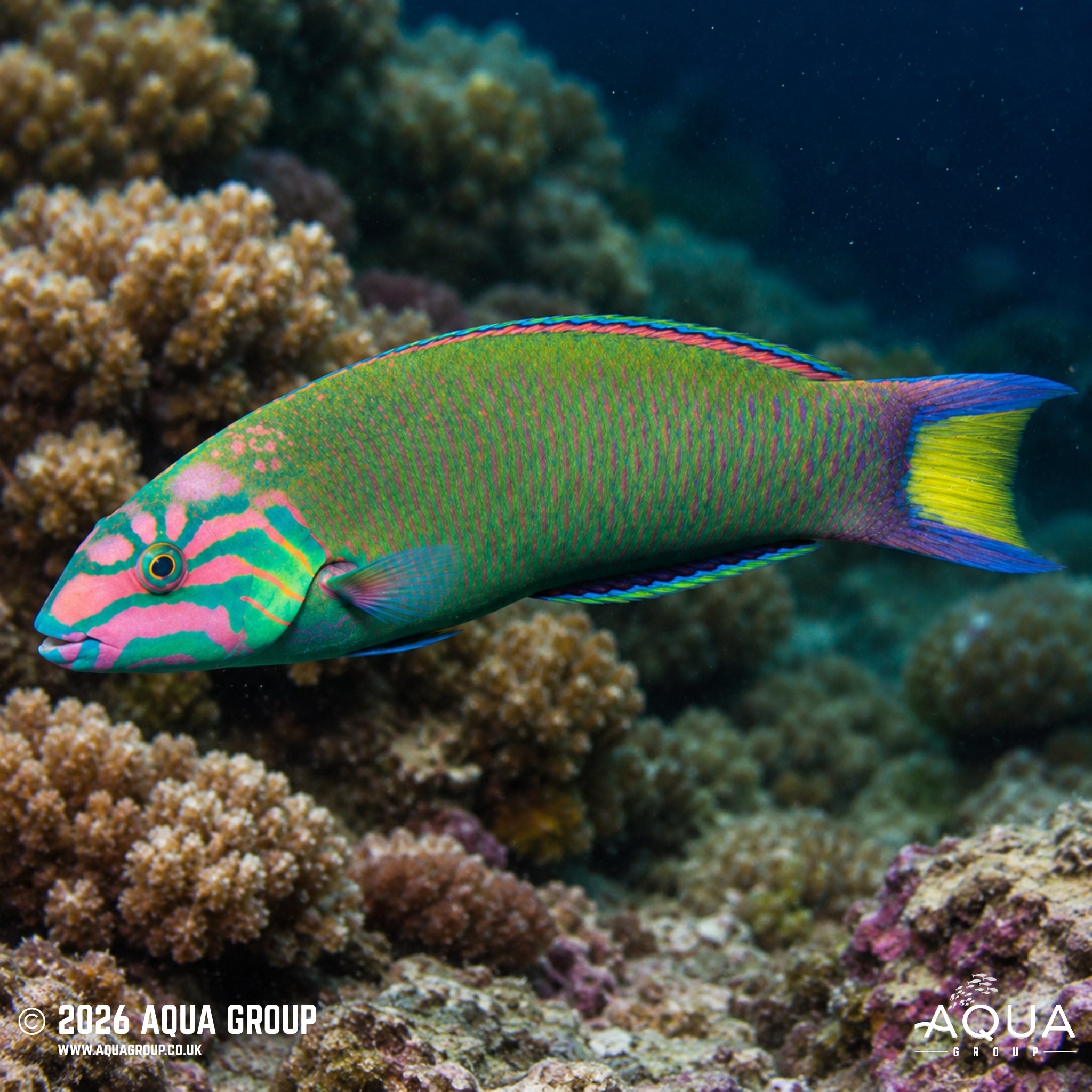
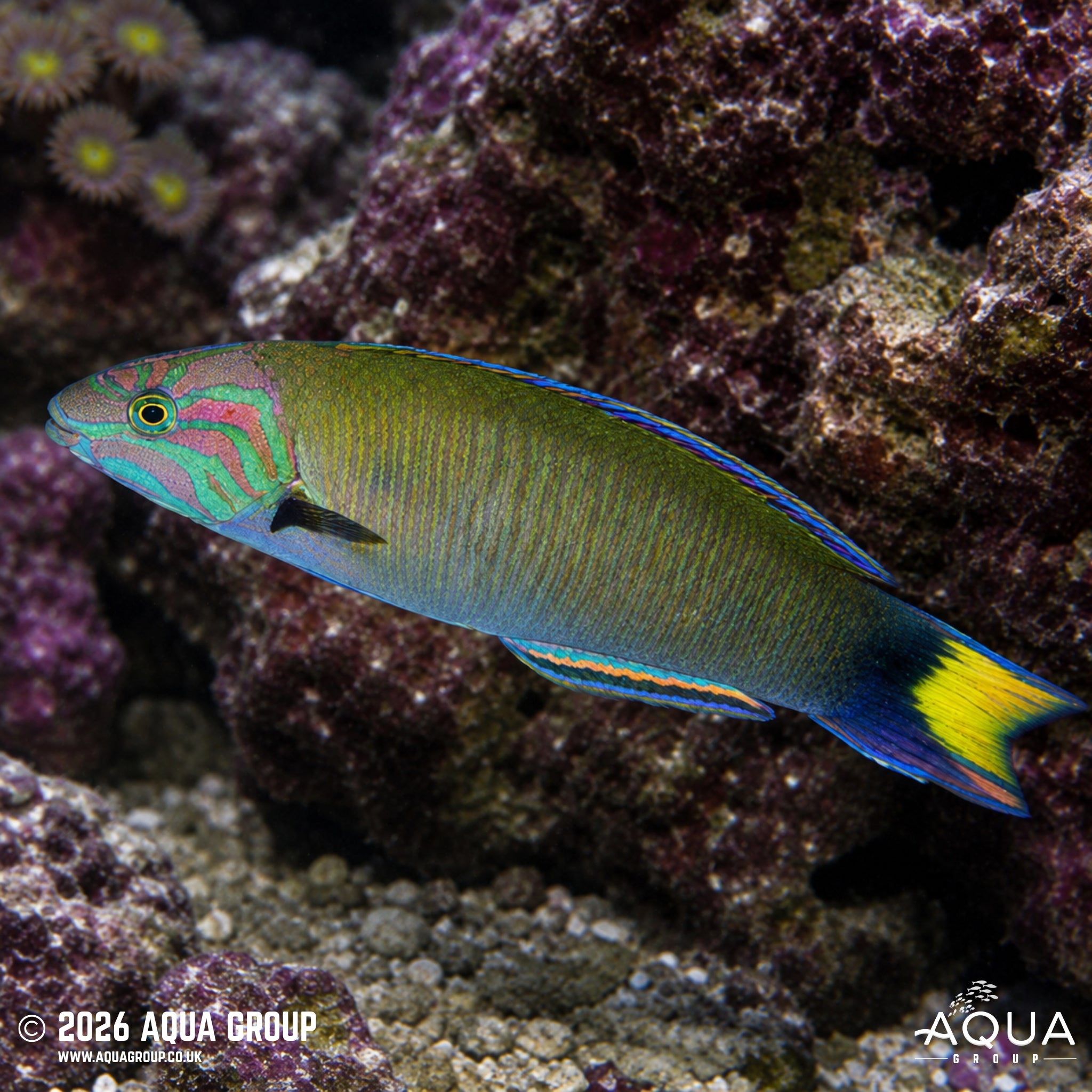
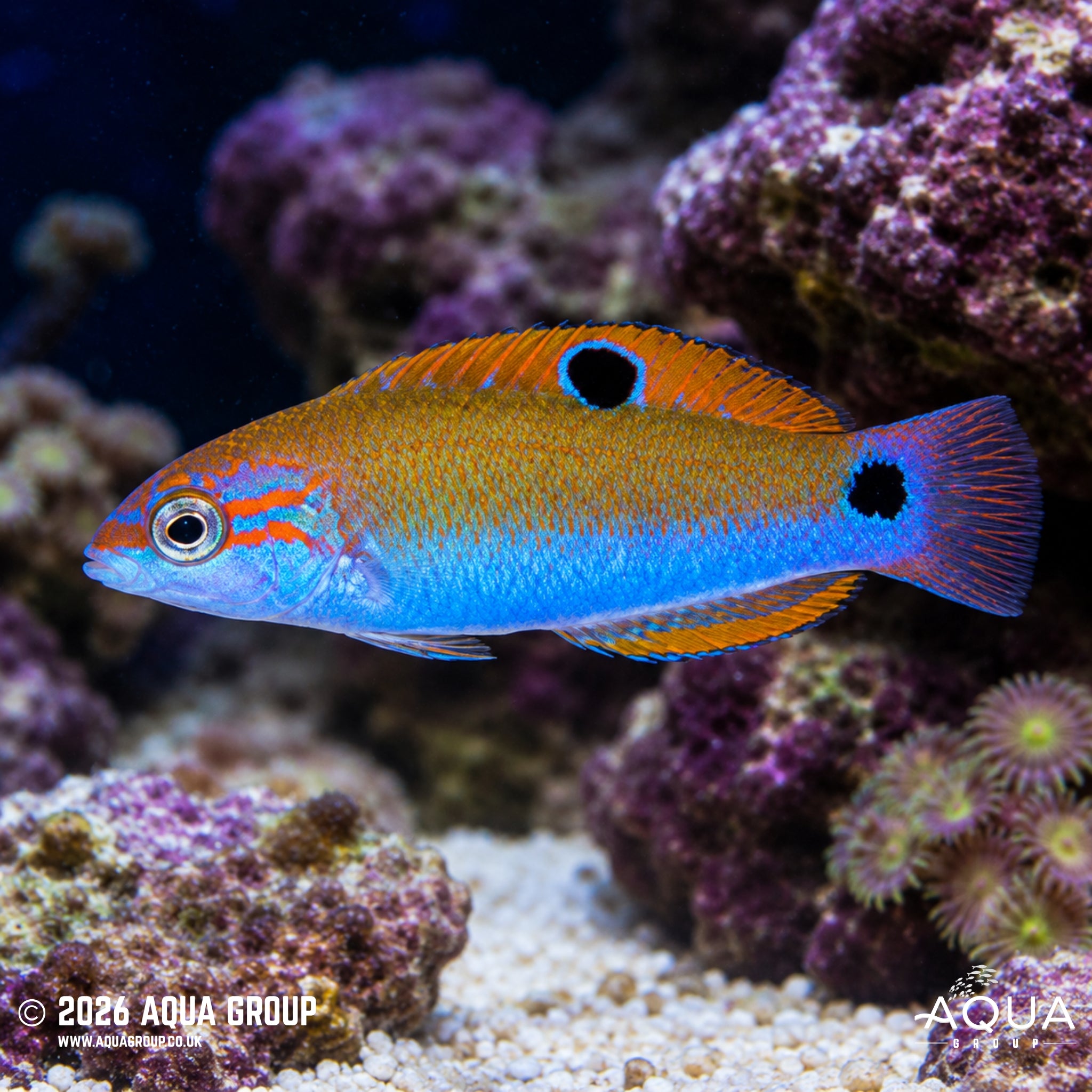
The Moon Wrasse, also commonly sold as the Lyretail Wrasse or Lunare Wrasse, is a bold, fast-moving marine wrasse known for its vivid green-blue body, electric facial markings and the yellow crescent that develops in the tail as it matures. Juveniles look quite different from adults, with darker markings and a more contrasting pattern. Native to the Indo-Pacific, it is an active, intelligent species that thrives in spacious marine aquaria, but its territorial nature and appetite for mobile invertebrates mean it is usually better suited to more experienced marine keepers.
Common Name:
Moon Wrasse, also commonly referred to as Lyretail Wrasse or Lunare Wrasse.
Scientific Name (Latin):
Thalassoma lunare
Maximum Size:
Up to 25 cm in captivity. The species can reach larger sizes in the wild.
Water Type:
Marine.
Origin / Natural Habitat:
Widespread across the Indo-Pacific, from the Red Sea and East Africa to the Line Islands, north to southern Japan and south to Lord Howe Island and northern New Zealand. It is a reef-associated species found in the upper parts of lagoons, coastal reefs and protected seaward reefs, typically in shallow water.
Water Parameters:
Temperature: 24–28°C
pH Range: 8.1–8.4
Salinity: 1.020–1.025 SG
Temperament:
Semi-aggressive to aggressive. This species becomes increasingly territorial with age and can harass smaller, slower or newly added fish, especially in undersized systems. It is usually best added towards the end of stocking.
Diet:
Carnivorous. In the wild it feeds on small invertebrates including crustaceans, molluscs and sea urchins. In captivity it should be offered a varied diet of quality meaty marine foods such as mysis, chopped crustacean foods and other protein-rich frozen or prepared foods.
Minimum Tank Size:
475 litres minimum. Larger aquaria are preferable for adult specimens due to their speed, activity level and territorial behaviour.
Behaviour & Activity:
A highly active, diurnal wrasse that spends much of the day patrolling rockwork and open swimming areas. It is energetic, curious and constantly on the move, so it benefits from plenty of open space as well as rocky cover. A secure lid is advisable, as this species is known to jump.
Reef Safe:
Not Reef Safe
This species may leave corals alone, but it is poorly suited to reef aquaria because it will readily prey on snails, crustaceans, tube worms and other mobile invertebrates. Larger individuals can also be disruptive around rockwork and unsecured frags while hunting for food.
Special Requirements or Care Notes:
Best kept in a large, mature marine aquarium with excellent water quality, strong swimming space and secure rockwork. It does best with robust tankmates and should not be mixed with delicate ornamental invertebrates. A tight-fitting lid is strongly recommended.
Suitable for:
Intermediate to Experienced fishkeepers. It is hardy once established, but its aggression, activity level and compatibility limits make it less suitable for beginner community reef setups. This is an inference from retailer care guidance and species behaviour.
Availability:
Regular in trade.
All images are a visual representation of the fish you will receive, made to be as accurate as possible. Please note that Mother Nature is a wonderful thing, and variation in patterns and colours will occur — that is part of the unique beauty of these animals.
Order and get 45 reward points
Earn points by signing up for our rewards program