


Description
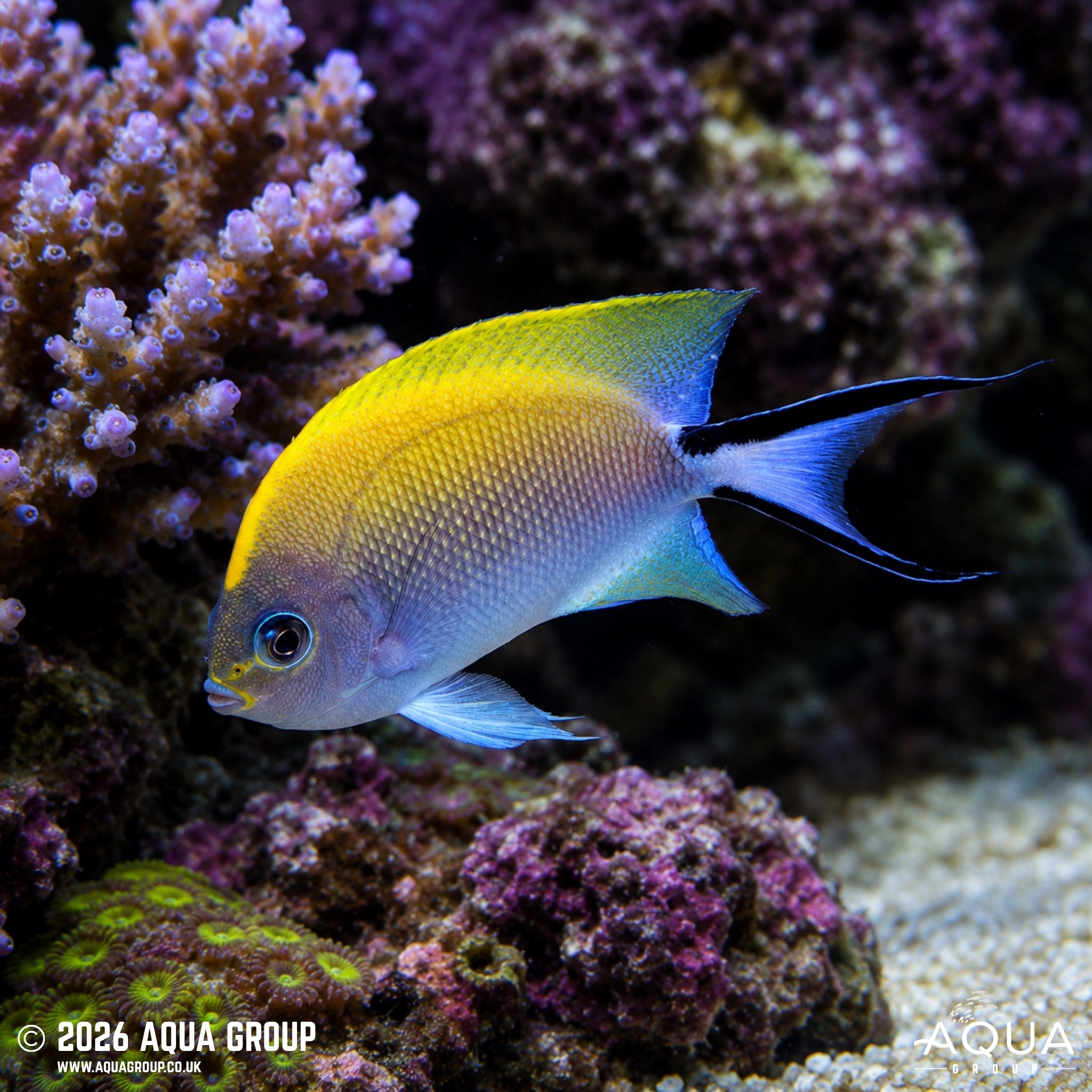
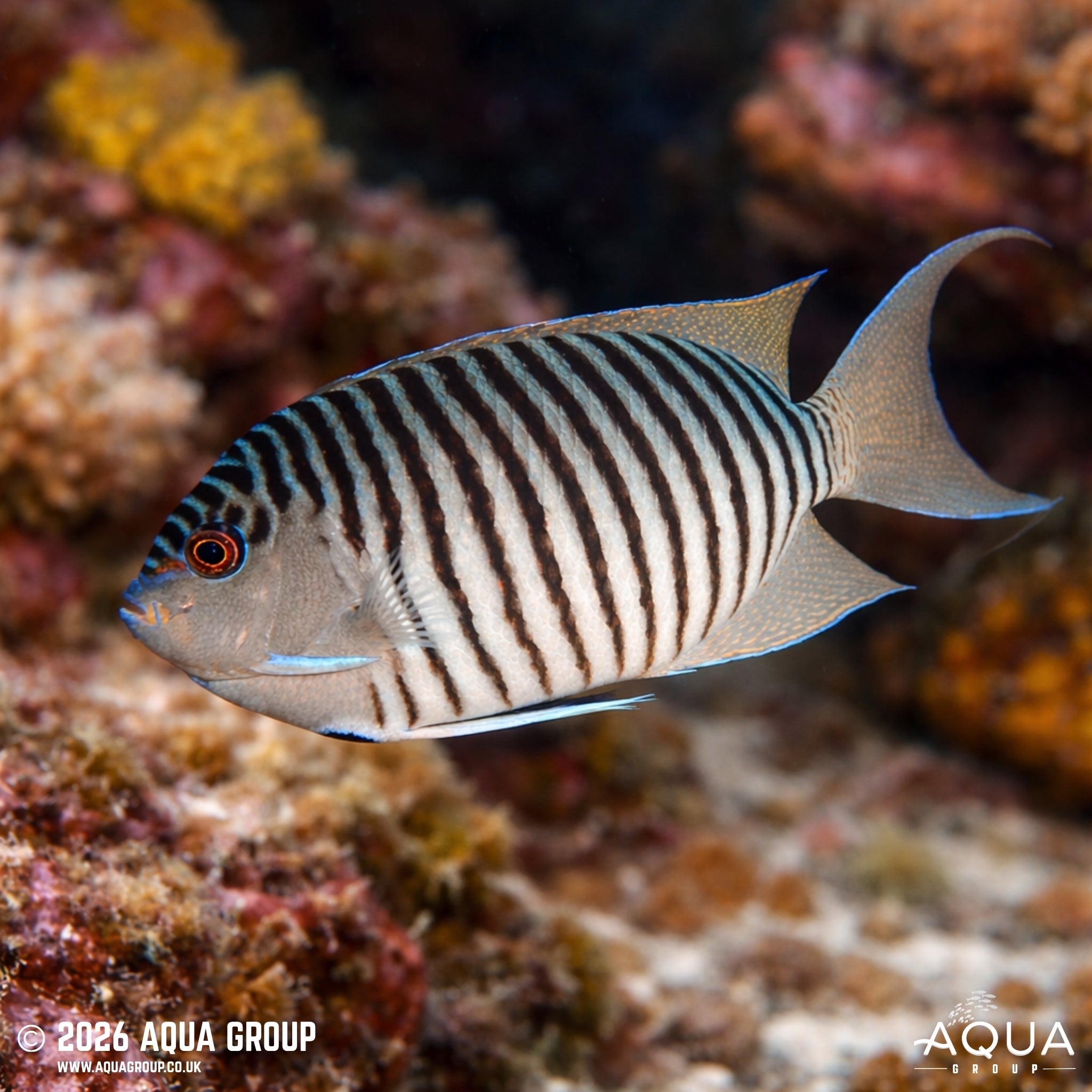
Masked Swallowtail Angel (Genicanthus melanospilos)
The Masked Swallowtail Angel, Genicanthus melanospilos, is a graceful and highly desirable marine angelfish, admired for its elegant body shape, active swimming behaviour and strong sexual dimorphism between males and females. Also commonly known as the Spotbreast Angelfish, Blackspot Angelfish or Swallowtail Angelfish, this species belongs to the Genicanthus group of plankton-feeding angelfish, which are generally considered some of the most reef-suitable angelfish available. It is a beautiful choice for larger mature reef aquariums, offering the angelfish look without the same coral-nipping risk associated with many dwarf or large angelfish.
Common Name:
Masked Swallowtail Angel, Swallowtail Angelfish, Spotbreast Angelfish, Blackspot Angelfish, Blackspot Lyretail Angelfish, Japanese Swallowtail Angelfish.
Scientific Name (Latin):
Genicanthus melanospilos
Maximum Size:
Up to around 18 cm, making it a medium-sized angelfish that requires good open swimming space.
Water Type:
Marine
Origin / Natural Habitat:
Found across the Western Pacific, including Indonesia, Fiji, the Ryukyu Islands, Rowley Shoals, New Caledonia and surrounding reef regions. In the wild, Masked Swallowtail Angels are associated with outer reef slopes, drop-offs and deeper reef areas with good water movement. They are often seen swimming above the reef where they feed from the water column, rather than constantly grazing directly from coral surfaces like many other angelfish.
Water Parameters:
Temperature: 24–27°C
pH Range: 8.1–8.4
Hardness or Salinity: SG 1.020–1.025
Temperament:
Peaceful to mildly semi-aggressive. Masked Swallowtail Angels are generally calmer than many other angelfish and can be kept with a wide range of peaceful to moderately active marine fish. Males may be territorial towards other male Genicanthus angels or similar angelfish, so mixing should be done carefully in suitably large aquariums. A single specimen or established male/female pair is usually the safest option.
Diet:
Omnivorous planktivore. In the wild, Genicanthus angelfish feed heavily on zooplankton and suspended foods in the water column. In the aquarium, offer a varied diet including frozen mysis shrimp, enriched brineshrimp, cyclops, copepod-based foods, finely chopped seafood, high-quality marine pellets, flakes, spirulina foods and specialist angelfish preparations. Smaller, regular feeds are ideal, as this species is naturally adapted to active mid-water feeding.
Minimum Tank Size:
A practical minimum of around 450–500 litres is recommended for a single specimen, with larger aquariums preferred for pairs or mixed reef communities. Provide open swimming space, mature rockwork, stable water quality, strong filtration and good oxygenation.
Behaviour & Activity:
An active, graceful mid-water swimmer that spends much of its time cruising above and around the rockwork. Unlike many Centropyge and Pomacanthus angelfish, it is not primarily a rock-grazing coral picker, which is one reason it is considered more suitable for reef aquariums. Males and females can look noticeably different, with males typically showing stronger black barring, a dark chest spot and more dramatic tail markings, while females are usually more understated. A secure lid is recommended, as startled marine fish can jump.
Reef Safe:
Reef Safe
Masked Swallowtail Angels are widely regarded as one of the more reliable reef-safe angelfish choices. They do not normally nip corals, clam mantles or sessile invertebrates, as they are primarily water-column feeders rather than coral-picking grazers. As with all marine fish, individual behaviour can vary, but this species is generally a strong option for mature reef aquariums.
Special Requirements or Care Notes:
Best kept in a mature, spacious marine aquarium with open swimming areas and peaceful tank mates. This species appreciates stable water quality, regular feeding and good oxygenation. If keeping more than one, a male/female pair is preferable to multiple males. Avoid aggressive tangs, large territorial angels or boisterous fish that may prevent it from feeding confidently. Quarantine and careful acclimation are recommended, especially for imported specimens.
Suitable for:
Intermediate fishkeepers
Availability:
Occasionally available in the marine aquarium trade / Availability can vary depending on sex, size, collection region and supplier
All images are a visual representation of the fish you will receive, made to be as accurate as possible. Please note that Mother Nature is a wonderful thing, and variation in patterns and colours will occur — that is part of the unique beauty of these animals.
Order and get 60 reward points
Earn points by signing up for our rewards program