

Description
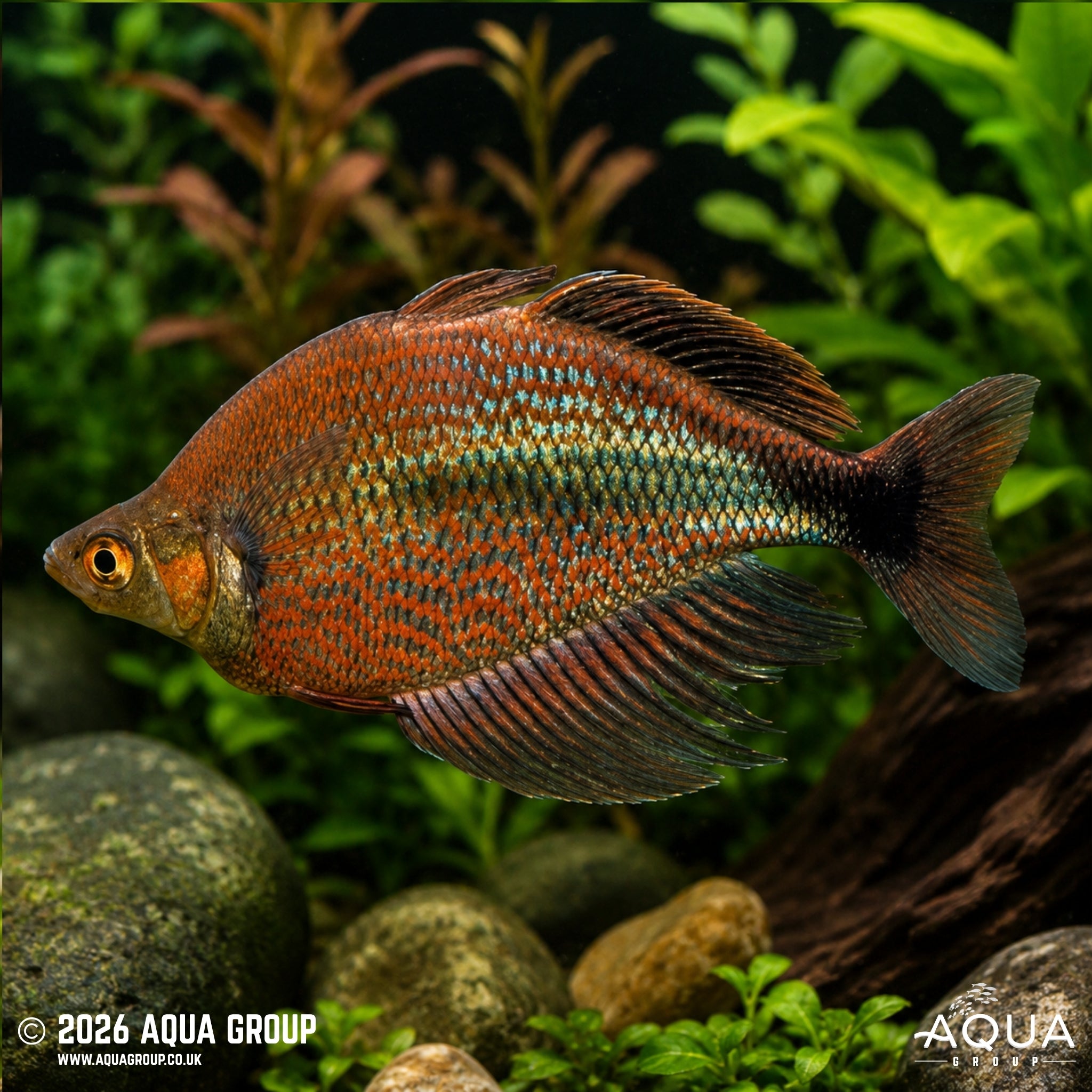
Mamberamo River Rainbowfish (Glossolepis multisquamata)
The Mamberamo River Rainbowfish, Glossolepis multisquamata, is a rare and impressive New Guinea rainbowfish with a deep-bodied shape, active shoaling behaviour and colourful mature males that can develop warm red, orange, gold and metallic tones depending on mood, age and collection locality. Also known as the Mamberamo Rainbowfish or Sepik Rainbowfish, this is a larger, specialist rainbowfish best suited to spacious planted aquariums with open swimming room, excellent water quality and a proper group.
Common Name:
Mamberamo River Rainbowfish, Mamberamo Rainbowfish, Sepik Rainbowfish, Multisquamata Rainbowfish.
Scientific Name (Latin):
Glossolepis multisquamata
Maximum Size:
Usually around 10–12 cm in aquariums, with larger adult males becoming deep-bodied and noticeably more colourful.
Water Type:
Freshwater
Origin / Natural Habitat:
Native to northern New Guinea floodplain systems, including the Mamberamo and Sepik river regions. The Mamberamo locality forms come from lowland floodplain habitats such as oxbow lakes, slow-flowing side channels, swampy lagoons and quiet river-edge areas with little current. Australian import assessment notes Mamberamo-system localities such as Lake Kli near Dabra, Faowi, Pagai and Haya, with typical habitat being oxbow lakes and very slow water.
Water Parameters:
Temperature: 24–28°C
pH Range: 7.0–8.0
Hardness or Salinity: Moderately soft to moderately hard freshwater; best in stable, clean water with good oxygenation.
Temperament:
Peaceful and active. This is a sociable rainbowfish that should be kept in a group, where males can display naturally and aggression is spread. It is not aggressive, but its size and constant movement mean it is better with medium, confident community fish rather than very timid nano species.
Diet:
Omnivorous with a strong small-invertebrate feeding element. In nature, Glossolepis multisquamata feeds mainly on small invertebrates taken from mid-water or the surface. In the aquarium, offer quality flakes, small floating and sinking pellets, granules, frozen daphnia, brineshrimp, mysis, cyclops, mosquito larvae and occasional live foods. A varied diet helps males show their best colour.
Minimum Tank Size:
A minimum of 250 litres is recommended for a group, with larger aquariums strongly preferred. A long aquarium with open swimming space is much better than a small tall tank.
Behaviour & Activity:
An active mid-to-upper level shoaling fish that spends much of its time swimming in open water and displaying among its own kind. Keep at least 6 individuals, with 8–10 or more preferred for confidence and natural behaviour. Mature males may intensify their colours, deepen in body shape and display with extended fins. Provide open swimming lanes, planted margins, wood, shaded areas and calm-to-moderate flow rather than a high-current river tank.
Aquarium Category:
Community Fish
Suitable with other peaceful medium-sized community fish such as larger tetras, rainbowfish, peaceful barbs, rasboras, Corydoras, peaceful loaches, non-aggressive catfish and calm cichlids that enjoy similar water. Avoid tiny fish that may be intimidated, aggressive cichlids, fin-nippers, very slow feeders and cramped community aquariums.
Special Requirements or Care Notes:
This is a larger and rarer rainbowfish that should be kept in a mature, well-filtered aquarium with excellent water quality. Provide regular water changes, stable temperature and a secure lid, as rainbowfish can jump when startled. Keep in groups rather than singly or in pairs. Colour varies between localities and individuals, and young fish may look plain compared with mature males. Avoid mixing different locality forms if breeding purity is important.
Suitable for:
Intermediate fishkeepers
Availability:
Rare or occasional in trade / Specialist rainbowfish import or captive-bred locality strain where relevant
All images are a visual representation of the fish you will receive, made to be as accurate as possible. Please note that Mother Nature is a wonderful thing, and variation in patterns and colours will occur — that is part of the unique beauty of these animals.
Order and get 8 reward points
Earn points by signing up for our rewards program