

Description
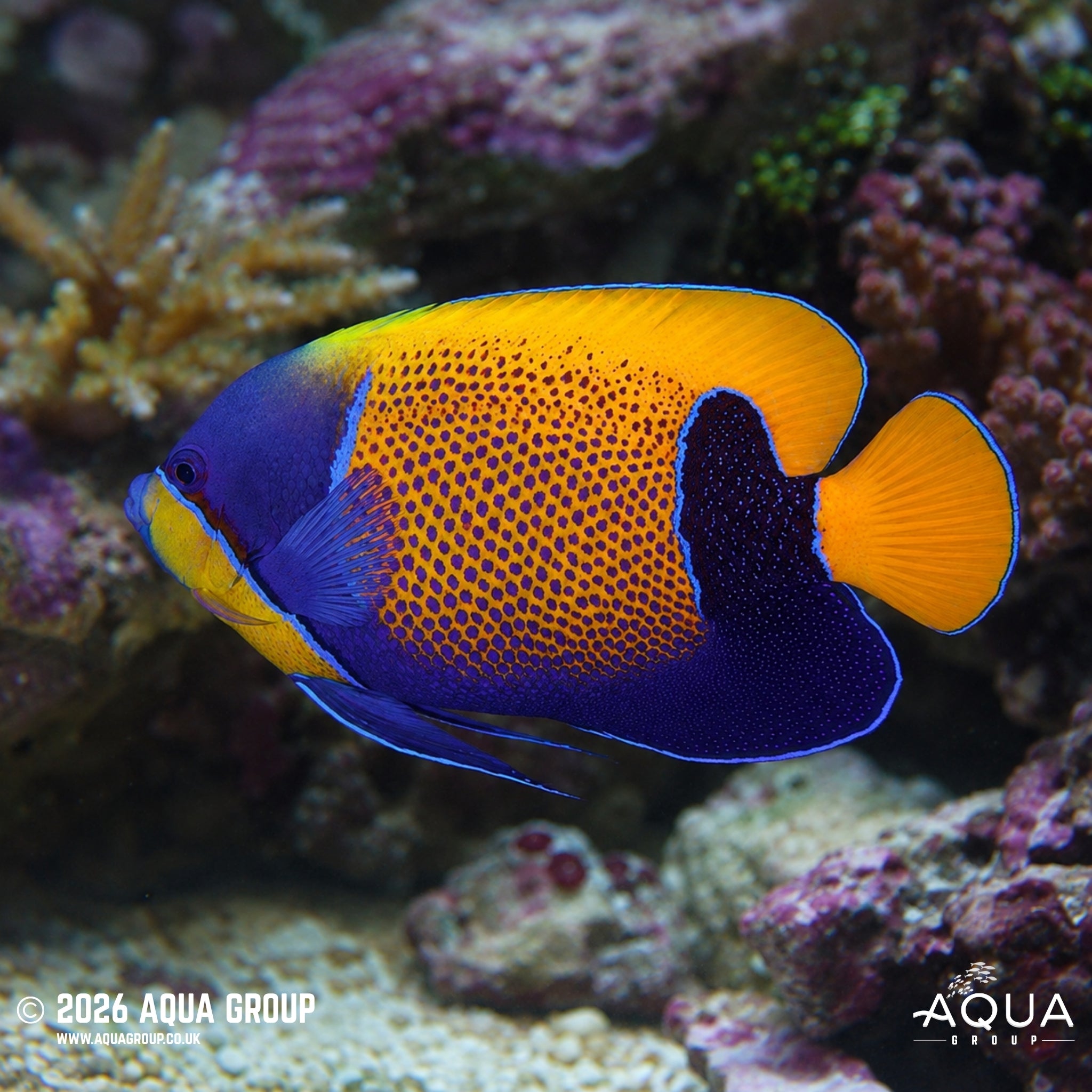
Majestic Angel (Pomacanthus navarchus)
The Majestic Angel is a striking large marine angelfish known for its deep blue body, bright yellow flanks and elegant contrasting facial markings. Also called the Blue Girdled Angelfish, it is one of the more refined-looking Pomacanthus species and becomes increasingly impressive as it matures. Although generally less aggressive than some other large angelfish, it still requires a spacious, mature aquarium, carefully selected tankmates and a varied diet rich in marine-based foods.
Common Name:
Majestic Angel, Majestic Angelfish, Blue Girdled Angelfish
Scientific Name (Latin):
Pomacanthus navarchus
Maximum Size:
Approximately 28 cm
Water Type:
Marine
Origin / Natural Habitat:
The Majestic Angel occurs throughout the Indo-West Pacific, including Indonesia, Papua New Guinea, the Philippines and northern Australia.
It inhabits coral-rich lagoons, channels and protected reef slopes, often remaining close to caves, overhangs and complex rockwork. Adults are commonly found around areas with abundant sponge growth and established reef structure.
Water Parameters:
Temperature: 24–26°C
pH Range: 8.1–8.4
Salinity: SG 1.024–1.026
Nitrate: Low and stable
Ammonia/Nitrite: 0 ppm
Temperament:
Semi-Aggressive / Territorial
The Majestic Angel is generally less aggressive than some other large Pomacanthus species but can still become territorial once established.
It is usually best kept as the only large angelfish unless the aquarium is exceptionally spacious and introductions are carefully managed.
Peaceful but robust tankmates are usually the best choice, while very timid fish may become intimidated.
Diet:
Omnivore / Sponge Feeder
The Majestic Angel naturally feeds on sponges, tunicates, algae and other encrusting reef organisms.
In the aquarium, provide a varied diet including specialist marine angelfish foods containing sponge, quality marine pellets, spirulina, nori, frozen mysis, chopped prawn and other marine-based foods.
Several smaller meals throughout the day are preferable and help maintain healthy body condition and strong colouration.
Minimum Tank Size:
Approximately 500 litres
Its adult size, territorial behaviour and need for established rockwork mean the Majestic Angel requires a spacious aquarium with plenty of horizontal swimming room.
Behaviour & Activity:
The Majestic Angel is an active but deliberate swimmer that spends much of its time exploring rockwork and grazing reef surfaces.
It naturally remains close to caves, overhangs and sheltered reef structure and benefits from a well-aquascaped aquarium with numerous retreat areas.
Juveniles differ noticeably from adults and gradually develop the distinctive blue and yellow adult pattern as they mature.
Reef Safe:
With Caution
The Majestic Angel should be considered reef safe with caution.
Its natural diet includes sponges and other encrusting organisms, and aquarium specimens may nip at fleshy LPS corals, soft corals, zoanthids and clam mantles.
Individual behaviour varies considerably, so some specimens coexist successfully in reef systems while others become persistent coral pickers.
Special Requirements or Care Notes:
Provide a mature marine aquarium with extensive live rock, caves and open swimming space.
A varied diet containing sponge-based foods is particularly important for long-term health.
Newly introduced specimens can be shy and may spend significant time hidden until they become comfortable with their surroundings.
Avoid highly aggressive tankmates, particularly during the settling-in period.
Strong filtration, good oxygenation and stable water chemistry are essential.
Careful acclimation and quarantine are recommended, as large marine angelfish can be susceptible to transport stress and external parasites.
Suitable for:
Intermediate to Experienced
Availability:
Regularly available
All images are a visual representation of the fish you will receive, made to be as accurate as possible. Please note that Mother Nature is a wonderful thing, and variation in patterns and colours will occur — that is part of the unique beauty of these animals.
Order and get 89 reward points
Earn points by signing up for our rewards program