


Description
Long Tail Fairy Wrasse (Cirrhilabrus lanceolatus)
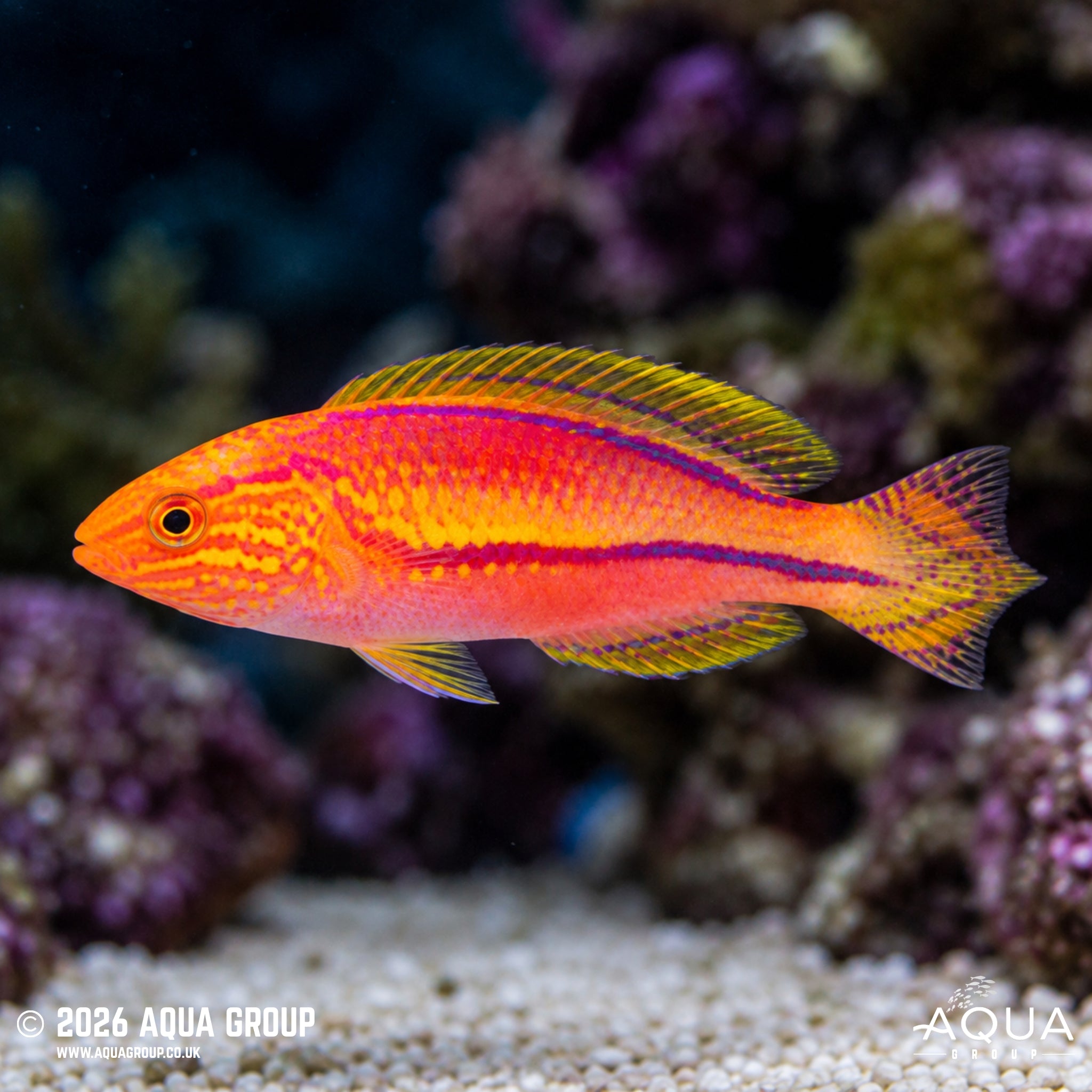
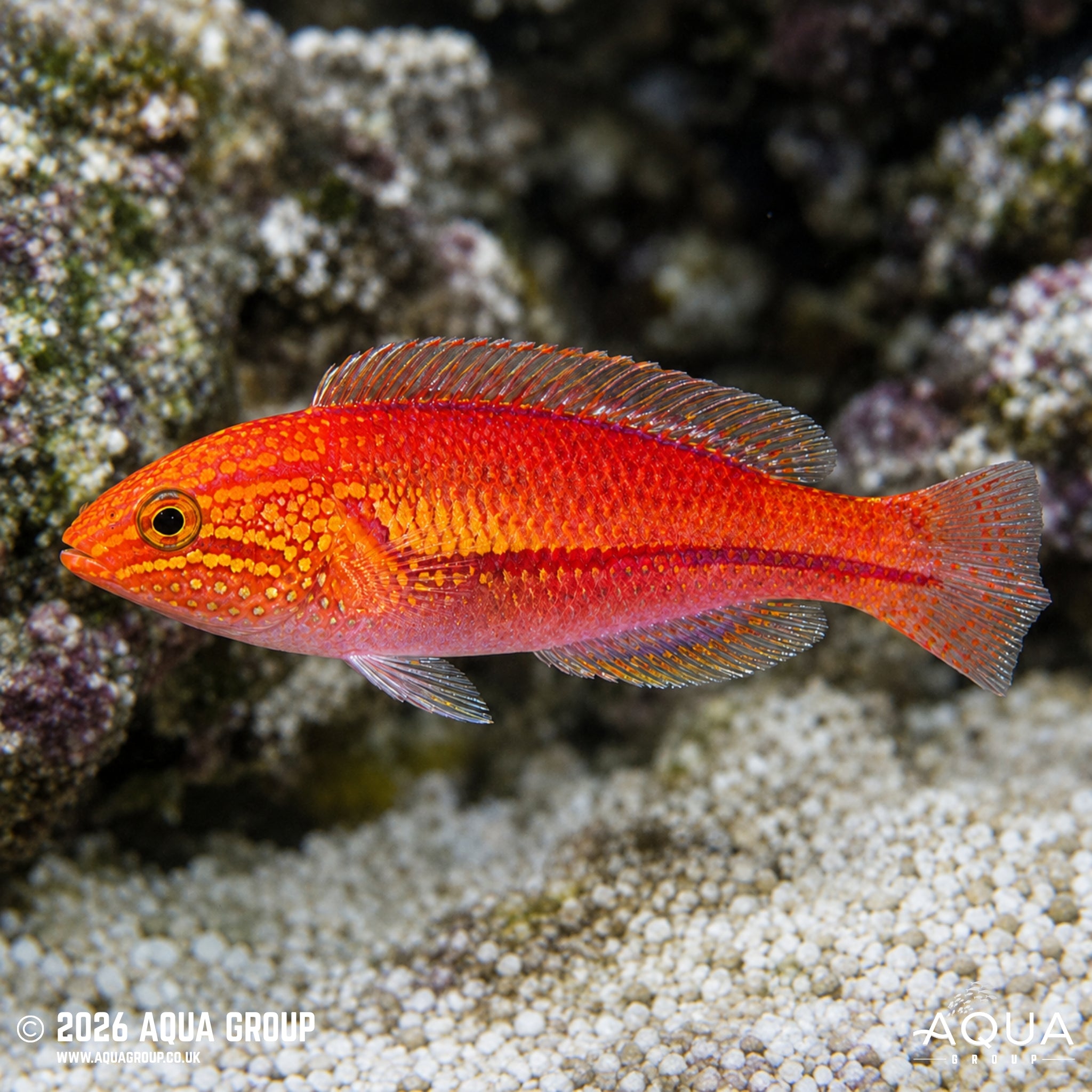
The Long Tail Fairy Wrasse, Cirrhilabrus lanceolatus, is a rare and elegant Western Pacific reef fish recognised by its slender body, reddish to pink colouration, delicate blue markings and distinctive extended tail. Also known as the Long-tailed Wrasse, mature males develop the most pronounced lance-shaped tail and vivid display colours. This active zooplankton feeder naturally inhabits deeper, steeply sloping reefs around Japan and nearby western Pacific regions. Its peaceful temperament, compact adult size and excellent coral compatibility make it a highly desirable addition to established reef aquariums, although its rarity and deeper-water origin make it best suited to experienced marine fishkeepers.
Common Name:
Long-tail Fairy Wrasse, Long-tailed Fairy Wrasse, Long-tailed Wrasse, Lance-tail Fairy Wrasse.
Scientific Name (Latin):
Cirrhilabrus lanceolatus
Maximum Size:
Usually around 9–10 cm in total length when fully grown, with a reported scientific maximum of approximately 8.8 cm standard length.
Water Type:
Marine
Origin / Natural Habitat:
Western Pacific, with confirmed records from Japan and the Philippines and photographic records from Palau. The type locality is Okinawa, Japan.
Long-tail Fairy Wrasses inhabit steep seaward reef slopes at depths of approximately 42–60 metres. They swim above rocky and coral reef structure while feeding on passing zooplankton and retreat rapidly into caves and narrow crevices when threatened.
Water Parameters:
Temperature: 23–27°C
pH Range: 8.1–8.4
Hardness or Salinity: Marine salinity 1.023–1.026 specific gravity; maintain stable salinity, alkalinity, strong oxygenation and consistently high water quality.
Temperament:
Peaceful, active and generally suitable for calm reef communities. Long-tail Fairy Wrasses normally coexist well with unrelated marine fish but may become territorial towards closely related Cirrhilabrus species or similarly coloured males.
Avoid aggressive, highly dominant or exceptionally boisterous tank mates that may intimidate the fish or prevent it from feeding. Keeping multiple mature males is not recommended unless the aquarium is exceptionally spacious and carefully structured.
Diet:
Carnivorous zooplankton feeder. In the wild, this species feeds on copepods, tiny crustaceans and other planktonic organisms captured from the water column above the reef.
In the aquarium, offer enriched mysis shrimp, Artemia, copepods, Calanus, finely chopped krill, small marine pellets and high-quality marine flakes. Feed small portions at least two or three times daily to support its active metabolism and maintain good body condition.
Minimum Tank Size:
A minimum aquarium volume of approximately 250 litres is recommended for one adult, with generous open swimming room and extensive mature rockwork. A larger aquarium is preferable when maintaining several fairy wrasses or a compatible social group.
Behaviour & Activity:
An active daylight-swimming wrasse that spends much of its time moving through the middle and upper areas of the aquarium while feeding from the water column.
Mature males may intensify their reddish, pink and blue colouration, spread their fins and perform rapid display swimming when interacting with females or rival wrasses. The extended central portion of the tail becomes particularly noticeable in established adult males.
At night, the fish retreats into a narrow rock crevice and may surround itself with a thin protective mucus cocoon. Unlike many Halichoeres and leopard wrasses, the Long-tail Fairy Wrasse does not normally bury itself in sand.
Reef Safe:
Reef Safe
Long-tail Fairy Wrasses do not normally damage corals, anemones, clams or established ornamental invertebrates. They feed primarily on small planktonic organisms in the water column and are well suited to mixed reef aquariums.
Very small planktonic crustaceans and larvae may be consumed as part of their natural diet, but established ornamental shrimps, crabs and snails are generally ignored.
Special Requirements or Care Notes:
A tightly fitted aquarium cover or fine mesh lid is essential because fairy wrasses are exceptionally capable jumpers. Cover all gaps around cables, pipework, overflow boxes and feeding hatches.
Provide extensive secure rockwork containing caves and narrow sleeping crevices alongside generous open swimming space. A sand bed is optional because this species sleeps within rockwork rather than burying itself.
Because the Long-tail Fairy Wrasse originates from deeper reef habitats, newly imported specimens may initially be shy under intense aquarium lighting. Provide shaded areas and consider reducing light intensity temporarily while the fish settles.
Introduce closely related fairy wrasses carefully and add the largest or most dominant male last where possible. An acclimation box can help assess aggression before release. A social group should normally consist of one male with one or more females, although females may transition into males if no dominant male is present.
Select only an alert specimen with clear eyes, intact fins, an undamaged mouth and a well-filled body. Confirm that it accepts suitable aquarium foods before purchase whenever possible, as rare deeper-water wrasses can lose condition quickly if they fail to feed.
Offer frequent varied meals and avoid highly competitive feeders. Slow acclimation and quarantine are recommended, with close monitoring for rapid breathing, faded colour, mouth damage, external parasites or loss of appetite following transport.
Suitable for:
Intermediate to experienced fishkeepers
Availability:
Rare
All images are a visual representation of the fish you will receive, made to be as accurate as possible. Please note that Mother Nature is a wonderful thing, and variation in patterns and colours will occur — that is part of the unique beauty of these animals.
Order and get 80 reward points
Earn points by signing up for our rewards program