

Description
Black Spotted Leopard Wrasse (Macropharyngodon meleagris)
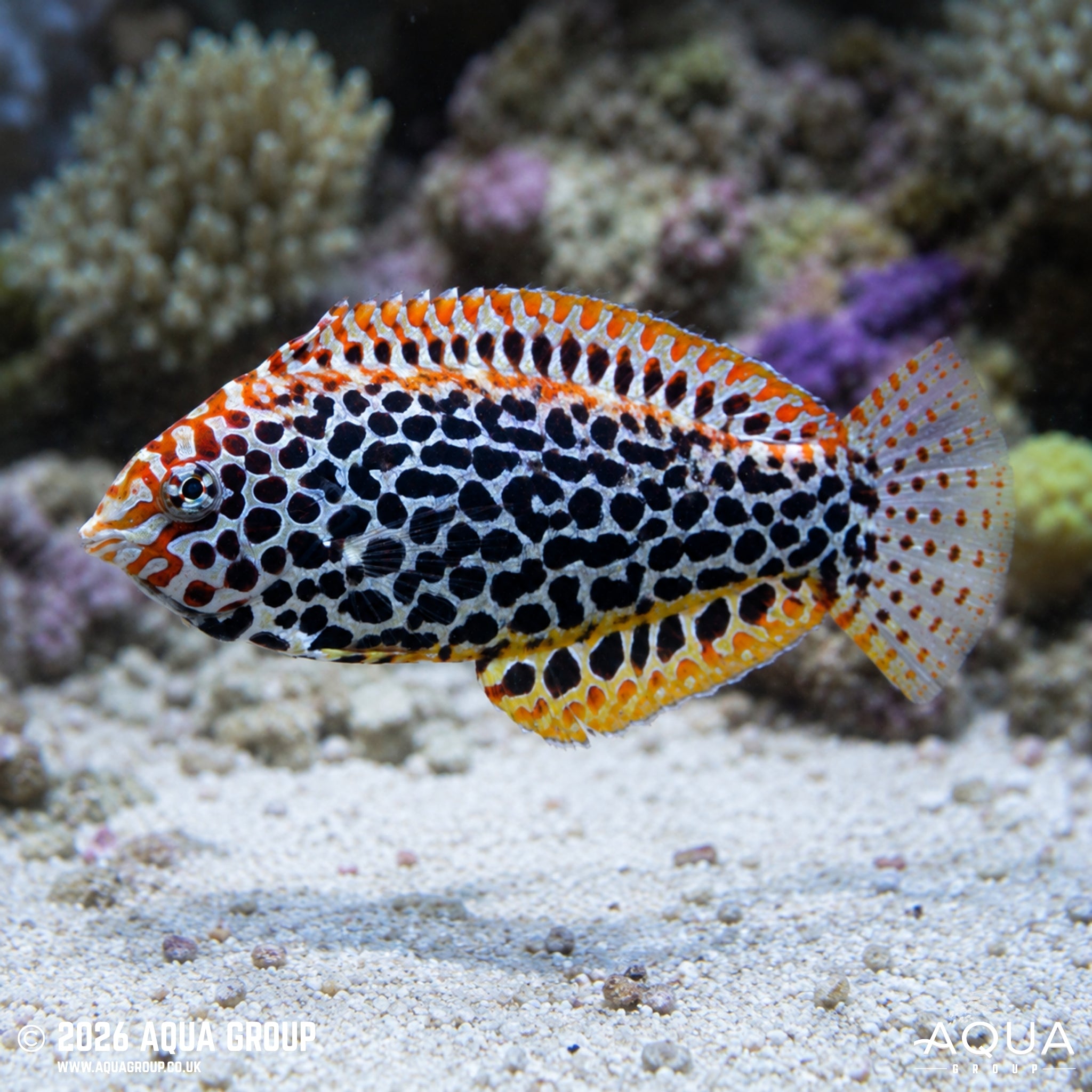
The Black Spotted Leopard Wrasse, Macropharyngodon meleagris, is a beautiful and highly sought-after marine wrasse, admired for its intricate spotted patterning, active foraging behaviour and elegant movement through the reef aquarium. Also known as the Blackspotted Wrasse, Leopard Wrasse or Guinea Fowl Wrasse, this species can be a stunning addition to mature reef systems. However, it is a specialist wrasse that requires stable water quality, a suitable sand bed, peaceful tank mates and regular access to natural microfauna, making it best suited to experienced marine fishkeepers.
Common Name:
Black Spotted Leopard Wrasse, Blackspotted Wrasse, Leopard Wrasse, Guinea Fowl Wrasse, Reticulated Wrasse.
Scientific Name (Latin):
Macropharyngodon meleagris
Maximum Size:
Up to around 15 cm, making it a medium-sized wrasse that needs good swimming and foraging space.
Water Type:
Marine
Origin / Natural Habitat:
Found across the Indo-Pacific, from the eastern Indian Ocean through to the western and central Pacific islands of Oceania. In the wild, Black Spotted Leopard Wrasse inhabit subtidal reef flats, outer lagoon reefs and seaward reef areas, usually where sand, rubble and coral structure are mixed together. They spend much of the day searching across the substrate and reef surface for small natural foods, then bury into the sand for security when resting or startled.
Water Parameters:
Temperature: 24–27°C
pH Range: 8.1–8.4
Hardness or Salinity: SG 1.020–1.025
Temperament:
Peaceful. Black Spotted Leopard Wrasse are best kept with calm, reef-safe tank mates and should not be housed with aggressive wrasses, predatory fish or overly boisterous feeders. They may be shy when first introduced and can be outcompeted by faster, more aggressive fish if feeding is not carefully managed.
Diet:
Carnivorous micro-predator. In the wild, this species feeds on small benthic invertebrates, including tiny shelled prey and other organisms picked from the substrate and reef surface. In the aquarium, offer a varied diet of frozen mysis shrimp, enriched brineshrimp, cyclops, copepod-based foods, finely chopped meaty marine foods and high-quality small marine pellets if accepted. A mature aquarium with natural pods and microfauna is strongly recommended, as newly introduced specimens may take time to adapt to prepared foods.
Minimum Tank Size:
A practical minimum of around 350–500 litres is recommended for a single specimen, with larger aquariums preferred for long-term success. The aquarium should be mature, stable and include established rockwork, open foraging areas and a suitable sand bed.
Behaviour & Activity:
An active daytime forager that spends much of its time moving across rockwork, rubble and sand while picking at small natural foods. Like other leopard wrasses, it sleeps buried in the sand and will also dive into the substrate when frightened. A soft, fine sand bed is essential, as sharp or coarse substrates can damage the fish when it buries. Newly introduced specimens may hide in the sand for long periods, especially during the first few days or while adjusting to a different light cycle.
Reef Safe:
Reef Safe
Black Spotted Leopard Wrasse are considered reef safe and do not normally nip corals, clam mantles or sessile invertebrates. They are well suited to mature reef aquariums, although very tiny ornamental crustaceans and natural microfauna may be eaten as part of their normal feeding behaviour.
Special Requirements or Care Notes:
Best kept in a mature, stable reef aquarium with a soft sand bed, peaceful tank mates and strong natural food availability. Avoid bare-bottom aquariums, sharp crushed coral substrates and aggressive feeding competition. This species can be delicate during acclimation and may refuse prepared foods at first, so careful quarantine, low-stress introduction and frequent small feeds are important. Do not dig for the fish if it buries, as this is normal behaviour and disturbing it can cause stress or injury.
Suitable for:
Experienced fishkeepers
Availability:
Specialist marine wrasse / Availability can vary depending on collection, import, sex, size and supplier
All images are a visual representation of the fish you will receive, made to be as accurate as possible. Please note that Mother Nature is a wonderful thing, and variation in patterns and colours will occur — that is part of the unique beauty of these animals.
Order and get 45 reward points
Earn points by signing up for our rewards program