

Description
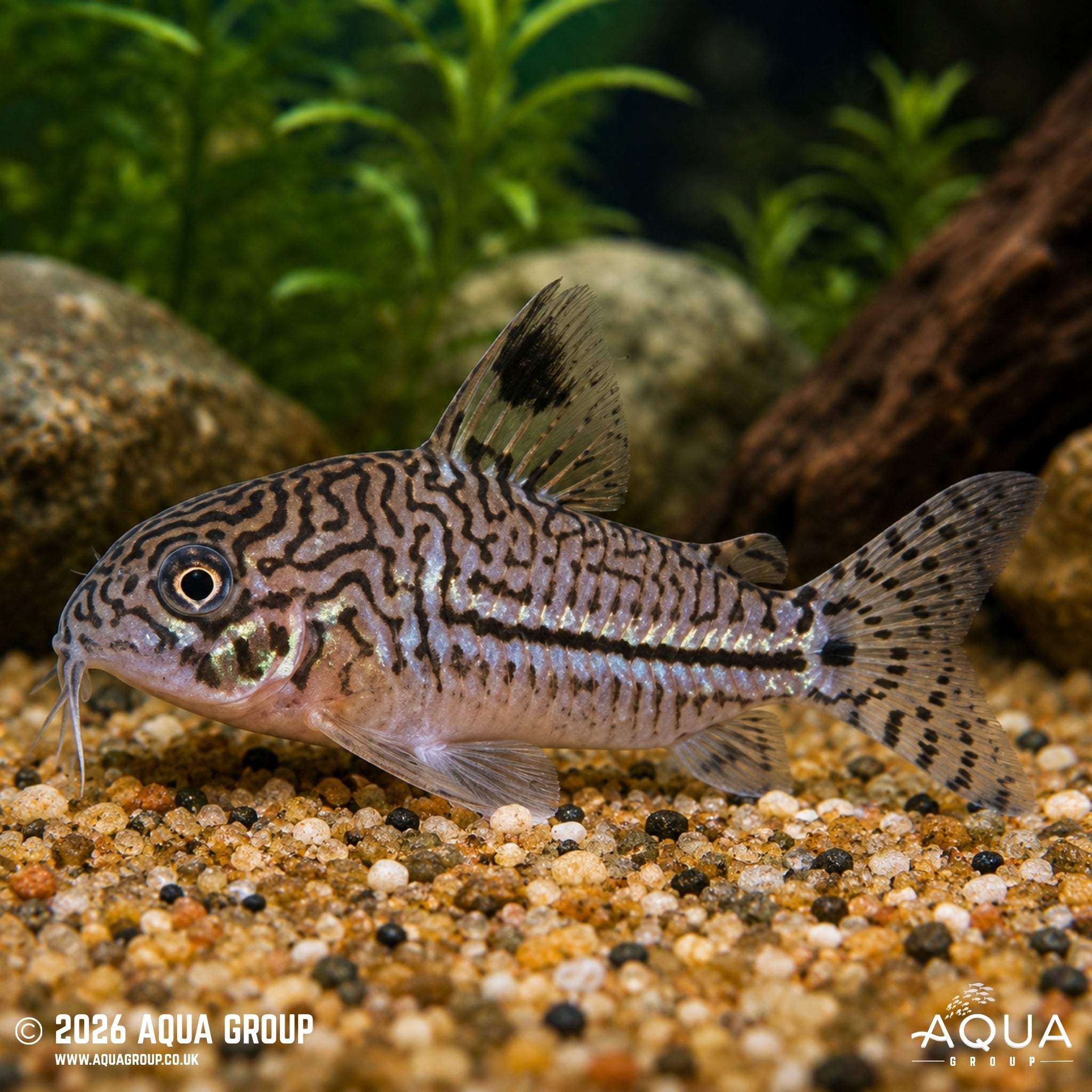
Leopard Corydoras (Hoplisoma trilineatum)
The Leopard Corydoras, Hoplisoma trilineatum, is a peaceful South American cory-type catfish with a silver body covered in dark reticulated markings, a strong horizontal side stripe and a bold patterned dorsal fin. Also known as the Three-lined Cory, Three-stripe Cory or False Julii Cory, this hardy and sociable bottom-dweller is one of the most popular Corydoras-type catfish for community aquariums. It is best kept in groups over soft sand, where its natural foraging behaviour and calm, active personality can be seen.
Common Name:
Leopard Corydoras, Leopard Cory, Three-lined Cory, Three-stripe Cory, False Julii Cory, Three-line Corydoras.
Scientific Name (Latin):
Hoplisoma trilineatum
Still widely traded as Corydoras trilineatus.
Maximum Size:
Usually around 5–6 cm.
Water Type:
Freshwater
Origin / Natural Habitat:
Native to tropical South America, including parts of the Amazon basin and coastal river systems. It is recorded from Brazil, Colombia, Peru and Suriname, where it inhabits freshwater rivers, streams, tributaries and quieter marginal areas close to the substrate. In the aquarium trade, it is commonly seen as a hardy captive-bred or farmed community catfish.
Water Parameters:
Temperature: 22–26°C
pH Range: 6.0–7.8
Hardness or Salinity: Soft to moderately hard freshwater; adaptable when captive-bred, but clean and stable water is essential.
Temperament:
Peaceful and sociable. Leopard Corydoras are excellent community fish and should not be kept alone. They do best with other calm species that will not bully them or prevent food from reaching the bottom.
Diet:
Omnivorous bottom-feeder. Offer sinking catfish pellets, fine granules, wafers, frozen bloodworm, daphnia, brineshrimp, cyclops and other small meaty foods. They will graze around the substrate, but should not be expected to live only on leftovers from other fish.
Minimum Tank Size:
A minimum of 75 litres is recommended for a small group, with larger aquariums preferred for community setups. A longer tank footprint is more useful than a tall aquarium, as this species spends most of its time on or near the bottom.
Behaviour & Activity:
An active bottom-dwelling shoaler that spends much of its day sifting sand, exploring plants and resting together in loose groups. Keep at least 6 individuals, with 8 or more preferred for confidence and natural behaviour. Like other cory-type catfish, it may occasionally dart to the surface to gulp air, so always leave clear access to the water surface.
Aquarium Category:
Community Fish
Suitable with peaceful tetras, rasboras, small barbs, livebearers, dwarf cichlids with care, gouramis, rainbowfish and other non-aggressive community species. Avoid large predatory fish, aggressive cichlids, fin-nippers, very boisterous bottom feeders or any fish large enough to swallow them.
Special Requirements or Care Notes:
Provide soft sand or very smooth fine gravel to protect the barbels and underside. Add plants, driftwood, leaf litter, shaded areas and open patches for foraging. Keep the aquarium mature, well-filtered and regularly maintained, as cory-type catfish are sensitive to poor substrate hygiene and unstable water quality. Take care with identification, as Leopard Corydoras are frequently sold as Julii Corydoras; true Julii Cory are less commonly seen and have a different spotting pattern.
Suitable for:
Beginner to intermediate fishkeepers
Availability:
Common in trade / Captive-bred or farmed where relevant
All images are a visual representation of the fish you will receive, made to be as accurate as possible. Please note that Mother Nature is a wonderful thing, and variation in patterns and colours will occur — that is part of the unique beauty of these animals.
Order and get 5 reward points
Earn points by signing up for our rewards program