

Description
Koi Angelfish (Pterophyllum scalare)
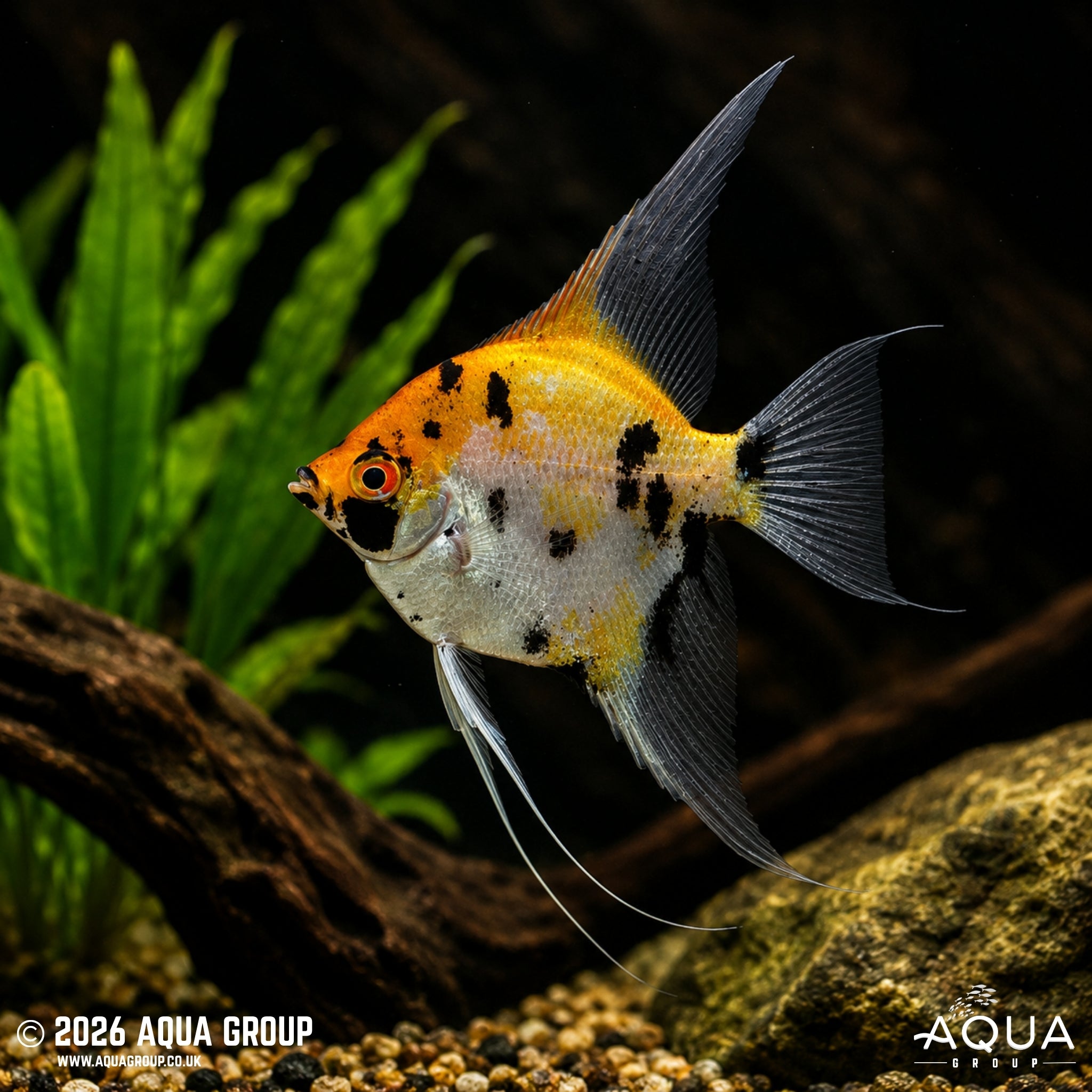
The Koi Angelfish is a beautiful captive-bred form of the classic freshwater angelfish, admired for its tall triangular body shape, long flowing fins and striking mix of white, orange, yellow and black markings. Its colour pattern is inspired by koi carp, giving each fish a unique appearance with natural variation in orange coverage, dark marbling and pale body areas. Elegant, graceful and full of presence, this variety makes an excellent centrepiece fish for a mature tropical community aquarium with calm, carefully chosen tank mates.
Common Name:
Koi Angelfish. Also commonly referred to as Koi Angel, Koi Freshwater Angelfish, Marbled Koi Angelfish, Domestic Angelfish or Freshwater Angel.
Scientific Name (Latin):
Pterophyllum scalare
Maximum Size:
Around 15 cm in body length, but the full height can be much greater due to the extended dorsal and anal fins. A tall aquarium is strongly recommended to allow proper fin development and natural movement.
Water Type:
Freshwater
Origin / Natural Habitat:
The Koi Angelfish is a captive-bred aquarium strain. The wild form of Pterophyllum scalare is native to the Amazon River basin in South America, including areas of Peru, Colombia and Brazil. In the wild, angelfish inhabit slow-moving waters, swamps and flooded areas with dense aquatic or riverside vegetation, submerged roots, branches and calmer shaded zones.
Water Parameters:
Temperature: 24–28°C
pH Range: 6.0–7.8
Hardness: soft to moderately hard water
Temperament:
Generally peaceful to semi-aggressive. Angelfish are usually calm and elegant, but they are still cichlids and may become territorial, especially when pairing or breeding. They should be kept with peaceful fish that are not small enough to be eaten and not likely to nip their long fins.
Diet:
Omnivorous with a strong preference for small animal-based foods. It should be offered a varied diet including quality angelfish flakes, slow-sinking pellets, granules, frozen bloodworm, brineshrimp, mysis, daphnia and occasional live foods. A varied diet helps support colour, growth, fin condition and breeding health.
Minimum Tank Size:
A practical recommendation is at least 180–200 litres for a small group or carefully planned community, with a tall aquarium of around 100 cm length or more strongly preferred. Adult pairs can sometimes be kept in smaller breeding setups, but community care is much safer in a larger, taller aquarium.
Behaviour & Activity:
This is a graceful mid-water cichlid that spends much of its time swimming between plants, wood and open areas. Young angelfish may be kept in groups, but as they mature they may form pairs and establish territories. They benefit from tall aquariums, vertical wood, broad-leaved plants, gentle flow and shaded areas. Long fins mean they should not be kept with fin-nipping species.
Aquarium Category:
Community Fish
This species can work well in a peaceful community aquarium, but tank mates must be chosen carefully. Suitable companions include larger peaceful tetras, rummynose tetras, corys suited to warmer water, bristlenose plecos, peaceful dwarf cichlids and other calm fish of suitable size. Avoid neon-sized fish with large adult angels, tiger barbs, serpae tetras, fin nippers, aggressive cichlids, very boisterous fish and tiny shrimp that may be eaten.
Special Requirements or Care Notes:
Best kept in a mature, stable aquarium with good filtration, regular maintenance and plenty of vertical swimming space. Avoid sharp décor that could tear fins, and provide calmer areas away from strong current. Angelfish can become more territorial during breeding, so watch pair behaviour in community aquariums. Koi Angelfish are selectively bred, so the balance of white, orange, yellow and black patterning will vary naturally between individuals.
Suitable for:
Beginner to intermediate fishkeepers
Availability:
Common / occasional in trade, usually as captive-bred stock
All images are a visual representation of the fish you will receive, made to be as accurate as possible. Please note that Mother Nature is a wonderful thing, and variation in patterns and colours will occur — that is part of the unique beauty of these animals.
Order and get 5 reward points
Earn points by signing up for our rewards program