


Description
Ornate Leopard Wrasse (Macropharyngodon ornatus)
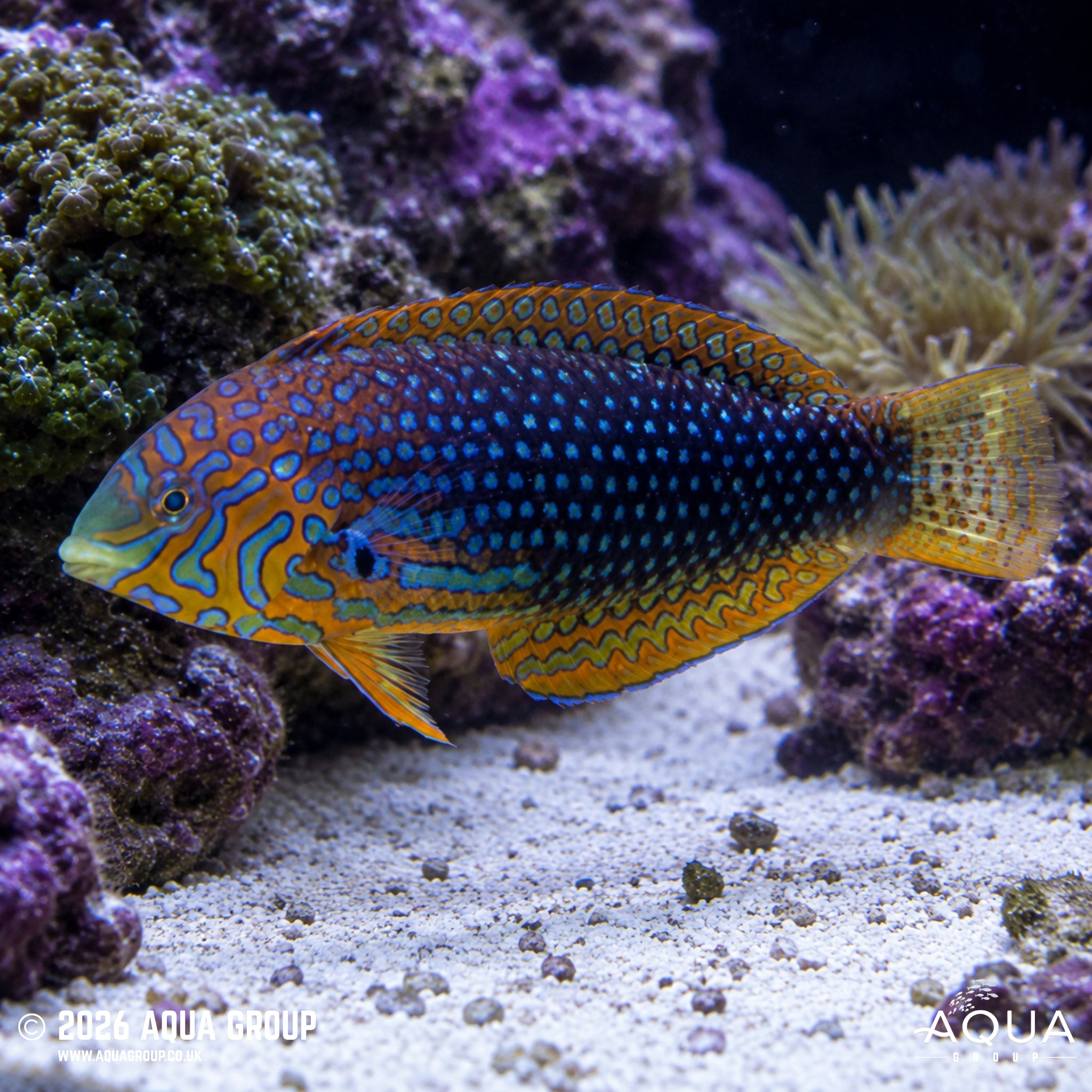
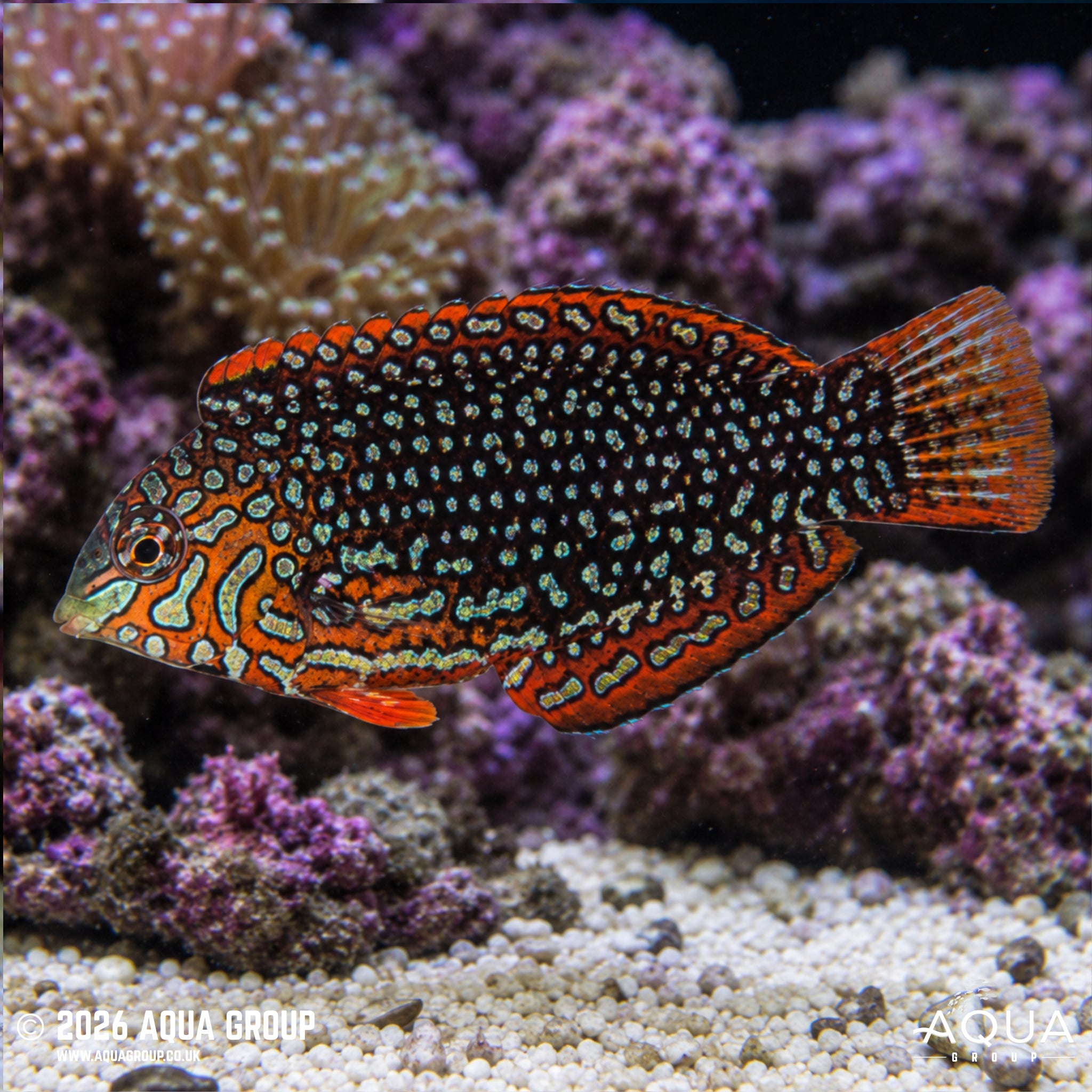
The Ornate Leopard Wrasse (Macropharyngodon ornatus) is a beautifully patterned marine wrasse recognised by its intricate green, yellow, orange and blue spotting over a dark body. Also known as the False Leopard Wrasse or Western Leopard Wrasse, it originates from sheltered Indo-Pacific reef habitats containing mixed sand, coral and rubble. Peaceful and generally reef safe, this active micro-predator can be an exceptional addition to a mature reef aquarium, but its specialised feeding habits, delicate acclimatisation and absolute requirement for a soft sand bed make it best suited to experienced marine fishkeepers.
Common Name:
Ornate Leopard Wrasse, False Leopard Wrasse, Western Leopard Wrasse, Ornate Wrasse
Scientific Name (Latin):
Macropharyngodon ornatus
Maximum Size:
Approximately 11–13 cm in total length. Males may appear slightly larger and darker than females, but both require generous grazing space and a mature aquarium.
Water Type:
Marine
Origin / Natural Habitat:
Native to parts of the Indo-Pacific, including Sri Lanka, western Australia, Indonesia and New Guinea.
It inhabits sheltered lagoons and seaward reefs at depths of approximately 2–30 metres, particularly areas containing mixed sand, coral and rubble. Individuals occur alone or in small groups and remain close to soft substrate that can be used for shelter.
Water Parameters:
Temperature: 24–28°C
pH Range: 8.1–8.4
Salinity: 1.023–1.026 SG
Temperament:
Peaceful and generally non-aggressive towards unrelated fish. It is best kept with calm reef species that will not continually chase it or outcompete it at feeding time.
Males may become territorial towards other male leopard wrasses or similarly patterned species. A single specimen is the safest choice for most aquariums, although one male may sometimes be kept with females in a sufficiently large, mature system.
Diet:
A specialised carnivore and micro-predator that naturally searches rockwork, coral rubble and substrate for copepods, amphipods, tiny molluscs, worms and other small benthic invertebrates.
A mature aquarium with abundant natural microfauna is extremely important. Supplement natural grazing with enriched brine shrimp, copepods, calanus, finely chopped mysis shrimp, small krill and high-quality frozen or soft marine foods.
Some individuals eventually accept small pellets or flakes, but this should not be assumed. Feed several small portions each day and ensure food reaches the wrasse before faster tank mates consume it.
Minimum Tank Size:
A minimum aquarium volume of approximately 300 litres is recommended for a single specimen, provided the aquarium is mature and contains extensive established live rock and a suitable sand bed.
A larger aquarium is preferable when keeping several leopard wrasses or other fish that compete heavily for copepods and benthic microfauna.
Behaviour & Activity:
An active daytime fish that spends much of its time swimming close to rockwork and the substrate while searching continuously for tiny prey.
At night, when frightened or during periods of stress, the Ornate Leopard Wrasse buries itself completely beneath the sand. Newly introduced specimens may remain buried for several days while adjusting to the aquarium.
Females have an orange-red head and forward body with greenish-yellow bands and spots, shading into a darker rear body covered with contrasting spots. Males are generally darker and may develop more intense coloration as they mature.
This species is capable of changing sex, with dominant females potentially transitioning into males under suitable social conditions.
Reef Safe:
Reef Safe
The Ornate Leopard Wrasse is generally compatible with corals, clams and established ornamental invertebrates. It does not normally damage healthy coral tissue or prey upon larger shrimps, crabs and snails.
It will consume copepods, amphipods, small worms and other tiny reef organisms as part of its natural diet. Very small crustaceans or newly introduced delicate invertebrates may occasionally be investigated.
Special Requirements or Care Notes:
A bed of fine, soft sand is essential. Provide a minimum depth of approximately 7–10 cm across a substantial area of the aquarium so the fish can bury itself safely at night and when alarmed.
Do not use sharp coral gravel or coarse substrate, as this can injure the mouth, skin and scales during normal burying behaviour.
Introduce only to a mature, fully cycled aquarium with an established population of copepods and other natural microfauna. Newly established or sterile systems are unsuitable.
A refugium can help maintain a continuous supply of natural prey. Regular additions of live copepods may be beneficial, particularly in smaller systems or aquariums containing mandarinfish and other competing microfauna feeders.
Confirm that the fish is feeding before purchase whenever possible. Avoid specimens with a pinched abdomen, damaged mouth, rapid breathing or weak, uncoordinated swimming.
The wrasse may remain buried for several days after introduction. Do not disturb or search through the sand unless there is a strong reason to suspect a serious problem.
A tightly fitted aquarium cover is essential. Leopard wrasses are capable jumpers and may escape through small gaps around cables, pipes and overflow boxes.
Avoid aggressive tank mates, large predators and fast-feeding fish. Calm surroundings and frequent small meals significantly improve the chance of successful acclimatisation.
A carefully managed quarantine period is recommended, but a container of fine sand should be provided during quarantine. Treatment must be monitored closely because leopard wrasses can be sensitive to stress, abrupt salinity changes and harsh medication regimes.
Suitable for:
Experienced fishkeepers
Availability:
Rare or occasional in trade
All images are a visual representation of the fish you will receive, made to be as accurate as possible. Please note that Mother Nature is a wonderful thing, and variation in patterns and colours will occur — that is part of the unique beauty of these animals.
Order and get 35 reward points
Earn points by signing up for our rewards program