

Description
Janssi Pipefish (Doryrhamphus janssi)
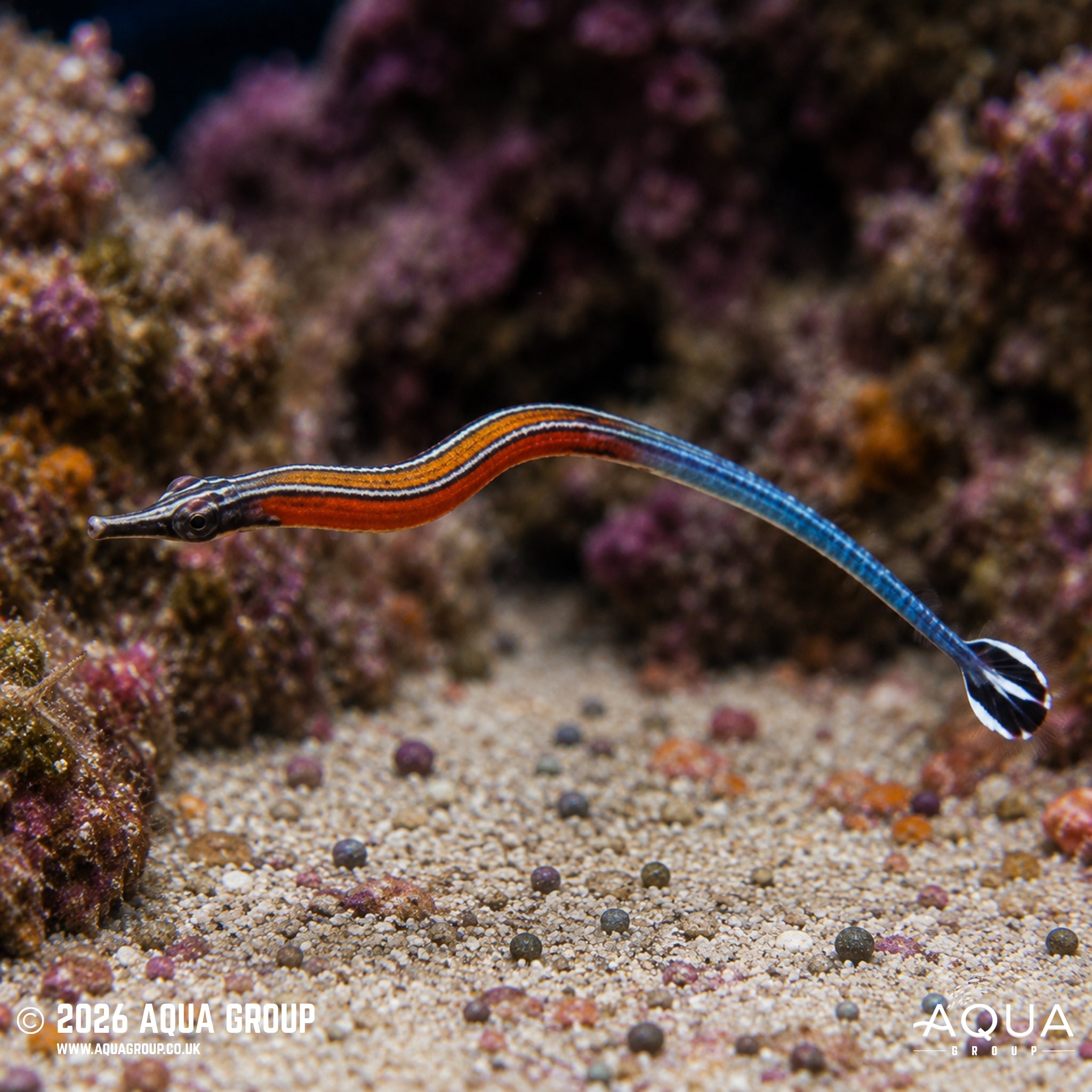
The Janssi Pipefish, Doryrhamphus janssi, is an elegant marine pipefish recognised by its bright orange body, contrasting blue head and distinctive fan-shaped tail marked with dark and pale bands. Also known as Janss’ Pipefish or Janss’ Flagtail Pipefish, it inhabits sheltered coral reefs and caves across parts of Southeast Asia, where it searches continuously for copepods and other tiny crustaceans. This peaceful and fascinating species may also perform cleaning behaviour around larger reef fish, but its specialised feeding needs and vulnerability to aggressive tank mates make it best suited to a mature reef aquarium managed by an experienced fishkeeper.
Common Name:
Janssi Pipefish, Janss’ Pipefish, Janss’s Pipefish, Janss’ Flagtail Pipefish, Janss’ Cleaner Pipefish.
Scientific Name (Latin):
Doryrhamphus janssi
Maximum Size:
Usually around 12–14 cm when fully grown.
Water Type:
Marine
Origin / Natural Habitat:
Western Pacific and eastern Indian Ocean, with records from Indonesia, the Philippines, Thailand, Vietnam, Palau and surrounding Southeast Asian reef regions.
Janssi Pipefish inhabit coral-rich coastal reefs, lagoons, caves, ledges and shaded crevices. They are often associated with sheltered reef structure where small crustaceans are abundant and may establish cleaning stations visited by larger fish.
Water Parameters:
Temperature: 24–27°C
pH Range: 8.1–8.4
Hardness or Salinity: Marine salinity 1.023–1.026 specific gravity; stable salinity, excellent oxygenation and consistently high water quality are essential.
Temperament:
Peaceful, shy and easily intimidated. Janssi Pipefish should be housed with calm reef fish that will not chase them, nip their fins or consume food before they can feed.
They may show territorial behaviour towards other pipefish of the same sex or similar appearance. A confirmed compatible pair can often be maintained together, but unrelated individuals should be introduced carefully and monitored for persistent chasing.
Diet:
Carnivorous micro-predator. In the wild, Janssi Pipefish feed throughout the day on copepods, amphipods, tiny mysid shrimps and other small planktonic or benthic crustaceans.
Wild-caught specimens may initially accept only live foods. Offer live copepods, enriched Artemia, small mysid shrimp and other suitably sized moving prey. Captive-bred or well-established specimens may accept frozen copepods, finely chopped mysis shrimp, lobster eggs, Calanus and other very small meaty marine foods.
Feed several small portions throughout the day and deliver food close to the fish using a pipette or feeding tube where necessary. Confirm that the individual is feeding reliably before purchase.
Minimum Tank Size:
A minimum aquarium volume of approximately 150 litres is recommended for one fish or a compatible pair, provided the system is mature and contains extensive live rock and a healthy microfauna population. A larger aquarium offers a more sustainable natural food supply and greater protection from competition.
Behaviour & Activity:
A slender, deliberate swimmer that spends much of its time close to caves, overhangs and reef structure while searching for tiny prey. It often swims using rapid movements of its small fins while keeping the body relatively straight.
Janssi Pipefish may establish cleaning stations and remove small parasites or damaged tissue from larger fish. This behaviour should be viewed as natural enrichment rather than relied upon as a treatment for aquarium parasites.
Pairs may perform courtship displays involving close parallel swimming. As with seahorses and other pipefish, the male carries the developing eggs in a specialised brood area beneath the body.
Reef Safe:
Reef Safe
Janssi Pipefish do not normally damage corals, anemones, clams or established ornamental invertebrates. They are suitable for peaceful mixed reef aquariums, although copepods, amphipods, tiny shrimps and crustacean larvae form part of their natural diet.
Special Requirements or Care Notes:
Introduce only to a mature, biologically established aquarium containing abundant live rock and a healthy population of copepods and other microfauna. A refugium can help maintain a renewable natural food supply.
Captive-bred specimens are strongly preferred where available because they are generally better adapted to aquarium life and more likely to accept frozen or prepared foods. Captive-bred status does not remove the need for frequent feeding and careful monitoring of body condition.
Avoid aggressive fish, fast-feeding wrasses, large clownfish, damsels, hawkfish, triggerfish and other species likely to intimidate the pipefish or outcompete it for food. Strong stinging corals and anemones may also present a risk to this slow swimmer.
Provide extensive caves, shaded ledges and narrow crevices alongside areas of gentle to moderate water movement. Strong direct flow can exhaust the fish or make feeding difficult, although good overall circulation and oxygenation remain important.
Protect pump and overflow intakes and use a secure aquarium cover. Pipefish have limited body reserves and can lose weight quickly, so monitor the abdomen and area behind the head closely. A hollow body profile, reduced hunting behaviour or repeated unsuccessful feeding attempts can indicate inadequate food availability.
Quarantine should be undertaken carefully in a mature or suitably provisioned system where live food is continuously available. Avoid unnecessary copper exposure and harsh medication unless treatment is clearly required and managed by an experienced aquatic professional.
Suitable for:
Experienced fishkeepers
Availability:
Rare or occasional in trade / Captive-bred where available
All images are a visual representation of the fish you will receive, made to be as accurate as possible. Please note that Mother Nature is a wonderful thing, and variation in patterns and colours will occur — that is part of the unique beauty of these animals.
Order and get 70 reward points
Earn points by signing up for our rewards program