

Description
Hybrid Powder Blue Tang (Acanthurus leucosternon)
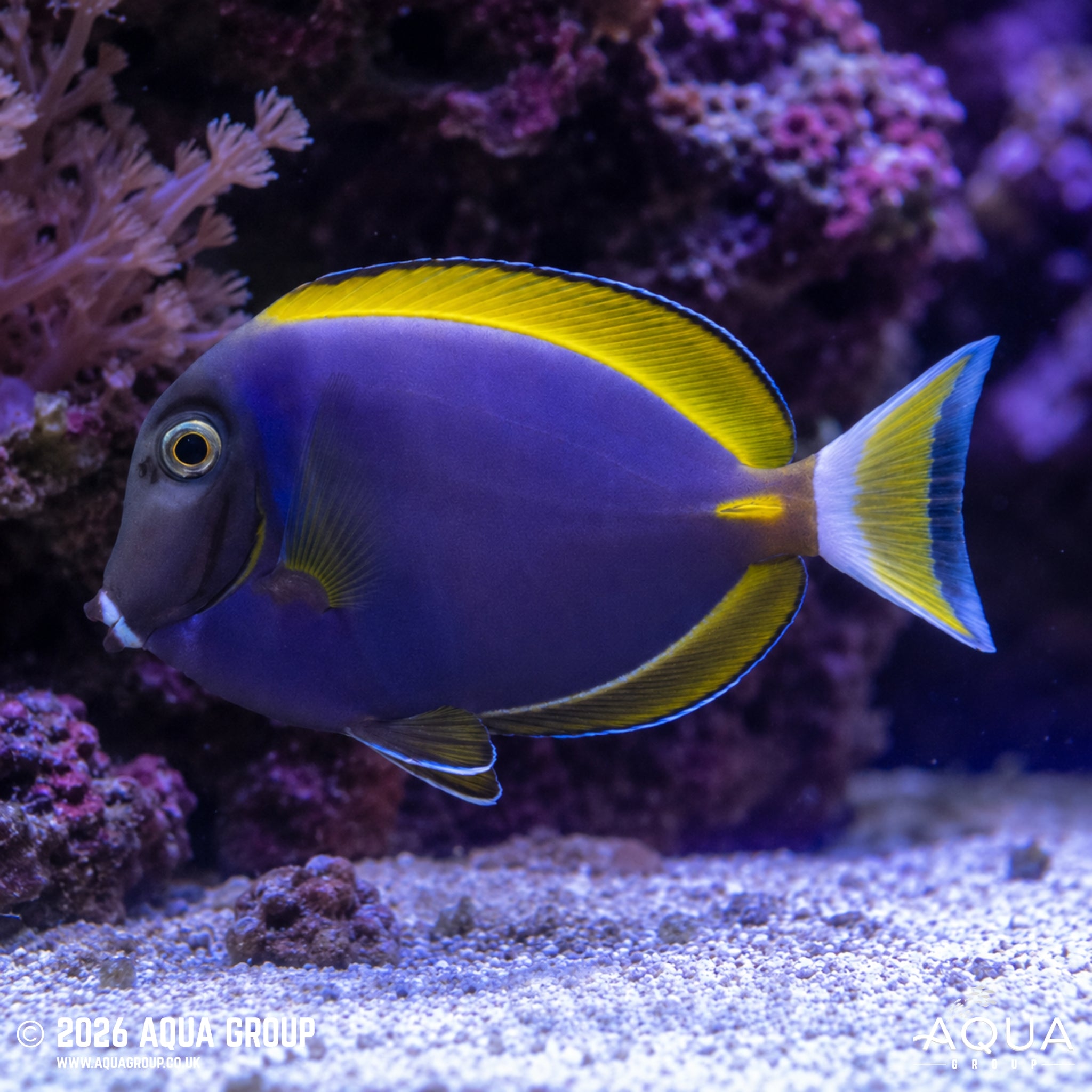
The Hybrid Powder Blue Tang, Acanthurus leucosternon, is a rare and highly distinctive surgeonfish displaying a variable blend of powder blue, charcoal, black, yellow and white colouration. Hybrid individuals are generally associated with natural interbreeding between Powder Blue and closely related Goldrim or Whitecheek-type tangs where their ranges meet, creating patterns that vary considerably from one fish to another. This powerful, continuously active reef grazer requires a large, mature marine aquarium with excellent oxygenation, strong circulation and generous swimming space. Its unusual appearance makes it highly desirable, but its territorial nature and sensitivity to environmental stress mean it is best suited to experienced marine fishkeepers.
Common Name:
Hybrid Powder Blue Tang, Powder Blue Hybrid Tang, Hybrid Powder Blue Surgeonfish, Powder Purple Tang.
Scientific Name (Latin):
Acanthurus leucosternon
Maximum Size:
Usually expected to reach approximately 20–25 cm in aquariums. It should be housed as a large, powerful and highly active surgeonfish, regardless of its size when purchased.
Water Type:
Marine
Origin / Natural Habitat:
Hybrid Powder Blue Tangs are associated with reef regions where Powder Blue Tangs and closely related surgeonfish occur together, particularly around parts of eastern Indonesia and the Indo-Pacific biogeographic boundary.
The Powder Blue Tang occurs throughout the tropical Indian Ocean, from East Africa eastwards to the Andaman Sea, south-western Indonesia and nearby reef regions. It inhabits shallow, clear coral reefs, reef flats and exposed outer reef areas with strong water movement and extensive algae-covered grazing surfaces.
Water Parameters:
Temperature: 24–28°C
pH Range: 8.1–8.4
Hardness or Salinity: Marine salinity 1.023–1.026 specific gravity; exceptionally stable salinity, strong oxygenation, powerful circulation and consistently excellent water quality are essential.
Temperament:
Semi-aggressive, territorial and potentially highly assertive. Hybrid Powder Blue Tangs may become particularly aggressive towards other Acanthurus tangs, surgeonfish with similar body shapes and newly introduced algae-grazing fish.
They are generally best kept with robust, confident marine fish in a sufficiently large aquarium. Avoid very timid species that may be repeatedly chased, confined to hiding places or prevented from feeding.
Diet:
Primarily herbivorous reef grazer. Its natural feeding behaviour is centred on cropping fine benthic algae and associated organic material from reef surfaces.
Provide marine algae sheets or nori every day, together with spirulina-based flakes, quality herbivore pellets and frozen foods containing marine algae. Enriched mysis shrimp, krill and other small meaty foods may be included as part of a varied diet, but vegetable-based marine foods should remain the foundation.
Feed several modest portions throughout the day and provide mature live rock for natural grazing. Appropriate marine vitamins and a varied algae-rich diet can help maintain body condition, colour and immune health.
Minimum Tank Size:
A minimum aquarium volume of approximately 600 litres is recommended for one adult, with a tank length of at least 180 cm preferred. Larger accommodation is advisable when housing it with other large tangs or territorial reef fish.
Behaviour & Activity:
A powerful and continuously active daytime swimmer that spends much of its time moving through open water and grazing algae from rockwork. It requires long, uninterrupted swimming areas alongside mature grazing surfaces and secure caves for resting.
Like other surgeonfish, it possesses sharp defensive scalpels on the caudal peduncle near the base of the tail. These may be used during territorial disputes and can injure other fish or the keeper if the animal is handled carelessly.
Hybrid colouration is highly variable. Some individuals closely resemble a traditional Powder Blue Tang with darker markings, while others display stronger charcoal, black, yellow or purple tones. Pattern and colour may continue to develop as the fish matures.
Reef Safe:
Reef Safe
Hybrid Powder Blue Tangs do not normally damage healthy corals, anemones, clams or established ornamental invertebrates. Their constant algae-grazing behaviour can be beneficial in a reef aquarium.
A hungry or nutritionally deficient individual may occasionally investigate fleshy coral surfaces, but persistent coral feeding is not typical. Large adults may accidentally dislodge unsecured coral pieces while swimming or grazing.
Special Requirements or Care Notes:
Introduce only to a large, mature and biologically stable aquarium. Hybrid Powder Blue Tangs can be highly sensitive to transport stress, fluctuating water chemistry, low dissolved oxygen and sudden environmental changes. Strong, well-distributed water movement and excellent surface agitation are particularly important.
Provide oversized biological filtration, efficient protein skimming and regular maintenance. These active herbivores require frequent feeding and can produce substantial waste. Maintain extensive open swimming room alongside firmly secured rockwork containing caves and established grazing surfaces.
Quarantine is strongly recommended. Powder Blue-type tangs are particularly susceptible to marine white spot and other external parasites following transport, temperature changes or aggression. Monitor closely for rapid breathing, scratching, faded colour, reduced appetite or small white spots.
Introduce the Hybrid Powder Blue Tang after smaller or more peaceful fish have become established. When keeping several tangs, use a very large aquarium, select species with different body shapes and consider introducing them at the same time. An acclimation box can help assess aggression before release.
Persistent attacks should not be ignored, as the targeted fish can quickly suffer from stress, injury and reduced feeding. Rearranging some rockwork may help disrupt an established territory, but separation may still be necessary.
Provide marine algae every day and avoid relying mainly on meaty frozen foods. A secure aquarium cover is recommended. Take care during capture or transfer because the sharp caudal scalpels can cut through nets and cause injury.
Suitable for:
Experienced fishkeepers
Availability:
Rare
All images are a visual representation of the fish you will receive, made to be as accurate as possible. Please note that Mother Nature is a wonderful thing, and variation in patterns and colours will occur — that is part of the unique beauty of these animals.
Order and get 95 reward points
Earn points by signing up for our rewards program