


Description
Hovercraft Boxfish (Ostracion fornasini/Lactoria fornasini)
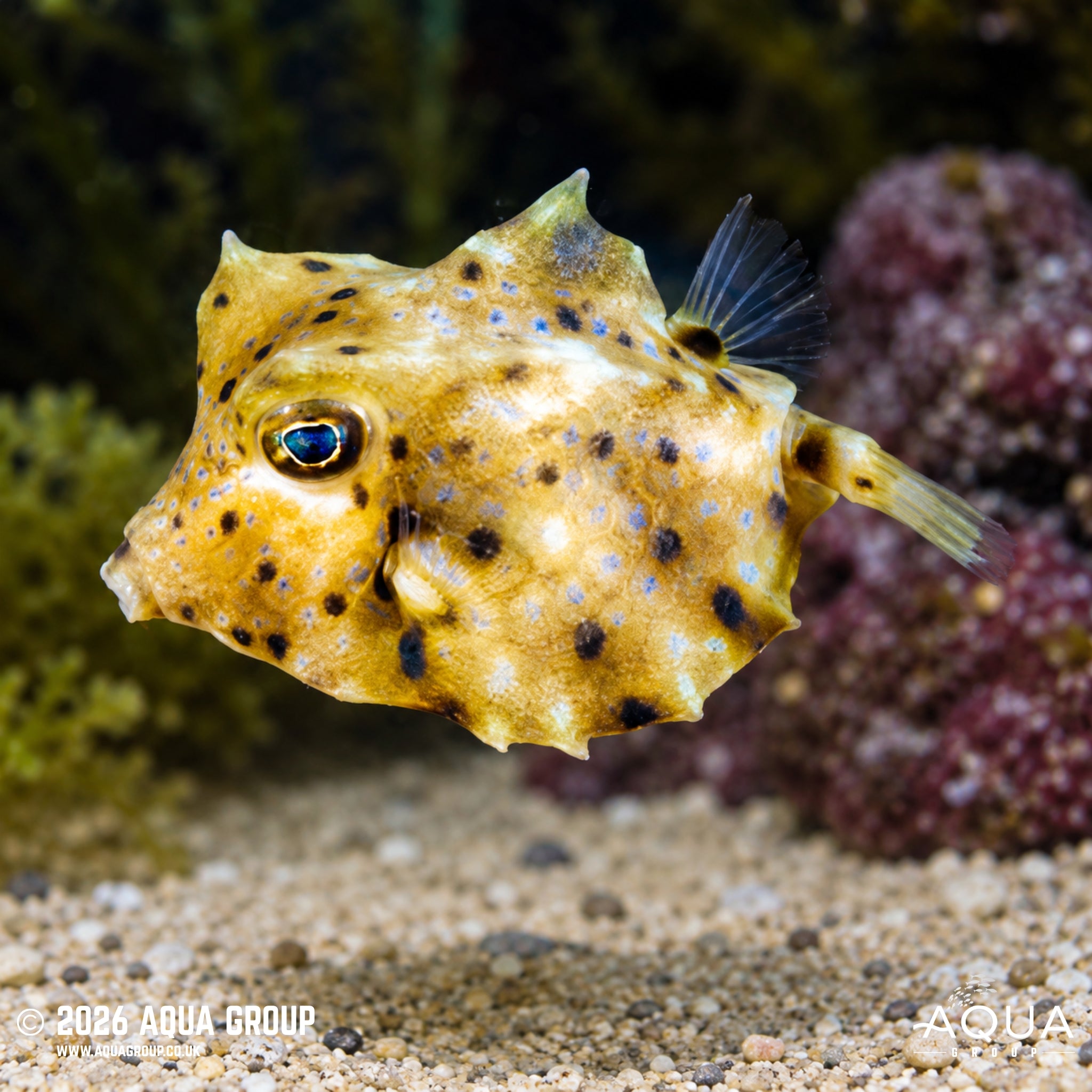
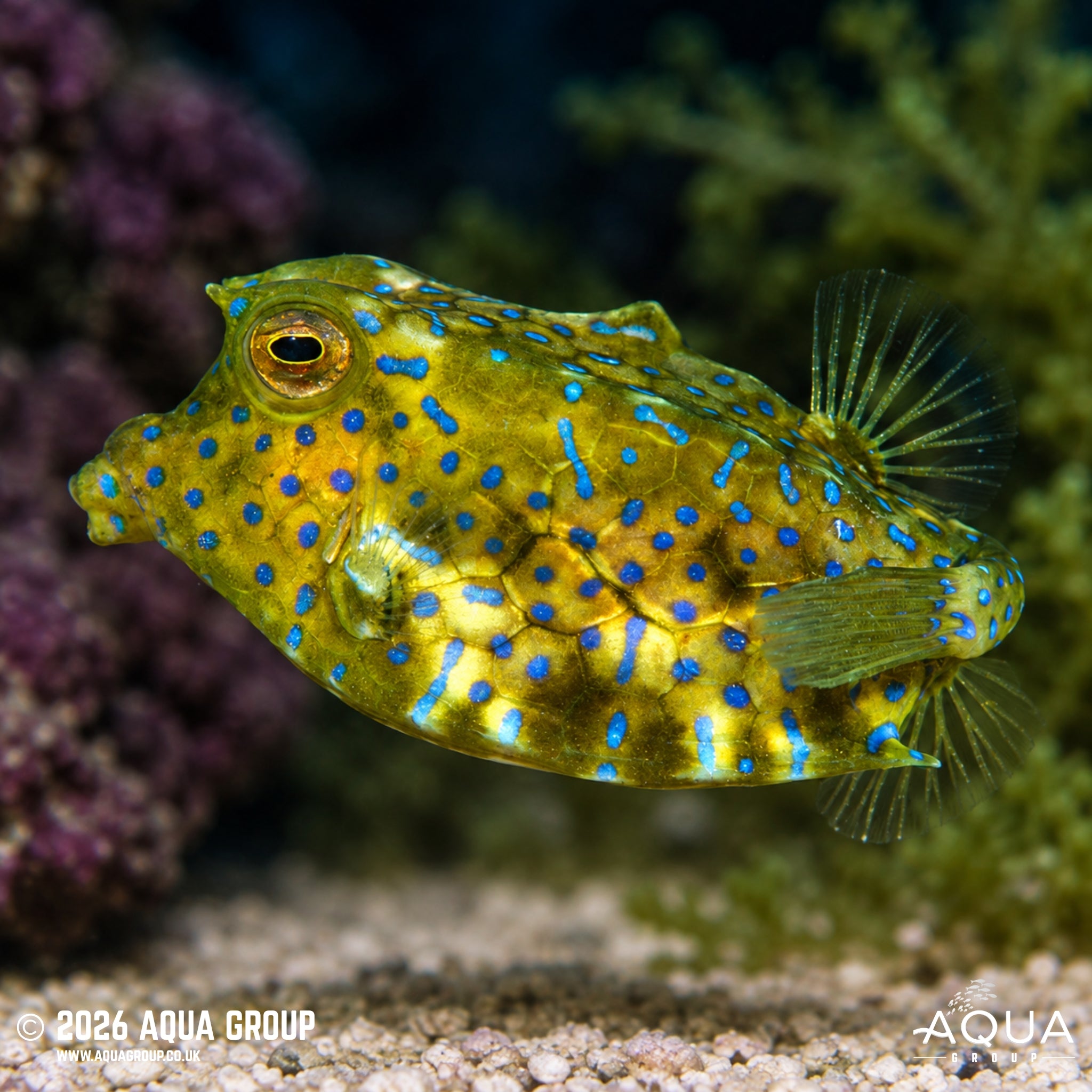
The Hovercraft Boxfish, Lactoria fornasini, is an unusual Indo-West Pacific cowfish recognised by its rigid box-shaped body, delicate blue spots and scribbled markings, prominent horns above the eyes and distinctive spine along the upper back. More widely known as the Thornback Cowfish, it moves through the water using rapid movements of its small fins, creating the hovering appearance behind its aquarium trade name. This intelligent benthic forager naturally searches sand, rubble and algae-covered reef areas for small invertebrates. Although highly distinctive, its specialist feeding behaviour, adult size, sensitivity to stress and potential to release toxic skin secretions make it suitable only for experienced marine fishkeepers.
Common Name:
Hovercraft Boxfish, Thornback Cowfish, Thorny-back Cowfish, Spiny-backed Cowfish.
Scientific Name (Latin):
Lactoria fornasini
Formerly described and still occasionally listed as Ostracion fornasini.
Maximum Size:
Capable of reaching approximately 23 cm when fully grown.
Water Type:
Marine
Origin / Natural Habitat:
Widely distributed throughout the tropical Indo-West Pacific, from East Africa eastwards to the Hawaiian and Rapa Islands, north to southern Japan and south to Lord Howe Island and temperate eastern Australia.
Hovercraft Boxfish inhabit clear outer lagoons, coastal reefs and seaward reef environments at depths of approximately 5–132 metres, although they are most frequently recorded between 6 and 30 metres. They favour sandy, rubble-strewn and algae-covered areas near coral or rocky reef structure and may also enter sheltered estuarine habitats.
Water Parameters:
Temperature: 24–27°C
pH Range: 8.1–8.4
Hardness or Salinity: Marine salinity 1.023–1.026 specific gravity; exceptionally stable salinity, strong oxygenation, efficient biological filtration and consistently high water quality are essential.
Temperament:
Generally peaceful towards unrelated fish but potentially territorial towards other cowfish and boxfish. Males may become particularly defensive around established territories.
This species is slow-moving and should not be housed with aggressive, highly boisterous or persistent fin-nipping fish. Triggerfish, puffers and large wrasses may bite its horns, fins or rigid body and cause serious stress or injury.
Diet:
Omnivorous benthic forager with a strong preference for animal-based foods. In the wild, it feeds on worms, small crustaceans, molluscs and other benthic invertebrates exposed from sand and rubble. It may blow jets of water into the substrate to uncover concealed prey.
In the aquarium, offer enriched mysis shrimp, Artemia, krill, finely chopped marine prawn, clam, mussel, cockle and other suitably sized marine foods. Supplement with spirulina-based foods, marine algae and high-quality sinking pellets.
Feed moderate portions two or three times daily. Food should reach the lower areas of the aquarium, where the fish naturally searches for prey. Regular feeding is important, but uneaten food must be removed promptly to protect water quality.
Minimum Tank Size:
A minimum aquarium volume of approximately 400 litres is recommended for one adult, with a broad footprint, substantial open swimming room and extensive areas of sand and secure rockwork.
Behaviour & Activity:
A deliberate, hovering swimmer that propels itself mainly with rapid movements of the dorsal, anal and pectoral fins. Its rigid armoured body prevents the flexible swimming movements seen in most marine fish, but allows precise manoeuvring around reef structure.
The Hovercraft Boxfish spends much of the day exploring the lower and middle areas of the aquarium, inspecting sand, rubble and rockwork for food. It may blow water into the substrate to expose worms and small crustaceans.
Individuals can become responsive to their keeper and may approach the aquarium front at feeding time. Their confident appearance should not be mistaken for robustness, as boxfish can be highly sensitive to harassment, transport stress and deteriorating water conditions.
Reef Safe:
Not Reef Safe
Hovercraft Boxfish may consume ornamental shrimps, small crabs, snails, worms, clams and other benthic invertebrates. They may also nip soft corals, fleshy stony corals, sponges, tunicates and other sessile reef organisms while searching for food.
Their foraging behaviour can disturb the substrate and deposit sediment onto low-positioned corals. The species is best maintained in a spacious fish-only or FOWLR aquarium rather than a valuable mixed reef system.
Special Requirements or Care Notes:
Like other members of the boxfish and cowfish family, the Hovercraft Boxfish may release a toxic skin secretion when severely stressed, injured or dying. In a closed aquarium, this can potentially harm or kill the boxfish and other fish.
A large volume of activated carbon should be available for emergency use, and efficient protein skimming and rapid water-change capability are strongly recommended. If the fish becomes distressed, remove the source of stress rather than chasing or netting it unnecessarily.
Avoid sudden temperature or salinity changes, overcrowding, aggressive tank mates and unstable water chemistry. Quarantine is recommended, but the quarantine aquarium must provide sufficient space, shelter, stable conditions and reliable feeding.
Provide open sandy areas alongside firmly secured rockwork with caves and sheltered resting zones. Avoid sharp decorations that may damage the horns, skin or rigid body. Protect pump and overflow intakes and prevent the fish from becoming trapped behind equipment.
Select only an alert specimen with clear eyes, intact horns and fins, smooth skin and a well-filled body. Confirm that it is feeding before purchase whenever possible.
Do not expose the fish to copper or other strong medications without careful professional guidance. Boxfish can be sensitive to treatment, and medication should be administered only in a separate hospital system with close monitoring.
Use a rigid submerged container rather than a conventional net when transfer is unavoidable. The horns and body spines can become caught in netting, causing injury and severe stress.
Suitable for:
Experienced fishkeepers
Availability:
Rare or occasional in trade
All images are a visual representation of the fish you will receive, made to be as accurate as possible. Please note that Mother Nature is a wonderful thing, and variation in patterns and colours will occur — that is part of the unique beauty of these animals.
Order and get 50 reward points
Earn points by signing up for our rewards program