

Description
Electric Blue Leg Hermit Crab (Calcinus elegans)
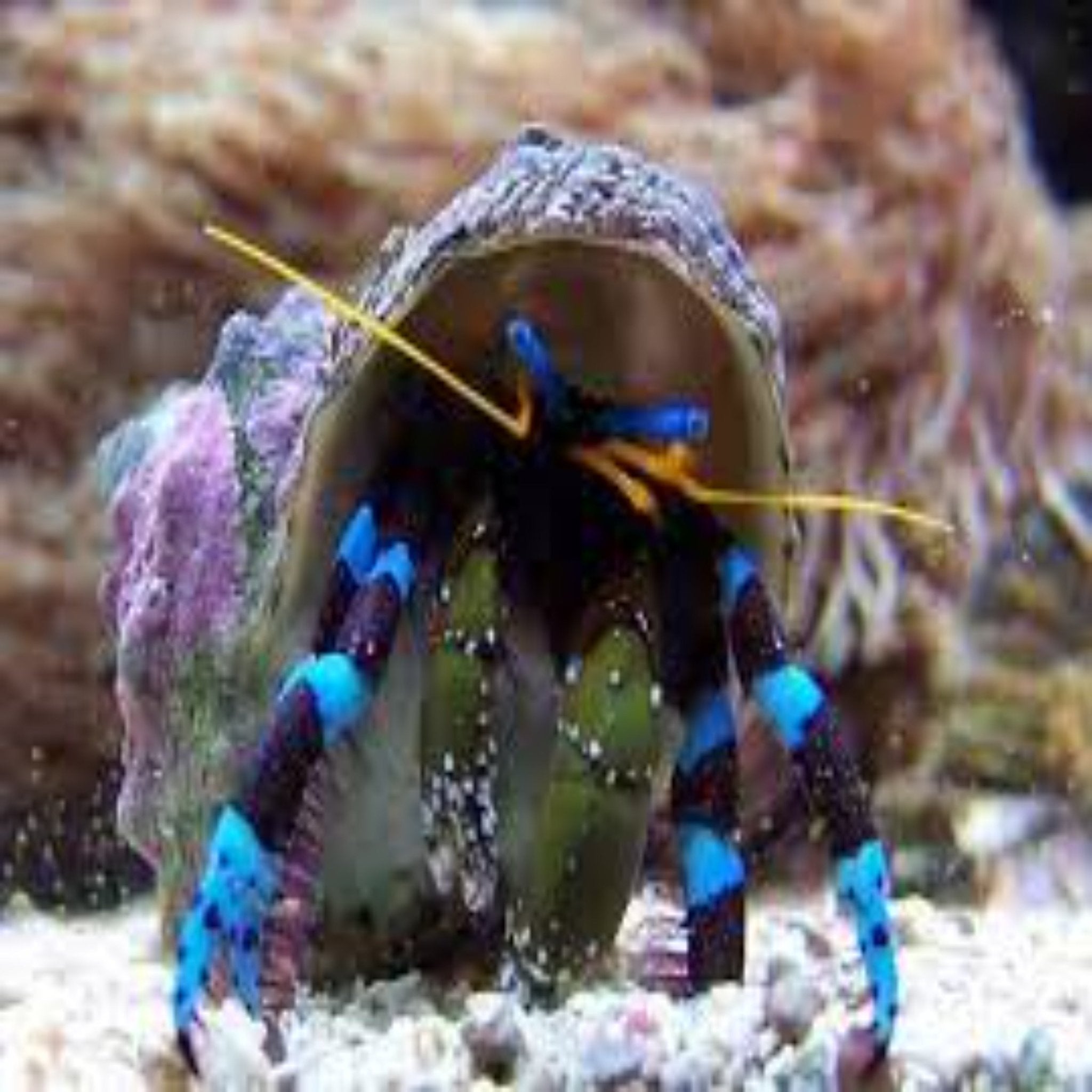
The Electric Blue Leg Hermit Crab, Calcinus elegans, is a colourful marine clean-up crew invertebrate with striking electric blue and black banded legs, orange antennae and a shell-dwelling body. Also known as the Electric Blue Hermit Crab or Blue Line Hermit Crab, it is a useful algae and detritus grazer for mature reef aquariums. This attractive hermit is generally reef safe, but it should be kept in sensible numbers with spare shells available, as it may compete with snails or other hermits if suitable housing is limited.
Common Name:
Electric Blue Leg Hermit Crab, Electric Blue Hermit Crab, Blue Line Hermit Crab, Blue-legged Hermit Crab.
Scientific Name (Latin):
Calcinus elegans
Maximum Size:
Usually around 3–5 cm, depending on shell size and maturity.
Water Type:
Marine
Origin / Natural Habitat:
Indo-Pacific, with aquarium trade references often noting the Marshall Islands and surrounding reef regions. In the wild, Electric Blue Hermit Crabs occur in shallow tropical marine habitats where they move across reef rubble, rockwork and sandy areas, grazing algae, detritus and organic matter while using empty gastropod shells for protection.
Water Parameters:
Temperature: 24–27°C
pH Range: 8.1–8.4
Hardness or Salinity: Marine salinity 1.023–1.026 specific gravity; stable salinity, alkalinity and good water quality are important. Avoid copper-based medications.
Temperament:
Generally peaceful, but opportunistic. Electric Blue Leg Hermit Crabs are suitable for most reef aquariums, but may become competitive with other hermits or snails if hungry, overcrowded or short of spare shells. They are best kept as part of a balanced clean-up crew rather than overstocked.
Diet:
Omnivorous scavenger and algae grazer. Feeds on microalgae, film algae, hair algae, detritus, leftover food and fine organic matter. Supplement with marine algae sheets, nori, spirulina foods, sinking pellets, small meaty marine foods or specialist invertebrate foods if natural grazing is limited.
Minimum Tank Size:
A minimum of 50 litres is recommended for a small number, provided the aquarium is mature and stable. Larger aquariums can support more individuals, but stocking should be modest to reduce competition.
Behaviour & Activity:
An active mobile hermit crab that spends much of its time climbing live rock, grazing algae films, searching the substrate and investigating crevices for food. It lives inside empty snail or gastropod shells and will move into larger shells as it grows. Activity often increases after feeding and during lower-light periods.
Reef Safe:
Reef Safe
Generally safe with corals and most reef fish, but may climb over coral tissue, irritate polyps temporarily or dislodge loose frags while grazing. It may attack snails for shells if spare empty shells are not provided.
Special Requirements or Care Notes:
Provide a selection of empty shells in different sizes to reduce shell-related aggression and protect snails. Acclimate slowly, as marine invertebrates are sensitive to rapid salinity changes. Do not expose to copper treatments or unstable water chemistry. Secure loose coral frags and lightweight rock pieces, as hermits can push items while climbing and grazing. Best added to mature aquariums with some natural algae and detritus rather than sterile new systems.
Suitable for:
Beginner to intermediate marine fishkeepers
Availability:
Occasional in trade / Marine clean-up crew species
All images are a visual representation of the animal you will receive, made to be as accurate as possible. Please note that Mother Nature is a wonderful thing, and variation in patterns and colours will occur — that is part of the unique beauty of these animals.
Order and get 9 reward points
Earn points by signing up for our rewards program