

Description
Heniochus Butterfly (Heniochus diphreutes)
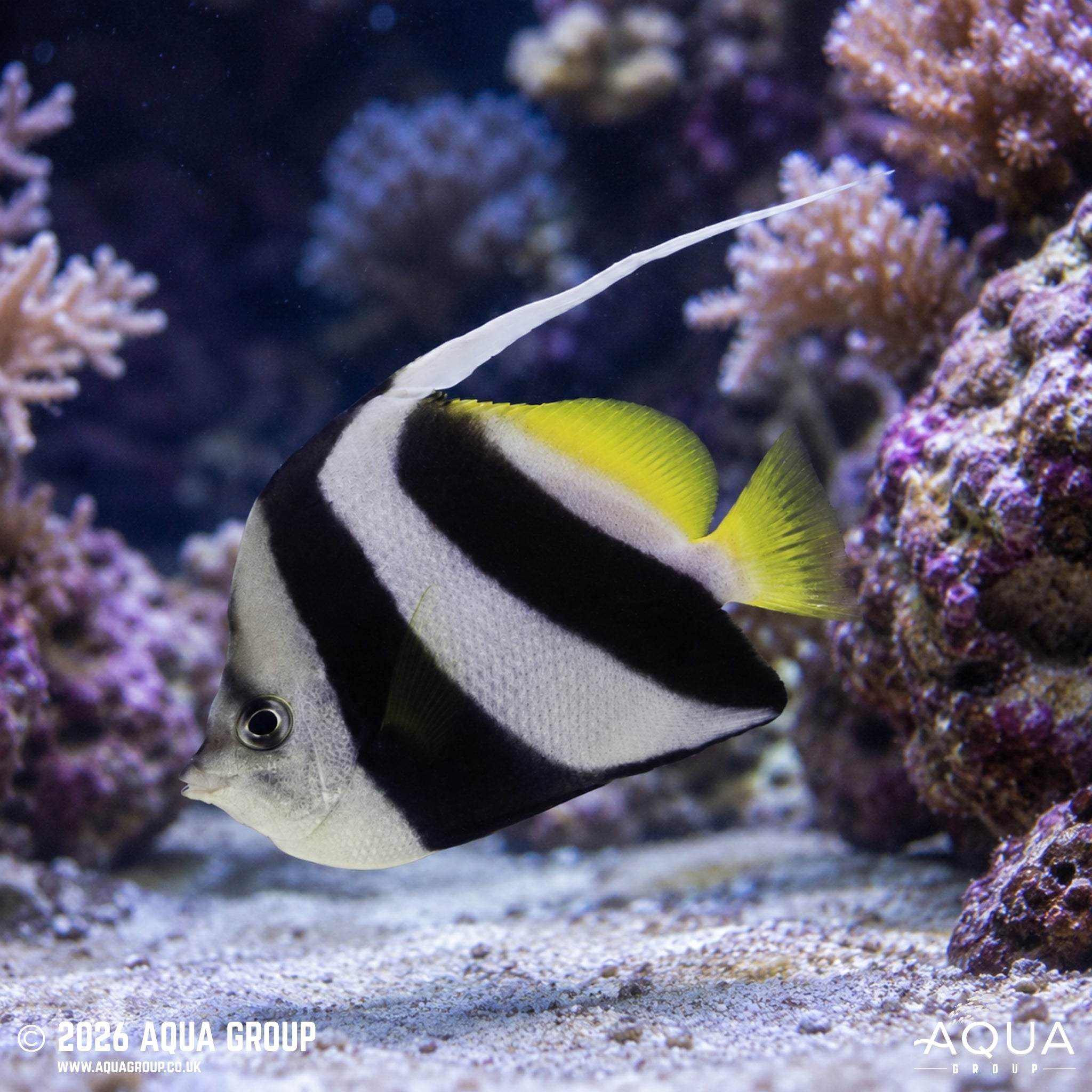
The Heniochus Butterfly, Heniochus diphreutes, is an elegant and highly recognisable marine butterflyfish, admired for its bold black-and-white bands, yellow fin highlights and long flowing dorsal banner. Also known as the Schooling Bannerfish or False Moorish Idol, this species has a graceful open-water swimming style and can make a striking addition to large mature marine aquariums. Unlike many butterflyfish that rely heavily on coral polyps, Heniochus diphreutes is primarily a plankton-feeding species, making it one of the more suitable Heniochus choices for reef-style aquariums, although it should still be treated as reef safe with caution.
Common Name:
Heniochus Butterfly, Schooling Bannerfish, False Moorish Idol, Pennant Bannerfish, Pennant Butterflyfish, Poor Man’s Moorish Idol.
Scientific Name (Latin):
Heniochus diphreutes
Maximum Size:
Up to around 21 cm, making it a medium-sized butterflyfish that requires good swimming space.
Water Type:
Marine
Origin / Natural Habitat:
Found across the Indo-Pacific, from the Red Sea and East Africa across the Indian Ocean to Indonesia, Japan, Australia and Hawaii. In the wild, Heniochus diphreutes is usually found around outer reef slopes, current channels, reef edges and open reef areas. Juveniles may gather around isolated patch reefs, while adults are often seen schooling well above the reef bottom in areas with good water movement.
Water Parameters:
Temperature: 24–27°C
pH Range: 8.1–8.4
Hardness or Salinity: SG 1.020–1.025
Temperament:
Peaceful to semi-aggressive. Heniochus Butterflyfish are usually manageable in suitably sized marine aquariums and can be kept with many peaceful to moderately robust tank mates. They may be shy when first introduced but often become active and confident once settled. Avoid housing with very aggressive fish, fin nippers or species that may outcompete them heavily at feeding time.
Diet:
Planktivore with omnivorous tendencies. In the wild, this species feeds mainly on plankton in the water column. In the aquarium, offer a varied diet of frozen mysis shrimp, enriched brineshrimp, cyclops, copepod-based foods, finely chopped seafood, quality marine pellets, flakes and occasional algae-based foods. Smaller, regular feeds are ideal, especially while newly introduced specimens are settling.
Minimum Tank Size:
A practical minimum of around 450–500 litres is recommended for a single specimen, with larger aquariums preferred for groups or mixed reef communities. This species benefits from open swimming space, mature rockwork, strong filtration and good oxygenation.
Behaviour & Activity:
An active and graceful swimmer that spends much of its time moving through open water above the rockwork. In the wild, adults often form schools, and in very large aquariums they may be kept in groups if added together and given enough space. In most home aquariums, a single specimen is often the safest option. Provide open swimming lanes along with rockwork for shelter and retreat. A secure lid is recommended, as startled marine fish can jump.
Reef Safe:
Reef Safe with Caution
Heniochus diphreutes is generally considered one of the more reef-suitable Heniochus species because it is primarily plankton-feeding rather than coral-polyp dependent. However, as with many butterflyfish, individual behaviour can vary. It may occasionally investigate or nip at soft corals, fleshy LPS corals or other sessile invertebrates, especially if underfed. Keeping the fish well fed and choosing corals carefully can reduce risk, but it cannot remove it completely.
Special Requirements or Care Notes:
Correct identification is important, as Heniochus diphreutes is often confused with Heniochus acuminatus. Heniochus diphreutes is generally regarded as the more reef-suitable, schooling, plankton-feeding form. Best kept in a mature aquarium with excellent water quality, open swimming space and peaceful to moderately active tank mates. Feed regularly and monitor closely around corals. Avoid cramped aquariums, aggressive tank mates and unstable new systems.
Suitable for:
Intermediate fishkeepers
Availability:
Occasionally available in the marine aquarium trade / Availability can vary depending on collection, import, size and supplier
All images are a visual representation of the fish you will receive, made to be as accurate as possible. Please note that Mother Nature is a wonderful thing, and variation in patterns and colours will occur — that is part of the unique beauty of these animals.
Order and get 40 reward points
Earn points by signing up for our rewards program