

Description
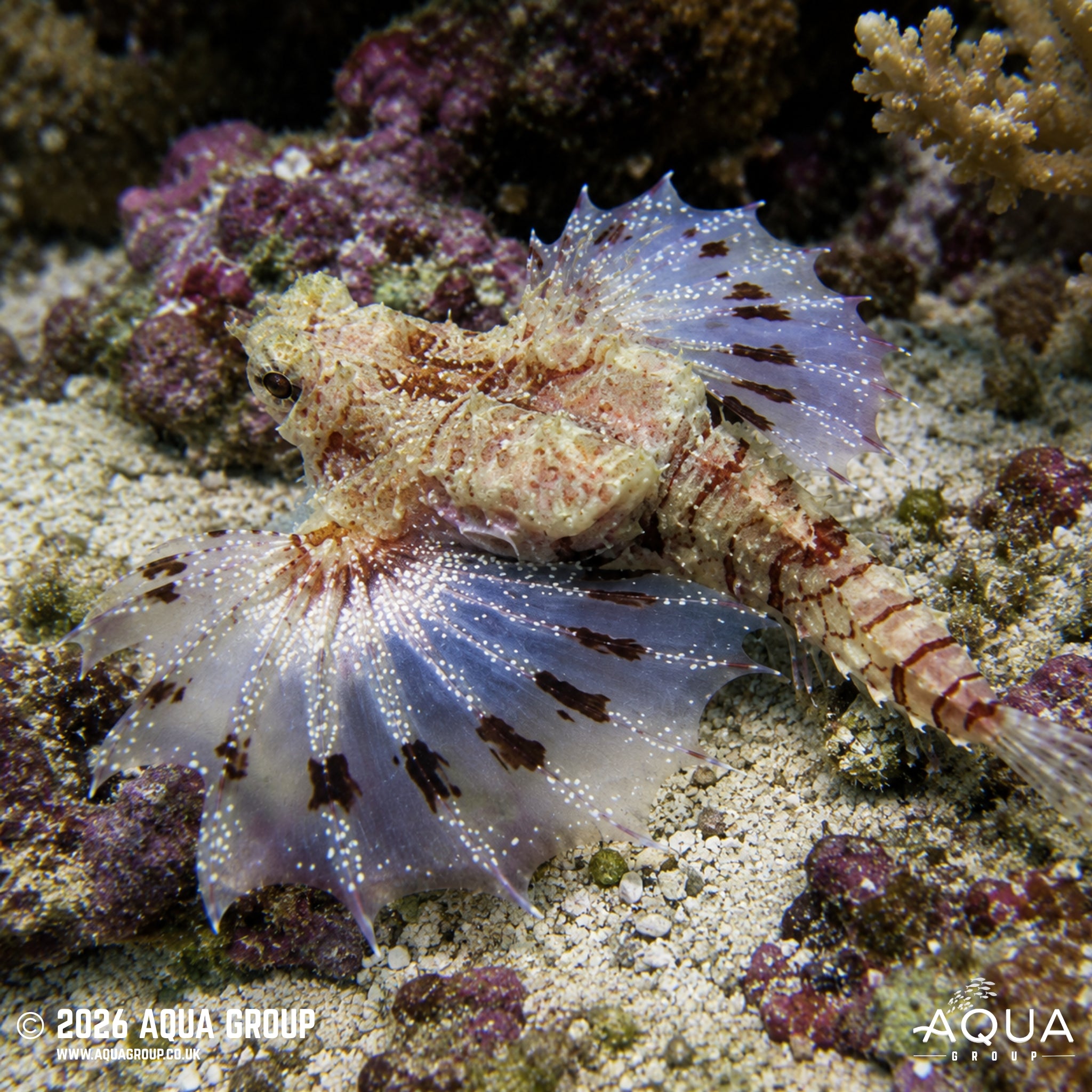
Hawaiian Seamoth (Eurypegasus papilio)
The Hawaiian Seamoth, Eurypegasus papilio, is a rare and extraordinary bottom-dwelling marine fish recognised by its flattened armoured body, elongated snout and broad wing-like pectoral fins. Also known as the Hawaiian Sea-moth Fish, it is found only around the Hawaiian Islands and naturally inhabits considerably deeper water than most aquarium reef fish. This small, slow-moving micro-predator searches the seabed for tiny crustaceans and other benthic organisms using its tubular mouth. Although fascinating in appearance, its specialised diet, uncommon deep-water habitat and very limited aquarium-care history make it suitable only for expert aquarists with a dedicated species system.
Common Name:
Hawaiian Seamoth, Hawaiian Sea-moth Fish, Hawaiian Seamoth Fish.
Scientific Name (Latin):
Eurypegasus papilio
Maximum Size:
Approximately 7–8 cm when fully grown, with a reported scientific maximum of around 7.6 cm standard length.
Water Type:
Marine
Origin / Natural Habitat:
Endemic to the Hawaiian Islands, meaning it is not naturally found anywhere else in the world. Records extend through the Hawaiian Archipelago, including waters from Kure Atoll south-eastwards towards Oahu, Molokai and Maui.
Hawaiian Seamoths are demersal fish associated with deep seabed habitats. They are recorded from approximately 80–291 metres, although many observations come from depths of around 80–115 metres. Their natural environment is likely to include sand, fine rubble and other open benthic surfaces where small invertebrate prey can be located.
Water Parameters:
Temperature: Approximately 20–24°C; temperature should reflect the specimen’s collection depth, and cooler specialist conditions may be required.
pH Range: 8.0–8.4
Hardness or Salinity: Marine salinity 1.023–1.026 specific gravity; exceptionally stable salinity, excellent oxygenation and consistently high water quality are essential.
Temperament:
Peaceful, slow-moving and easily outcompeted. Hawaiian Seamoths are not expected to show significant aggression towards unrelated fish, but they may struggle to feed when housed with fast, active or dominant species.
They are best maintained alone, as a compatible pair or with carefully selected peaceful animals that occupy different areas of the aquarium. Compatibility between multiple seamoths is poorly documented and should be monitored closely.
Diet:
Carnivorous benthic micro-predator. Like other seamoths, this species is expected to feed on tiny crustaceans, worms and other minute organisms collected from the substrate with its narrow tubular mouth.
Offer live copepods, amphipods, enriched Artemia, very small mysid shrimp and other suitably sized marine microfauna. Established individuals may accept frozen copepods, finely chopped mysis shrimp, lobster eggs and similarly small meaty foods.
Food should be delivered directly in front of the fish using a pipette or narrow feeding tube. Several small meals throughout the day are preferable because the Hawaiian Seamoth has a small mouth and limited ability to compete for food.
Minimum Tank Size:
A minimum aquarium volume of approximately 150 litres is recommended for one specimen or a compatible pair, with a broad footprint and extensive open substrate. Aquarium maturity and food availability are more important than water volume alone.
Behaviour & Activity:
A slow-moving bottom-dweller that spends most of its time travelling across sand or fine rubble using its enlarged pectoral fins and modified pelvic fins. Its armoured body and broad fins create the unusual winged appearance associated with the seamoth name.
The Hawaiian Seamoth is unlikely to swim continuously in open water. Instead, it remains close to the seabed, pausing frequently while inspecting the substrate for tiny prey. Its flattened shape and subdued olive, yellowish and pale colouration help it blend into the bottom.
Reef Safe:
Reef Safe
Hawaiian Seamoths are not expected to damage corals, anemones or other large sessile reef animals. However, copepods, amphipods, tiny shrimps, worms and other small benthic organisms form part of their natural food supply.
Their specialist temperature and feeding requirements make them poorly suited to conventional warm, brightly lit mixed reef aquariums. They are better maintained in a dedicated deep-water or specialist benthic system.
Special Requirements or Care Notes:
This species should only be maintained in a carefully planned specialist aquarium. Very little long-term captive husbandry information is available, and its natural depth range suggests that standard tropical reef conditions may be unsuitable.
Confirm the specimen’s collection depth and holding temperature before purchase. A reliable aquarium chiller may be necessary, and rapid exposure to warmer water should be avoided. Acclimate slowly and maintain excellent oxygenation.
Provide a broad bed of fine, soft marine sand with areas of smooth, fine rubble. Avoid sharp crushed coral or coarse gravel that could damage the underside, fins or tubular snout. Leave substantial areas of the aquarium floor open for natural movement and feeding.
Introduce only to a mature aquarium containing abundant copepods and other small benthic organisms. A connected refugium can help maintain a renewable microfauna population, although additional target feeding will still be required.
Select only an alert specimen with clear eyes, an undamaged snout and a well-filled body. Confirm that it is feeding before purchase whenever possible. A hollow underside, reduced movement or repeated unsuccessful feeding attempts may indicate inadequate nutrition.
Avoid wrasses, damsels, triggerfish, puffers, hawkfish, large gobies and other active or predatory fish. Even peaceful but rapid feeders may prevent the seamoth from obtaining enough food.
Use gentle to moderate, well-distributed water movement without directing strong flow across the substrate. Protect pump and overflow intakes and ensure that no equipment can trap the fish’s broad fins.
Quarantine is recommended but should take place in a mature, temperature-controlled aquarium containing soft substrate, shelter and suitable live foods. A bare, warm or brightly illuminated quarantine tank is unlikely to meet this species’ needs.
Suitable for:
Expert only
Availability:
Rare
All images are a visual representation of the fish you will receive, made to be as accurate as possible. Please note that Mother Nature is a wonderful thing, and variation in patterns and colours will occur — that is part of the unique beauty of these animals.
Order and get 40 reward points
Earn points by signing up for our rewards program