


Description
Hawaiian Boxfish (Ostracion meleagris)
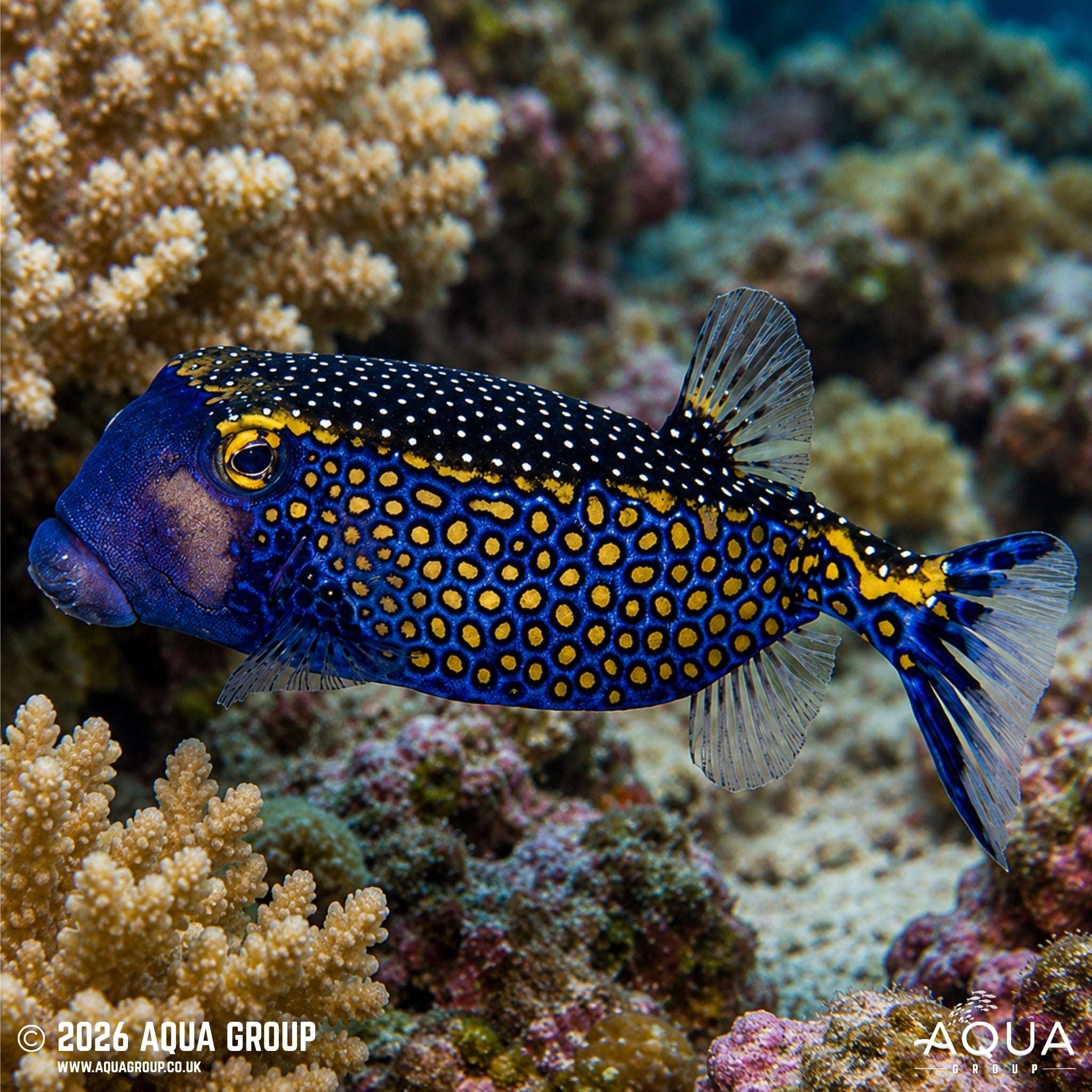
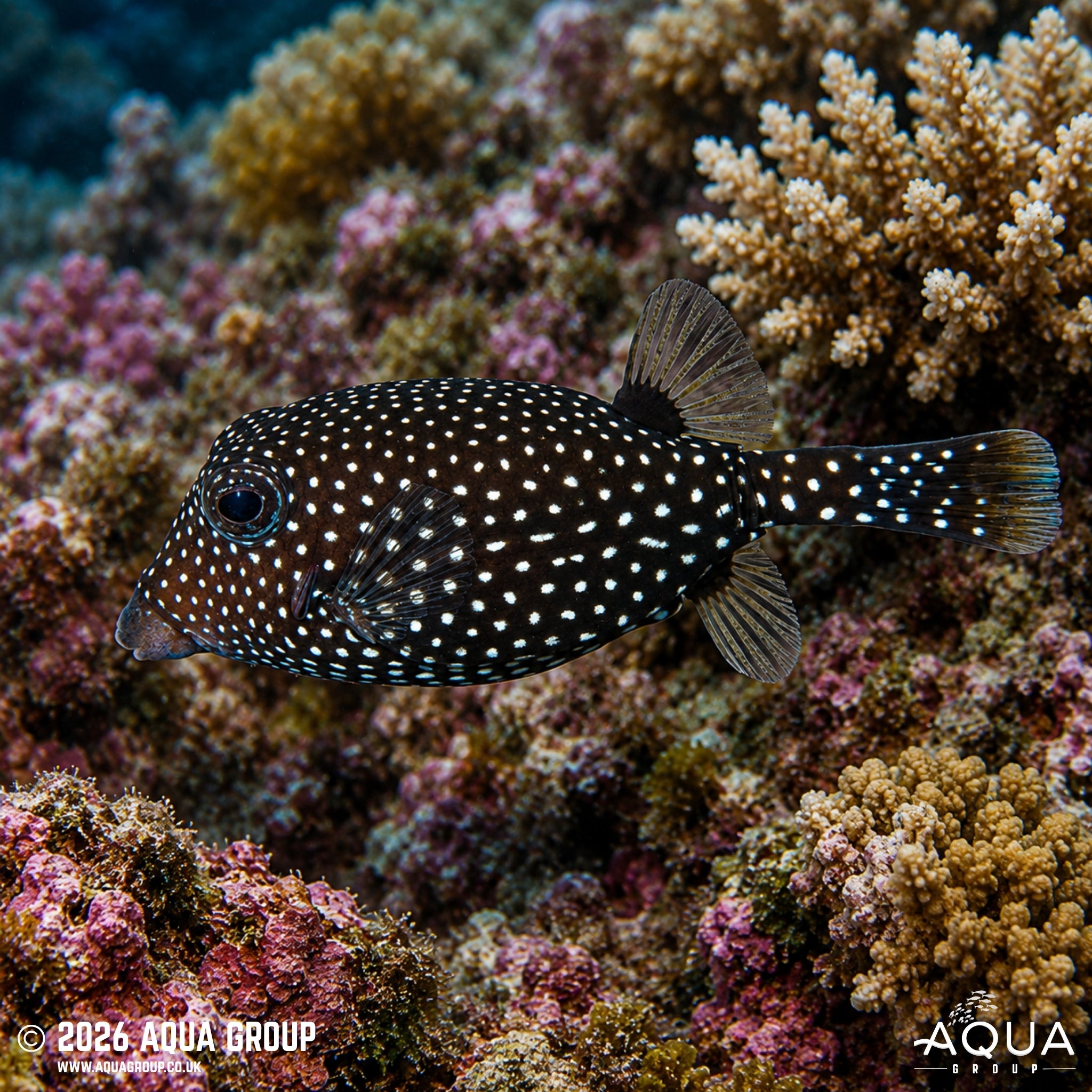
The Hawaiian Boxfish, Ostracion meleagris, is a fascinating and unusual marine boxfish, admired for its rigid armour-like body, unique swimming style and striking spotted pattern. Also known as the Spotted Boxfish, White-Spotted Boxfish or Black Boxfish, this species is a specialist marine fish best suited to experienced aquarists with large, stable aquariums and carefully chosen tank mates. It is not a standard community reef fish, and its feeding behaviour, adult size, sensitivity to stress and potential toxin risk mean it should be planned carefully before purchase.
Common Name:
Hawaiian Boxfish, Spotted Boxfish, White-Spotted Boxfish, Whitespotted Boxfish, Black Boxfish, Ornate Boxfish.
Scientific Name (Latin):
Ostracion meleagris
Maximum Size:
Up to around 25 cm, making it a medium-sized but specialist marine fish that requires good swimming space and a stable aquarium.
Water Type:
Marine
Origin / Natural Habitat:
Found across the Indo-Pacific and Eastern Pacific, including the Hawaiian Islands, where the Hawaiian form is recognised in the trade. In the wild, Hawaiian Boxfish inhabit clear lagoon reefs and seaward reefs from the lower surge zone to deeper reef areas. Juveniles may be found among rocky boulders and urchin-rich areas, while adults are usually associated with reef crests, slopes and open reef structure.
Water Parameters:
Temperature: 24–27°C
pH Range: 8.1–8.4
Hardness or Salinity: SG 1.020–1.025
Temperament:
Peaceful but specialist. Hawaiian Boxfish are not usually aggressive, but they can be slow, easily stressed and vulnerable to harassment from faster or more boisterous tank mates. Best kept with calm, peaceful to moderately active marine fish that will not nip, chase or outcompete them. Avoid aggressive triggers, puffers, large wrasses, predatory fish or fin-nipping species.
Diet:
Omnivorous grazer and micro-predator. In the wild, this species feeds on a mixture of tunicates, worms, sponges, molluscs, copepods, algae and other reef-surface foods. In the aquarium, offer a varied diet including finely chopped clam, mussel, prawn, mysis shrimp, enriched brineshrimp, sponge-based marine foods, algae-based foods, nori, spirulina flakes and quality marine pellets. Several smaller feeds per day are recommended, as boxfish can be slow feeders and may not compete well in busy aquariums.
Minimum Tank Size:
A practical minimum of around 600–800 litres is recommended for a single specimen, with larger aquariums strongly preferred for long-term adult care. The aquarium should be mature, stable and well filtered, with open swimming space, mature rockwork, low-stress shelter areas and excellent water quality.
Behaviour & Activity:
A slow, deliberate swimmer with a distinctive hovering movement. Hawaiian Boxfish spend time exploring rockwork and reef surfaces, picking at small foods and moving calmly through the aquarium. Their rigid box-like body gives them a unique appearance, but it also means they are not fast or agile compared with many reef fish. They should not be kept in overly turbulent systems where they are constantly pushed around by flow.
Reef Safe:
Not Reef Safe
Hawaiian Boxfish are not recommended for coral-focused reef aquariums. They may pick at sponges, tunicates, small worms, molluscs, tube worms, small crustaceans and potentially some coral or sessile invertebrate tissue. They are better suited to specialist marine systems or fish-only with live rock aquariums where their feeding behaviour can be managed safely.
Special Requirements or Care Notes:
Best suited to experienced marine fishkeepers. Boxfish can release toxic mucus when severely stressed, injured, trapped, harassed or dying, which may harm other aquarium livestock. For this reason, they should only be kept in calm, stable systems with carefully chosen tank mates and strong filtration. Avoid copper-based medications unless under expert guidance, avoid rough handling, and never house with fish likely to nip or bully them. Gradual lighting changes, careful acclimation and low-stress husbandry are strongly recommended.
Suitable for:
Experienced fishkeepers
Availability:
Specialist marine species / Occasionally available in the marine aquarium trade, with availability varying depending on supplier, size, sex, colour phase and import region
All images are a visual representation of the fish you will receive, made to be as accurate as possible. Please note that Mother Nature is a wonderful thing, and variation in patterns and colours will occur — that is part of the unique beauty of these animals.
Order and get 50 reward points
Earn points by signing up for our rewards program