
Description
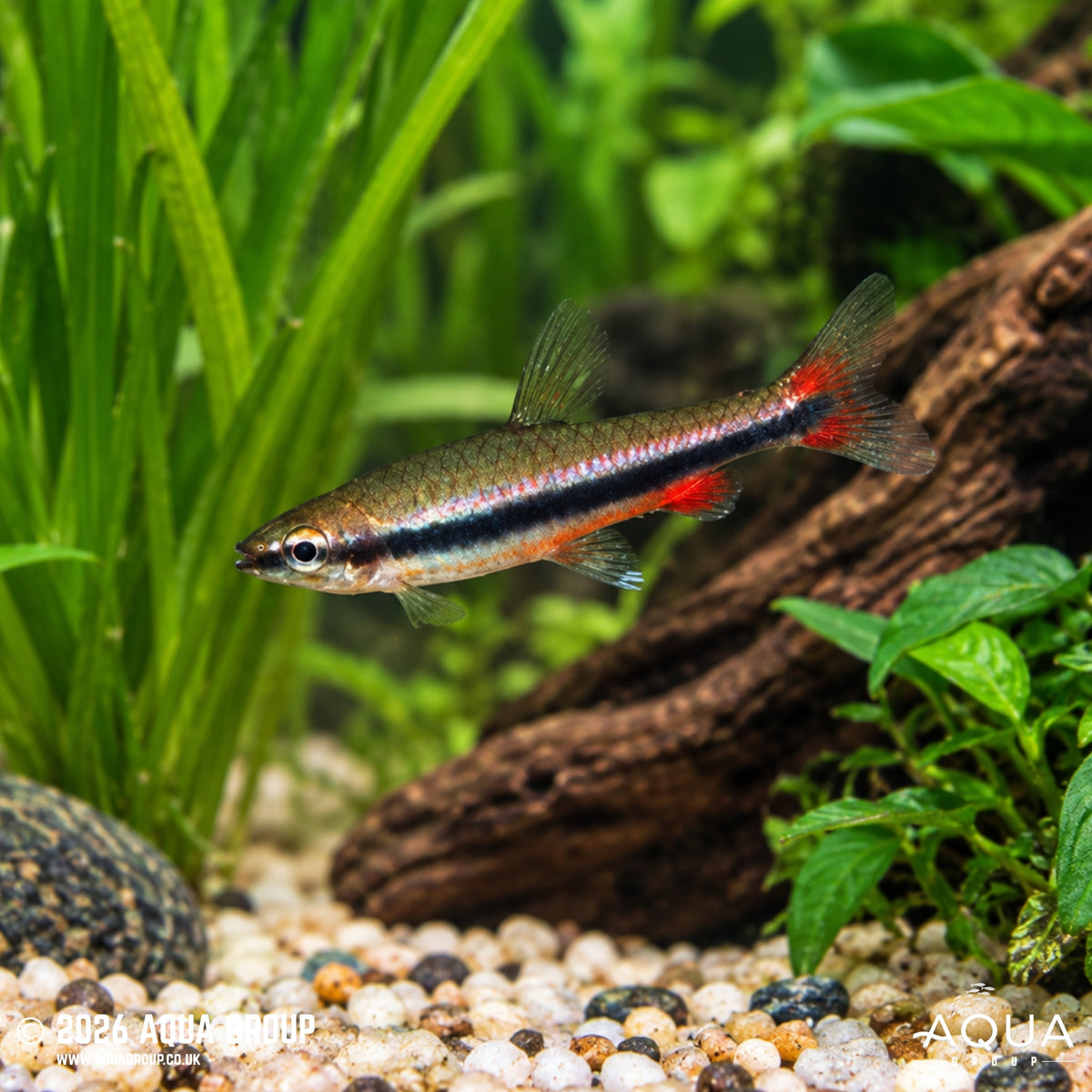
Golden Pencilfish – Nannostomus beckfordi
The Golden Pencilfish is an elegant freshwater fish admired for its slender body shape, warm golden colouration, distinctive dark lateral stripe and attractive reddish fin markings. Also known as Beckford’s Pencilfish, this peaceful South American species is an excellent addition to planted tropical aquariums, blackwater-style displays and carefully planned community setups. Active yet relatively gentle, Golden Pencilfish are best kept in groups, where their natural social behaviour and beautiful colouration can be fully appreciated.
Common Name: Golden Pencilfish, Beckford’s Pencilfish, Gold Pencilfish, Golden Pencil Tetra
Scientific Name (Latin): Nannostomus beckfordi
Maximum Size: Approximately 5–6.5 cm
Water Type: Freshwater
Origin / Natural Habitat: The Golden Pencilfish originates from South America, including Guyana, Suriname, French Guiana, Brazil and parts of Venezuela.
In the wild, it inhabits slow-moving streams, quiet river tributaries, swampy areas and sheltered freshwater habitats with abundant aquatic vegetation.
These environments commonly contain submerged roots, branches, leaf litter and shaded margins, providing shelter and natural feeding opportunities.
In the aquarium, Golden Pencilfish thrive in mature planted environments with floating plants, driftwood, gentle water movement and open areas for swimming.
Water Parameters: Temperature: 22–27°C pH Range: 5.5–7.5 Hardness: Soft to moderately hard (approximately 1–15 dGH) Ammonia/Nitrite: 0 ppm Nitrate: Kept low and stable Flow: Gentle to moderate preferred
Temperament: Peaceful / Occasionally Territorial Between Males
Golden Pencilfish are generally peaceful fish that are well suited to calm community aquariums.
They are social and should be maintained in groups, although males may occasionally display, chase or spar with one another.
These interactions are generally harmless when the aquarium provides sufficient space, plants and visual barriers.
Larger groups help spread attention between individuals and encourage more natural behaviour.
Avoid aggressive or overly boisterous tankmates that may intimidate them.
Diet: Omnivore / Micro-predator
Golden Pencilfish naturally feed on tiny aquatic invertebrates, zooplankton, insect larvae and other small organisms.
Offer high-quality micro pellets, finely crushed tropical flakes and small floating or slow-sinking foods as their staple diet.
Supplement regularly with frozen or live foods such as daphnia, cyclops, baby brineshrimp, mosquito larvae and appropriately sized bloodworm.
Their small mouths make finely sized foods particularly suitable.
A varied diet helps maintain healthy growth, strong colouration and breeding condition.
Minimum Tank Size: Approximately 60 litres for a small group
A longer aquarium with plenty of horizontal swimming space is preferred.
Larger aquariums are recommended for groups containing several males or mixed peaceful community setups.
Provide dense planting around the sides and background alongside open swimming areas.
Behaviour & Activity: The Golden Pencilfish is a slender, active species that spends much of its time swimming through the middle and upper levels of the aquarium.
Unlike tightly shoaling tetras, Golden Pencilfish often form loose groups, with individuals exploring plants and displaying to one another.
Males may develop stronger golden and reddish colouration, particularly during courtship or social displays.
An interesting characteristic of this species is its ability to change appearance at night, when darker vertical markings may temporarily become visible.
In well-planted aquariums with subdued lighting, their golden colouration and dark horizontal stripe create an attractive contrast against green plants and natural driftwood.
Community Suitability: Peaceful Community Fish
Golden Pencilfish are excellent additions to peaceful tropical community aquariums.
Suitable tankmates include small rasboras, peaceful tetras, other compatible pencilfish, small corydoras, otocinclus, kuhli loaches, peaceful dwarf gouramis and carefully selected dwarf cichlids.
They can also be housed with peaceful freshwater shrimp, although very small shrimp or newly hatched shrimplets may occasionally be eaten.
Avoid aggressive cichlids, large predatory fish, fin-nippers, boisterous barbs and highly competitive surface-feeding species.
Tankmates should be selected to ensure the Golden Pencilfish can feed comfortably without being intimidated.
Special Requirements or Care Notes: Keep Golden Pencilfish in groups of at least six, with eight to ten or more preferred where space allows.
A mature aquarium with stable water quality, gentle water movement and plenty of planting is strongly recommended.
Provide floating plants, driftwood, fine-leaved vegetation and shaded areas to help the fish feel secure.
Although relatively adaptable, Golden Pencilfish generally show their best colouration and natural behaviour in softer, slightly acidic water.
Multiple males may display or establish small territories, so plants and visual barriers are beneficial.
A secure aquarium lid is recommended, as small active fish may jump when startled.
Golden Pencilfish are egg-scattering fish and do not provide parental care.
Adults may eat eggs or fry, so a separate breeding arrangement with fine-leaved plants or spawning mops is recommended if breeding is intended.
Regular partial water changes, careful feeding and stable aquarium conditions will help maintain their health and colouration.
Suitable for: Beginner to intermediate
Availability: Common to occasional, depending on supplier and import or breeding availability.
All images are a visual representation of the fish you will receive, made to be as accurate as possible. Please note that Mother Nature is a wonderful thing, and variation in patterns and colours will occur — that is part of the unique beauty of these animals.
Order and get 3 reward points
Earn points by signing up for our rewards program