
Description
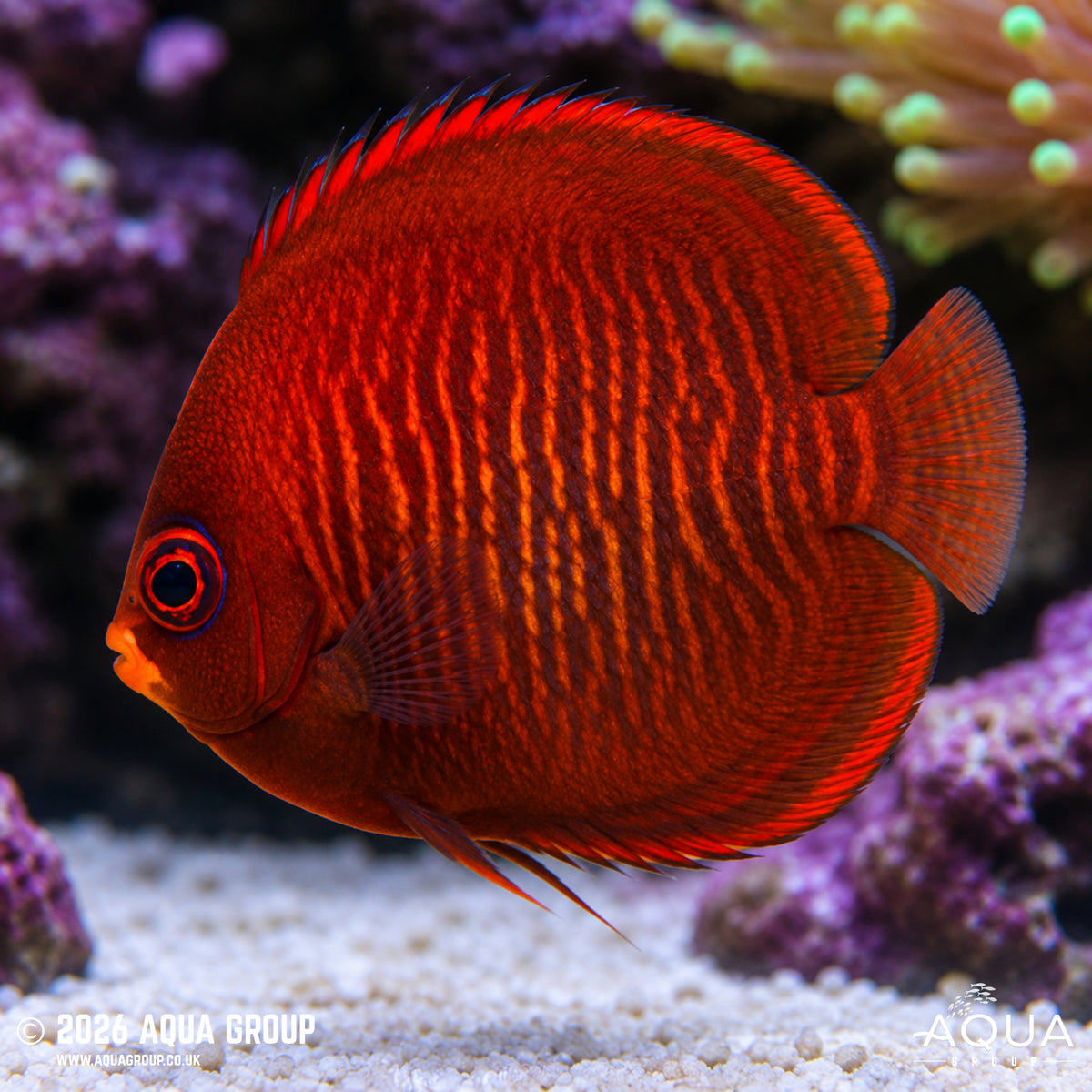
Golden Angelfish (Centropyge aurantia)
The Golden Angelfish is a beautiful and highly sought-after dwarf marine angelfish recognised for its rich golden-orange body colour, delicate reddish patterning and shy, secretive nature. It is a striking addition to mature marine aquariums but can be challenging to acclimate and is best suited to experienced keepers. Like many dwarf angelfish, it should be considered reef safe with caution due to the possibility of nipping at corals and other sessile invertebrates.
Common Name:
Golden Angelfish, Golden Dwarf Angelfish
Scientific Name (Latin):
Centropyge aurantia
Maximum Size:
Approximately 9–10 cm
Water Type:
Marine
Origin / Natural Habitat:
The Golden Angelfish occurs in tropical western Pacific reef environments and is commonly associated with sheltered coral-rich areas, caves, overhangs and dense reef structure.
It tends to remain close to cover and is often found in shaded areas where it can graze and retreat quickly if disturbed.
Water Parameters:
Temperature: 24–26°C
pH Range: 8.1–8.4
Salinity: SG 1.024–1.026
Nitrate: Low and stable
Ammonia/Nitrite: 0 ppm
Temperament:
Peaceful to Semi-Aggressive
The Golden Angelfish is generally shy when first introduced but may become territorial towards similar dwarf angelfish once established.
It is best housed with calm to moderately robust tankmates that will not intimidate it or outcompete it at feeding time.
Diet:
Omnivore / Grazer
The Golden Angelfish naturally feeds on algae, biofilm, small benthic organisms and material growing across reef surfaces.
In the aquarium, offer a varied diet including marine algae, spirulina-based foods, quality angelfish preparations, frozen mysis, enriched brine shrimp and suitable marine pellets.
Access to mature live rock for natural grazing is highly beneficial.
Minimum Tank Size:
Approximately 200 litres
A mature aquarium with substantial rockwork and numerous caves is more important than open swimming space alone.
Behaviour & Activity:
The Golden Angelfish is a relatively secretive species that spends much of its time weaving through rockwork, caves and shaded areas.
New specimens may remain hidden for extended periods while acclimating.
Once settled, it usually becomes more confident and can be seen grazing regularly across established rock surfaces.
Reef Safe:
With Caution
The Golden Angelfish should be considered reef safe with caution.
Some individuals may nip at fleshy corals, soft corals, zoanthids, clam mantles and other sessile invertebrates.
Individual behaviour varies, so careful observation is recommended after introduction.
Special Requirements or Care Notes:
Provide a mature marine aquarium with extensive established rockwork, caves and shaded retreat areas.
This species can be shy and sensitive during acclimation, so stable water conditions and peaceful surroundings are particularly important.
Monitor newly introduced specimens closely to ensure they begin feeding consistently.
A varied diet with a strong algae component and frequent access to natural grazing surfaces will help maintain healthy body condition.
Avoid highly aggressive tankmates and excessive competition at feeding time.
Multiple dwarf angelfish should only be kept together in sufficiently large aquariums with extensive rockwork and visual barriers.
Suitable for:
Experienced
Availability:
Availability can vary significantly depending on season, collection area and supplier.
All images are a visual representation of the fish you will receive, made to be as accurate as possible. Please note that Mother Nature is a wonderful thing, and variation in patterns and colours will occur — that is part of the unique beauty of these animals.
Order and get 225 reward points
Earn points by signing up for our rewards program