

Description
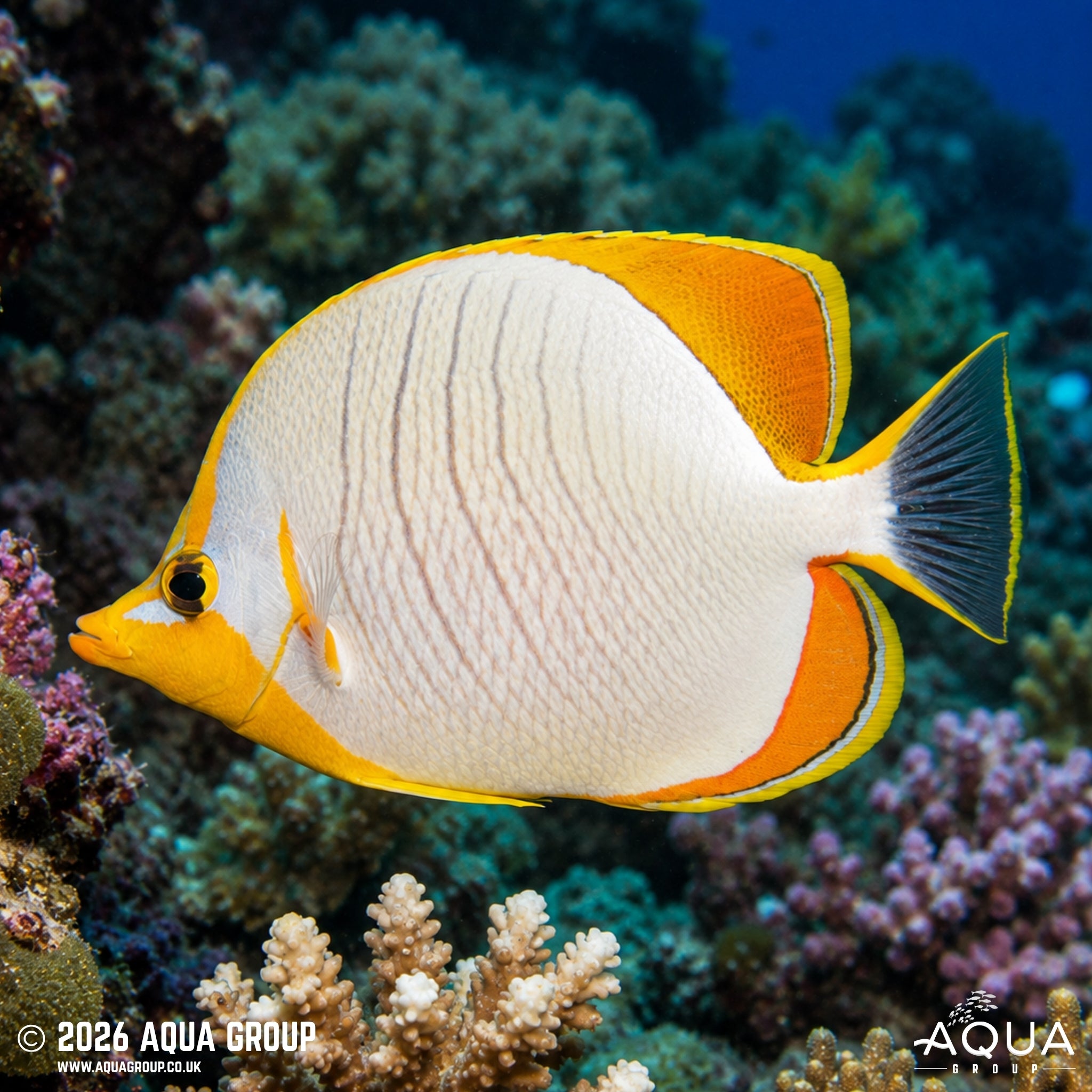
Gold Rim Butterflyfish (Chaetodon xanthocephalus)
The Gold Rim Butterflyfish, Chaetodon xanthocephalus, is an attractive and less commonly seen Indian Ocean butterflyfish, admired for its pale body, soft yellow head, delicate scale patterning and warm golden edging. Also known as the Yellowhead Butterflyfish, Goldring Butterflyfish or Yellow-Head Butterflyfish, this species is a beautiful but specialist marine fish best suited to mature aquariums with stable water quality, established rockwork and a varied feeding routine. Like many butterflyfish, it should be treated as reef safe with caution due to its natural interest in coral polyps, small invertebrates and sessile reef life.
Common Name:
Gold Rim Butterflyfish, Gold Rim Butterfly, Goldring Butterflyfish, Goldring Butterfly, Yellowhead Butterflyfish, Yellow-Head Butterflyfish, Yellow Head Butterflyfish.
Scientific Name (Latin):
Chaetodon xanthocephalus
Maximum Size:
Around 20 cm, making it a medium-sized butterflyfish that needs good swimming space and a mature marine aquarium.
Water Type:
Marine
Origin / Natural Habitat:
Found across the Western Indian Ocean, including East Africa, Sri Lanka, the Maldives and surrounding reef regions. In the wild, Gold Rim Butterflyfish are associated with reef habitats, coral heads, reef flats, lagoon areas and seaward reef zones. They may be seen singly, in pairs or occasionally in loose groups where suitable feeding areas are available.
Water Parameters:
Temperature: 24–27°C
pH Range: 8.1–8.4
Hardness or Salinity: SG 1.020–1.025
Temperament:
Peaceful to semi-aggressive. Gold Rim Butterflyfish are generally suitable with peaceful to moderately robust marine fish, but they can be territorial towards other butterflyfish, especially similar Chaetodon species. Best kept singly unless the aquarium is very large or a compatible pair has been sourced. Avoid very aggressive tank mates that may intimidate them or stop them feeding properly.
Diet:
Omnivorous grazer and micro-predator. In the wild, butterflyfish feed from reef surfaces and may consume small invertebrates, coral polyps, worms, algae films and other natural reef foods depending on species and habitat. In the aquarium, offer a varied diet including frozen mysis shrimp, enriched brineshrimp, finely chopped clam, mussel, prawn, krill, sponge-based angelfish or butterflyfish preparations, quality marine flakes, small pellets and algae-based foods such as spirulina. Several smaller feeds per day are recommended, especially while the fish is settling.
Minimum Tank Size:
A practical minimum of around 350–450 litres is recommended for a single specimen, with larger aquariums preferred for long-term success. Provide mature live rock, caves, overhangs, natural grazing surfaces and open swimming space.
Behaviour & Activity:
A graceful daytime swimmer that spends much of its time cruising around rockwork and inspecting reef surfaces for food. It may be cautious when first introduced, but usually becomes more confident once settled and feeding reliably. Like many butterflyfish, it benefits from a calm introduction period, a steady feeding routine and plenty of mature rockwork to explore. A secure lid is recommended, as startled marine fish can jump.
Reef Safe:
Reef Safe with Caution
Gold Rim Butterflyfish should be treated as reef safe with caution. It may nip at LPS corals, soft corals, tube worms, small anemones, sponges, clam mantles and other sessile invertebrates. It is generally better suited to fish-only with live rock systems, carefully selected mixed reefs or larger mature aquariums where coral compatibility can be monitored closely.
Special Requirements or Care Notes:
Best suited to intermediate to experienced marine fishkeepers. This species should be added to a mature, stable aquarium with plenty of live rock and a varied feeding routine. Newly imported specimens may be cautious feeders, so offer a wide range of small frozen foods and grazing options. Avoid keeping with aggressive butterflyfish or dominant tank mates that may cause feeding stress. Monitor coral and clam behaviour carefully if added to a reef aquarium.
Suitable for:
Intermediate to Experienced fishkeepers
Availability:
Occasionally available in the marine aquarium trade / Availability can vary depending on supplier, collection region, size and import season
All images are a visual representation of the fish you will receive, made to be as accurate as possible. Please note that Mother Nature is a wonderful thing, and variation in patterns and colours will occur — that is part of the unique beauty of these animals.
Order and get 35 reward points
Earn points by signing up for our rewards program