

Description
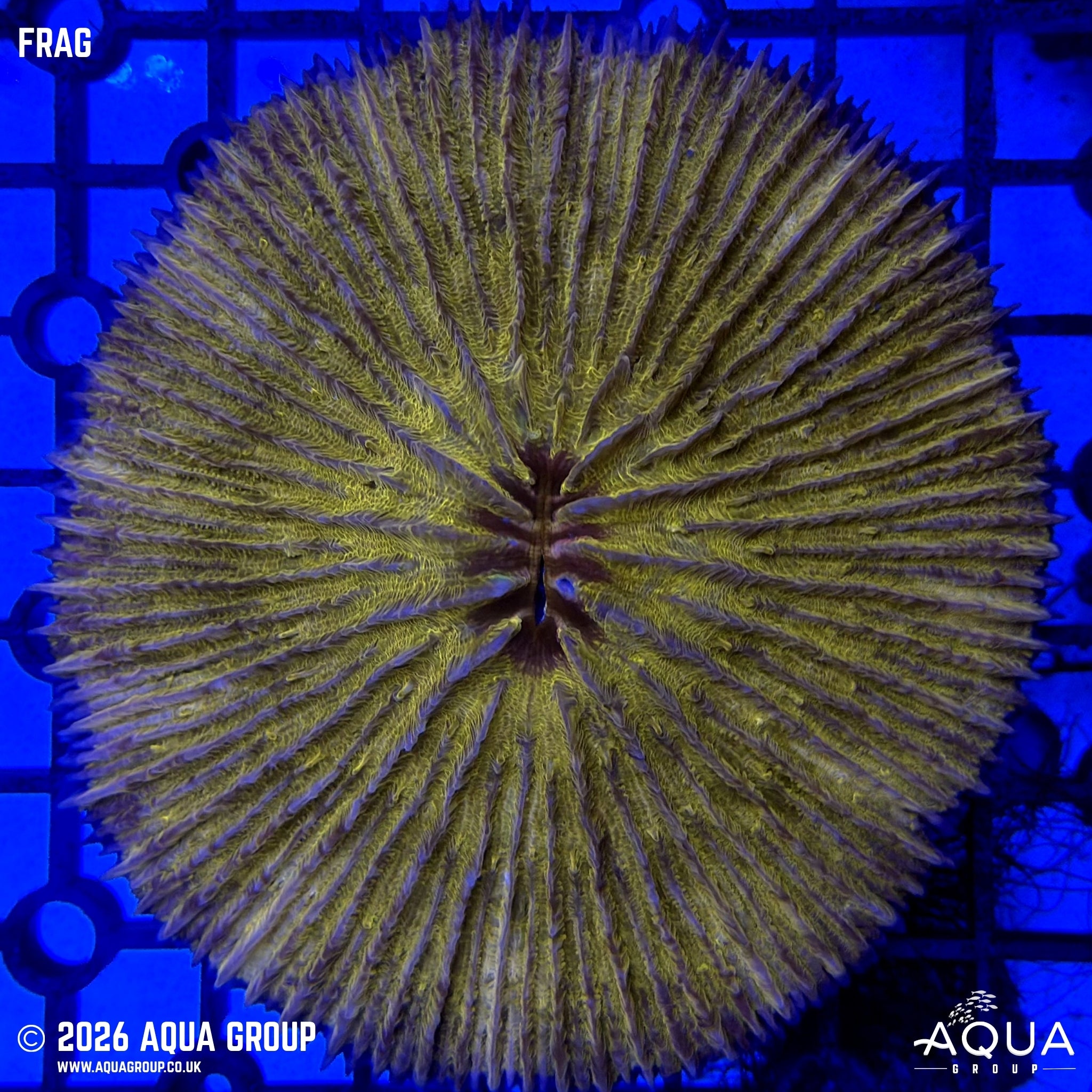
Gold Fungia (Fungia sp.)
Gold Fungia is a beautiful LPS coral admired for its rounded plate-like form, fleshy tissue and warm golden colouration under reef lighting. Often called a Plate Coral, it makes an excellent feature coral for the sandbed, where its natural shape, texture and subtle movement can be appreciated without being crowded by surrounding rockwork.
Common Name:
Gold Fungia, Fungia Plate Coral, Plate Coral, Gold Plate Coral
Scientific Name (Latin):
Fungia sp.
Coral Type:
LPS Coral
Growth Form:
Solitary plate-like growth form with fleshy tissue over a hard, rounded skeleton.
Water Type:
Marine
Origin / Natural Habitat:
Fungia corals are found across Indo-Pacific reef environments, often living on sandy reef flats, lagoonal areas and lower reef slopes where they receive moderate light, gentle to moderate flow and stable reef conditions.
Water Parameters:
Temperature: 24–26°C
pH Range: 8.1–8.4
Salinity: SG 1.024–1.026
Alkalinity: 7–10 dKH
Calcium: 400–450 ppm
Magnesium: 1250–1350 ppm
Nitrate: Low but detectable
Phosphate: Low but detectable
Lighting:
LOW TO MEDIUM
Gold Fungia is best kept under low to medium reef lighting. It can adapt to stronger light over time, but sudden exposure to intense lighting may cause stress, retraction or colour loss. Gradual light acclimation is recommended when introducing it to a new aquarium.
Flow:
LOW TO MEDIUM
Provide gentle to moderate, indirect flow that helps keep the coral surface clean without blasting the tissue. Flow should be strong enough to prevent detritus from settling, but not so forceful that the coral is flipped, pushed or unable to expand naturally.
Placement:
Place on the sandbed with space around the coral for full expansion. Avoid placing directly on sharp rockwork, as the fleshy underside and tissue can be damaged. Leave room between the coral and neighbouring corals, especially aggressive LPS species with sweeper tentacles.
Temperament / Aggression:
Semi-aggressive
Fungia corals can sting nearby corals if they come into contact, and they should be given clear space on the sandbed. They are not usually highly aggressive from a distance, but direct contact with other corals can cause tissue damage.
Feeding:
Photosynthetic, but benefits from feeding
Gold Fungia receives energy from light through its symbiotic zooxanthellae, but it benefits from occasional feeding. Suitable foods include small mysis, fine meaty coral foods, LPS pellets and finely chopped marine foods. Feed sparingly and avoid oversized foods that may be difficult for the coral to process.
Growth Rate:
Slow to moderate
In a stable reef aquarium, Gold Fungia will usually grow gradually, maintaining a healthy fleshy appearance and steady skeletal development. Good expansion, feeding response and stable colour are positive signs of long-term health.
Special Requirements or Care Notes:
Gold Fungia should be kept on a clean, stable sandbed with gentle flow and enough room around it. Avoid placing it where sand can constantly bury the tissue or where burrowing fish may disturb it. Maintain stable alkalinity, calcium and magnesium levels, and avoid sudden changes in salinity or lighting. Inspect carefully before introduction and use coral dips where appropriate. Watch for tissue recession, damage from being flipped over, detritus build-up and irritation from neighbouring corals.
Suitable for:
Beginner to Intermediate reefkeepers
Availability:
Regularly available in the coral trade
All images are a visual representation of the coral you will receive, made to be as accurate as possible. Please note that Mother Nature is a wonderful thing, and variation in patterns, colours and growth form will occur — that is part of the unique beauty of these animals.
Order and get 120 reward points
Earn points by signing up for our rewards program