

Description
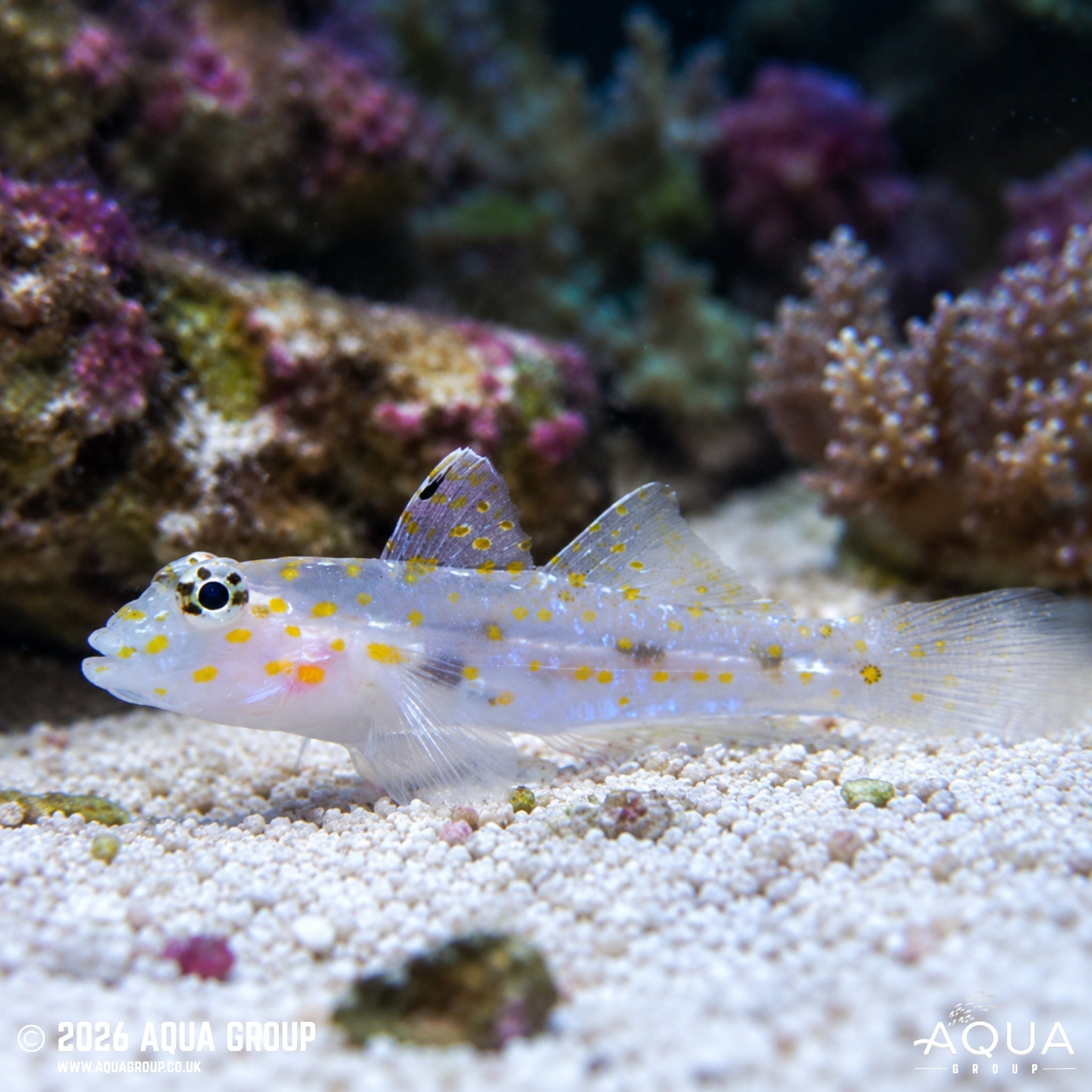
Ghost Goby (Fusigobius longispinus)
The Ghost Goby, Fusigobius longispinus, is a small and subtle marine goby, appreciated for its delicate sand-coloured body, orange spotting and calm bottom-dwelling behaviour. Also known as the Orange-Spotted Sand-Goby, this species is well suited to mature peaceful reef aquariums where it can spend its time resting on sandy areas, hovering close to rockwork and picking at tiny foods from the substrate. It is a quiet, understated fish that works especially well in calm marine communities with gentle tank mates and suitable sandy habitat.
Common Name:
Ghost Goby, Orange-Spotted Sand-Goby, Orange Spotted Sand Goby, Longspine Sand Goby, Sand Goby.
Scientific Name (Latin):
Fusigobius longispinus
Maximum Size:
Around 8 cm, making it a small and manageable marine goby.
Water Type:
Marine
Origin / Natural Habitat:
Found across tropical Indo-Pacific reef regions, including areas of the Red Sea, Indian Ocean, Western Pacific, Japan, Indonesia, Australia and surrounding reef systems. In the wild, Ghost Gobies are associated with sandy bottoms, caves, seaward reefs and sheltered reef structure. They are usually found close to the substrate, where their pale colouration helps them blend into sand, rubble and shaded reef areas.
Water Parameters:
Temperature: 24–27°C
pH Range: 8.1–8.4
Hardness or Salinity: SG 1.020–1.025
Temperament:
Peaceful to mildly territorial. Ghost Gobies are generally suitable for calm reef aquariums and peaceful marine communities. They may show territorial behaviour towards very similar gobies or other small sand-dwelling species, especially in smaller aquariums. Best kept with peaceful fish that will not bully, outcompete or intimidate them.
Diet:
Carnivorous micro-predator. In the aquarium, offer a varied diet of frozen mysis shrimp, enriched brineshrimp, cyclops, copepod-based foods, finely chopped meaty marine foods and quality small marine pellets. Food should be small enough for the goby to take easily and should be allowed to reach the lower areas of the aquarium where it naturally feeds.
Minimum Tank Size:
A practical minimum of around 75–100 litres is recommended for a single specimen, with larger aquariums preferred for mixed reef communities. Provide sandy areas, mature rockwork, caves, crevices and calm zones where the fish can rest and forage naturally.
Behaviour & Activity:
A small bottom-associated goby that spends much of its time resting on sand, rubble or low rockwork while watching for passing food. It may hover briefly above the substrate or retreat quickly into nearby shelter if startled. This species is not a bold open-water swimmer, so it is best appreciated in peaceful aquariums where it can settle without pressure from aggressive tank mates. A secure lid is recommended, as gobies can jump when startled.
Reef Safe:
Reef Safe
Ghost Gobies are considered reef safe and do not normally nip corals, clam mantles or sessile invertebrates. They are suitable for peaceful reef aquariums, although they may consume tiny natural microfauna and small crustaceans as part of their normal feeding behaviour.
Special Requirements or Care Notes:
Best kept in a mature, stable marine aquarium with peaceful tank mates and suitable sandy or rubble areas. Avoid aggressive wrasses, hawkfish, predatory fish or very boisterous feeders that may prevent the goby from feeding confidently. This species can be shy when first introduced, so provide plenty of cover and make sure food reaches the substrate. Avoid mixing with very similar gobies unless the aquarium is large enough to provide separate territories.
Suitable for:
Beginner to Intermediate fishkeepers
Availability:
Occasionally available in the marine aquarium trade / Availability can vary depending on supplier, import and identification
All images are a visual representation of the fish you will receive, made to be as accurate as possible. Please note that Mother Nature is a wonderful thing, and variation in patterns and colours will occur — that is part of the unique beauty of these animals.
Order and get 25 reward points
Earn points by signing up for our rewards program