

Description
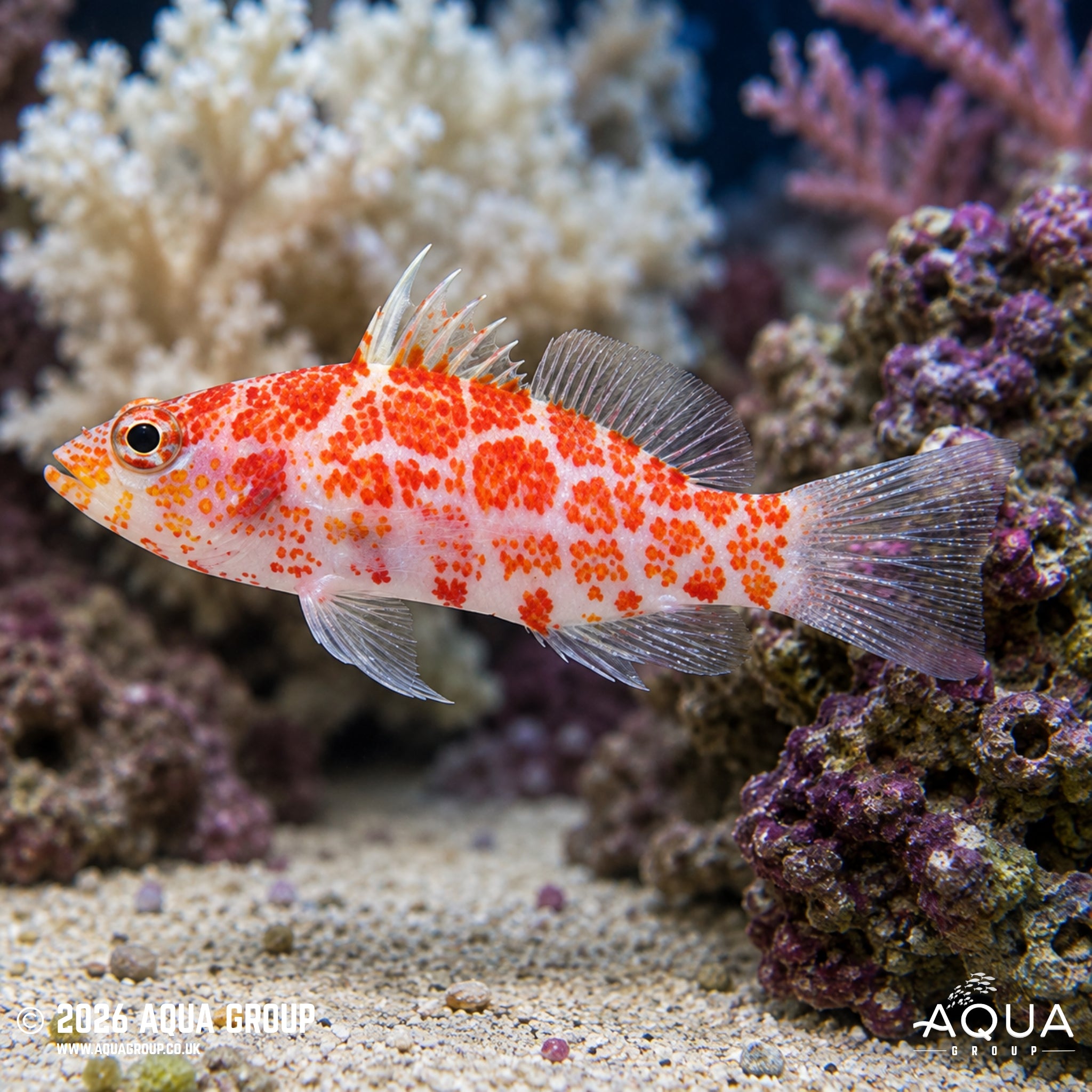
Geometric Hawkfish (Plectranthias altipinnatus)
The Geometric Hawkfish, Plectranthias altipinnatus, is a rare miniature Japanese reef fish admired for its intricate geometric pattern, large expressive eyes and compact perch-like body. Plectranthias altipinnatus, it is more accurately described as a small anthias or reef perchlet rather than a true hawkfish. This cryptic micro-predator naturally inhabits rocky reef structure, where it remains close to caves and crevices while watching for tiny crustaceans. Its exceptionally small adult size makes it fascinating for specialist displays, but its limited aquarium history, deeper temperate habitat and feeding requirements make it best suited to experienced marine fishkeepers.
Common Name:
Geometric Hawkfish, Geometric Perchlet, Highfin Perchlet, Geometric Anthias.
Scientific Name (Latin):
Xenanthias altipinnatus
Formerly and still widely listed in the aquarium trade as Plectranthias altipinnatus.
Maximum Size:
Approximately 4.5 cm standard length, with total length potentially slightly greater once the tail is included.
Water Type:
Marine
Origin / Natural Habitat:
Northwestern Pacific, currently documented from Japan, including the Izu Peninsula. The original type specimen was collected from rocky reef habitat at approximately 40 metres.
This species is associated with cooler, structurally complex reefs rather than warm, shallow tropical lagoons. It is likely to remain close to rock faces, caves and narrow crevices where it can shelter and ambush passing microfauna.
Water Parameters:
Temperature: 20–24°C
pH Range: 8.0–8.4
Hardness or Salinity: Marine salinity 1.023–1.026 specific gravity; stable salinity, strong oxygenation and consistently excellent water quality are essential. The holding and collection temperature should be confirmed before purchase.
Temperament:
Generally peaceful towards larger unrelated fish, but potentially territorial towards its own species or other tiny perchlets occupying the same caves.
Despite its small size, it is a micro-predator and may consume very small shrimps, newly hatched crustaceans and fish fry. Avoid boisterous or aggressive tank mates that may intimidate it or prevent it from feeding.
Diet:
Carnivorous micro-predator. Its natural diet is expected to consist of copepods, amphipods, tiny shrimps and other small crustaceans captured close to rocky reef structure.
In the aquarium, offer enriched Artemia, copepods, finely chopped mysis shrimp, Calanus, lobster eggs and very small sinking carnivore pellets. Live copepods or enriched live Artemia may be required to encourage a newly imported specimen to begin feeding.
Offer several small meals each day and deliver food close to the fish’s preferred cave or perch. Food particles must be small enough to fit comfortably into its mouth.
Minimum Tank Size:
A minimum aquarium volume of approximately 75 litres is recommended for one specimen, provided the system is mature, temperature appropriate and contains extensive secure rockwork. A larger aquarium offers greater water stability and a more sustainable population of natural microfauna.
Behaviour & Activity:
A cryptic, bottom-oriented reef fish that is likely to spend much of its time perched beside caves, beneath ledges or within narrow rock crevices. It may remain motionless while observing its surroundings before making a rapid movement to capture passing food.
Newly introduced specimens may remain hidden for extended periods, particularly under bright lighting. Activity and feeding confidence may increase during subdued lighting and once the fish has established a secure territory.
Reef Safe:
Reef Safe with Caution
Geometric Hawkfish are not expected to consume coral tissue or damage established corals. However, copepods, amphipods, very small shrimps and crustacean larvae may be eaten.
Larger established ornamental invertebrates should generally be ignored, but compatibility with newly introduced micro-shrimps and other extremely small animals cannot be guaranteed.
Special Requirements or Care Notes:
This is a rarely maintained species with very limited documented aquarium husbandry. Care recommendations should therefore remain conservative and be adjusted according to the specimen’s collection depth, previous holding conditions and feeding response.
Confirm the fish’s current temperature and collection information before purchase. A reliable aquarium chiller may be required, particularly during warmer weather, because this Japanese reef species should not automatically be maintained at standard tropical reef temperatures.
Provide mature live rock with numerous small caves, overhangs and narrow crevices. Subdued areas are important, although sufficient open space should remain around the shelter for feeding.
Choose peaceful tank mates that are too large to be viewed as prey but not so active that they outcompete the fish. Avoid aggressive damsels, larger hawkfish, predatory wrasses, dottybacks and other territorial cave-dwellers.
Select only an alert specimen with clear eyes, intact fins and a rounded body profile. Confirm that it accepts suitable aquarium foods before purchase whenever possible. Its small body provides limited energy reserves, so prolonged refusal to feed can become serious quickly.
A mature refugium or established copepod population may support natural feeding between meals. Target feeding is recommended, and body condition should be monitored closely around the abdomen and behind the head.
Use a tightly fitted aquarium cover because small reef perchlets may jump when startled. Protect pump and overflow intakes and maintain strong overall oxygenation without directing excessive current into the fish’s resting cave.
Quarantine should be carried out in a temperature-controlled system containing suitable shelter and appropriately sized live or frozen foods. A bare, brightly lit quarantine aquarium may cause stress and make feeding establishment more difficult.
Suitable for:
Expert only
Availability:
Rare
All images are a visual representation of the fish you will receive, made to be as accurate as possible. Please note that Mother Nature is a wonderful thing, and variation in patterns and colours will occur — that is part of the unique beauty of these animals.
Order and get 40 reward points
Earn points by signing up for our rewards program