


Description
Galaxy Mosaic Guppy (Poecilia reticulata)
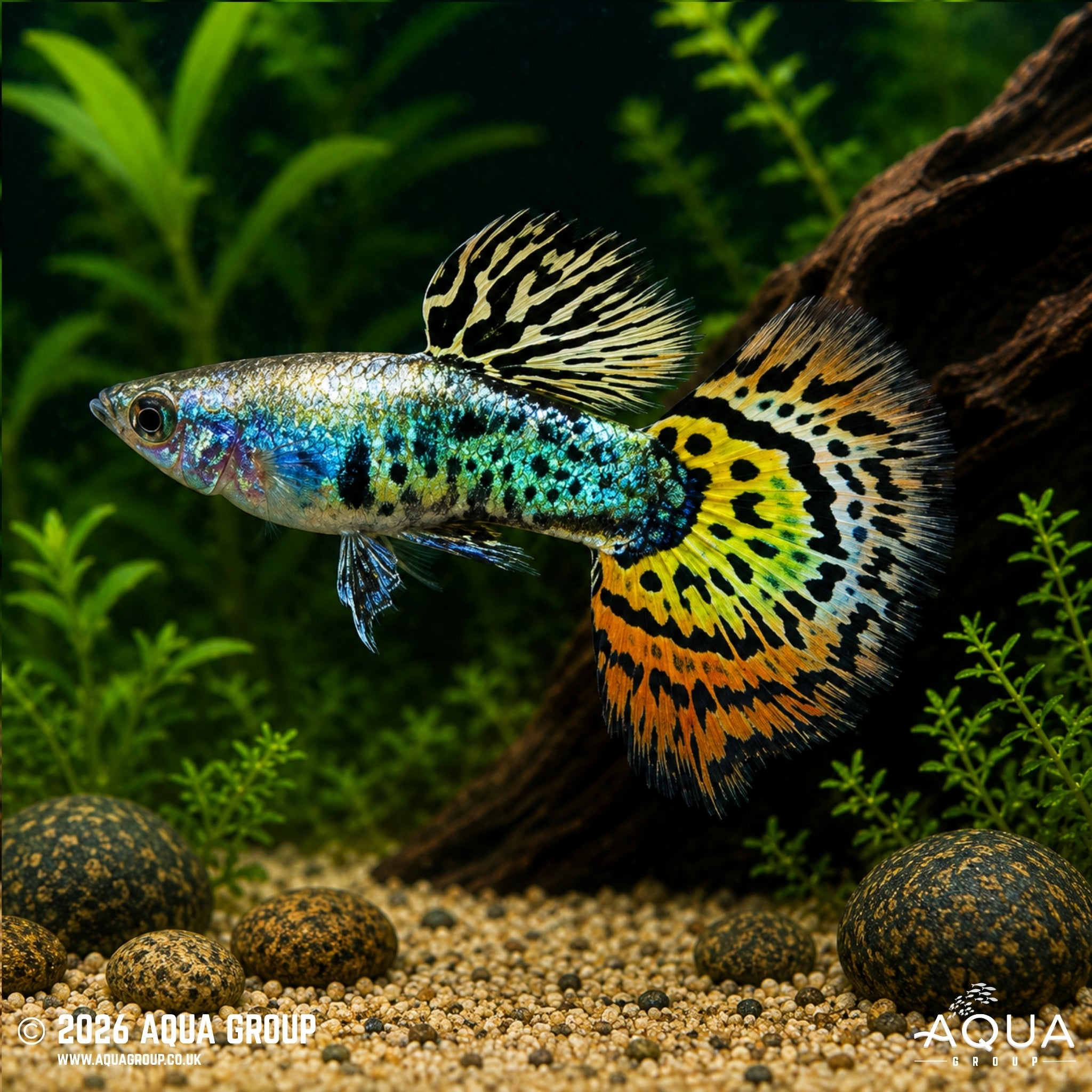
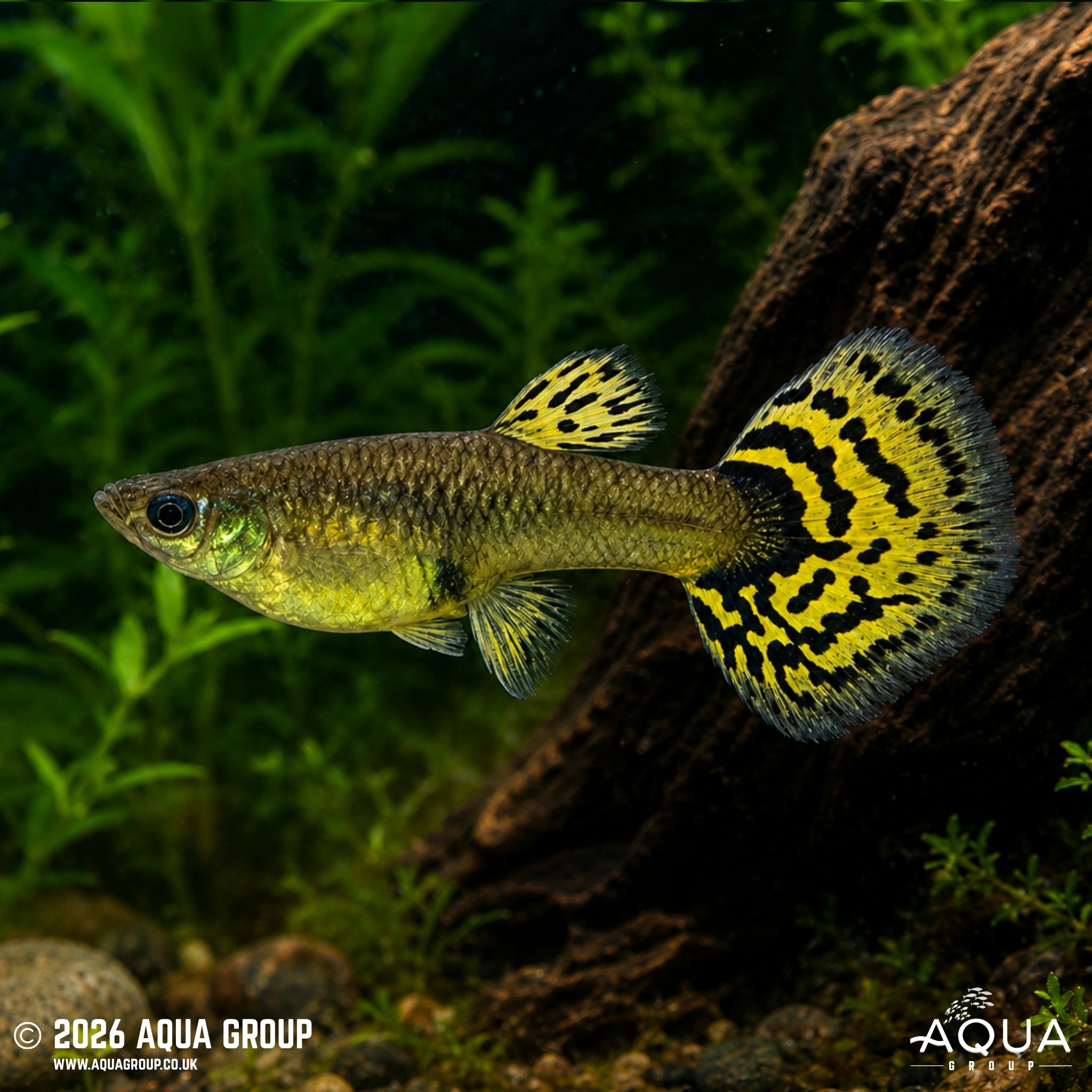
The Galaxy Mosaic Guppy, Poecilia reticulata, is a colourful captive-bred fancy guppy strain selected for bright body colour, patterned fins and a galaxy-style mosaic tail. This attractive livebearer brings constant movement to peaceful tropical aquariums and is especially popular in planted community setups where its colour and display behaviour stand out. Like other fancy guppies, it is hardy when kept in the right conditions, but it still needs clean, stable, mineral-rich water and calm tank mates that will not nip its fins.
Common Name:
Galaxy Mosaic Guppy, Mosaic Guppy, Galaxy Guppy, Fancy Guppy, Guppy.
Scientific Name (Latin):
Poecilia reticulata
Captive-bred fancy guppy strain.
Maximum Size:
Males usually around 3–4 cm. Females, if supplied, may reach around 5–6 cm and are usually larger-bodied with less intense fin colour.
Water Type:
Freshwater; can tolerate slightly brackish conditions, but normally kept in freshwater aquariums.
Origin / Natural Habitat:
This is a captive-bred ornamental strain and does not occur as a wild population. Wild Poecilia reticulata is native to northern South America and nearby Caribbean regions, where it inhabits warm, quiet, vegetated freshwater and sometimes mildly brackish habitats. The many fancy guppy colours and tail patterns seen in the aquarium trade have been developed through selective breeding.
Water Parameters:
Temperature: 22–28°C
pH Range: 7.0–8.0
Hardness or Salinity: Moderately hard to hard freshwater preferred; avoid very soft, acidic water. Stable minerals and clean water are especially important for fancy strains.
Temperament:
Peaceful and active. Galaxy Mosaic Guppies are suitable for calm community aquariums and do best with other non-aggressive fish. Males may display frequently to females and rival males, but serious aggression is uncommon. Avoid fin-nipping tank mates, as fancy guppy tails can be easily damaged.
Diet:
Omnivorous. Offer quality tropical flakes, micro pellets, fine granules, spirulina flakes, algae-based foods, frozen daphnia, brineshrimp, cyclops and small bloodworm. A varied diet with some plant-based content helps support colour, digestion and overall condition.
Minimum Tank Size:
A minimum of 60 litres is recommended for a small group, with larger aquariums preferred for mixed communities or breeding groups. Extra space and filtration are useful because guppies breed readily and population numbers can increase quickly.
Behaviour & Activity:
An active upper-to-midwater livebearer that spends much of its time swimming in open areas, browsing plants and displaying. Males show off their colour and tail pattern by flaring, courting and following females. Females give birth to free-swimming fry rather than laying eggs, and dense plants, floating cover or fine-leaved areas will help fry survive.
Aquarium Category:
Community Fish
Suitable with peaceful hard-water community fish such as platies, mollies, Endler’s livebearers, small peaceful rainbowfish, calm Corydoras kept within suitable water conditions, snails and other gentle community species. Avoid tiger barbs, fin-nipping tetras, aggressive cichlids, large predators and soft-water specialists that need acidic conditions.
Special Requirements or Care Notes:
Fancy guppies do best in mature, clean aquariums with stable temperature, stable hardness and regular water changes. Avoid overcrowding, sudden temperature drops and poor water quality, as these can lead to stress, fin damage and disease. If you do not want fry, keep males only or separate sexes, as females can store sperm and produce several broods after mating. Pattern and colour intensity can vary between individuals, especially in mosaic strains.
Suitable for:
Beginner to intermediate fishkeepers
Availability:
Common to occasional in trade / Captive-bred fancy strain
All images are a visual representation of the fish you will receive, made to be as accurate as possible. Please note that Mother Nature is a wonderful thing, and variation in patterns and colours will occur — that is part of the unique beauty of these animals.
Order and get 8 reward points
Earn points by signing up for our rewards program