

Description
Furcatus Rainbowfish (Pseudomugil furcatus)
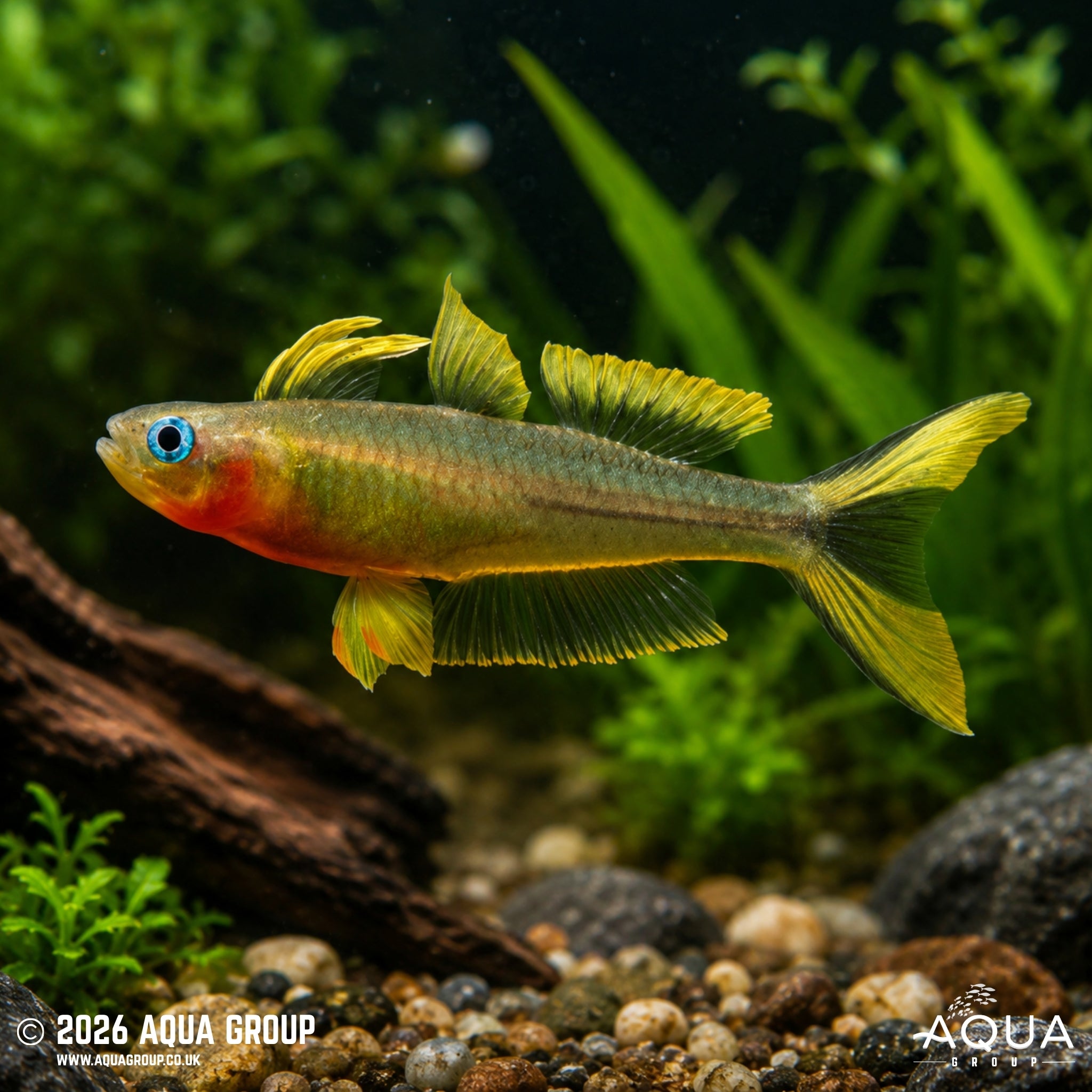
The Furcatus Rainbowfish, Pseudomugil furcatus, is a bright, lively blue-eye rainbowfish with a slim body, vivid blue eyes and striking yellow-edged fins that give it a cheerful, animated appearance in planted aquariums. Also known as the Forktail Rainbowfish or Forktail Blue-eye, this peaceful species is best kept in a group where males can display their extended fins and forked yellow tail to females and rival males. It is small, active and generally hardy when settled, but it still needs a mature aquarium, calm tank mates and regular feeding with suitably small foods.
Common Name:
Furcatus Rainbowfish, Forktail Rainbowfish, Forktail Blue-eye, Forktail Blue Eye Rainbowfish.
Scientific Name (Latin):
Pseudomugil furcatus
Maximum Size:
Usually around 4–5 cm.
Water Type:
Freshwater
Origin / Natural Habitat:
Native to Papua New Guinea, where it inhabits clear rainforest streams and slow to moderately moving waters with thick vegetation and cover. In the aquarium, it is best kept in a planted setup with open swimming space, shaded areas and gentle to moderate flow.
Water Parameters:
Temperature: 23–28°C
pH Range: 7.0–8.0
Hardness or Salinity: Moderately soft to moderately hard freshwater; stable, clean and well-oxygenated water is important.
Temperament:
Peaceful, active and sociable. Furcatus Rainbowfish are excellent community fish when kept with similarly sized, calm species. Males may display and spar harmlessly, but they are not aggressive. Avoid large, rough or fin-nipping tank mates that may stress them or damage the males’ fins.
Diet:
Omnivorous micro-feeder. Offer fine flakes, micro pellets, crushed granules, frozen daphnia, cyclops, baby brineshrimp, mosquito larvae and other suitably small foods. Small live or frozen foods help improve colour, condition and breeding behaviour. Feed in small amounts, as their mouths are relatively small.
Minimum Tank Size:
A minimum of 60 litres is recommended for a small group, with 90 litres or more preferred for a larger shoal or mixed planted community. A longer aquarium with swimming space is better than a very small cube-style setup.
Behaviour & Activity:
An active upper-to-midwater shoaling fish that spends much of its time moving through plants and open water. Keep at least 6 individuals, with 8–10 or more preferred. Males display by spreading their fins, showing off the yellow forked tail and performing short display dances around females or rival males. Eggs are scattered among fine-leaved plants, mosses or spawning mops, and adults may eat eggs or fry if not separated.
Aquarium Category:
Community Fish
Suitable with peaceful small rainbowfish, small rasboras, peaceful tetras, dwarf Corydoras-type catfish, Otocinclus, small gobies, snails and calm community fish that enjoy similar conditions. Avoid aggressive cichlids, large predators, tiger barbs, persistent fin-nippers and very boisterous fish that may dominate feeding.
Special Requirements or Care Notes:
Best kept in a mature, well-planted aquarium with stable water quality, good oxygenation, floating plants and open swimming areas. They appreciate clean water and regular maintenance, but avoid sudden large changes in temperature or chemistry. A secure lid is recommended, as small active rainbowfish can jump. For best colour and display, keep a mixed-sex group with several males and females rather than a single specimen.
Suitable for:
Beginner to intermediate fishkeepers
Availability:
Common to occasional in trade / Captive-bred where relevant
All images are a visual representation of the fish you will receive, made to be as accurate as possible. Please note that Mother Nature is a wonderful thing, and variation in patterns and colours will occur — that is part of the unique beauty of these animals.
Order and get 3 reward points
Earn points by signing up for our rewards program