

Description
Fumanchu Lionfish (Dendrochirus biocellatus)
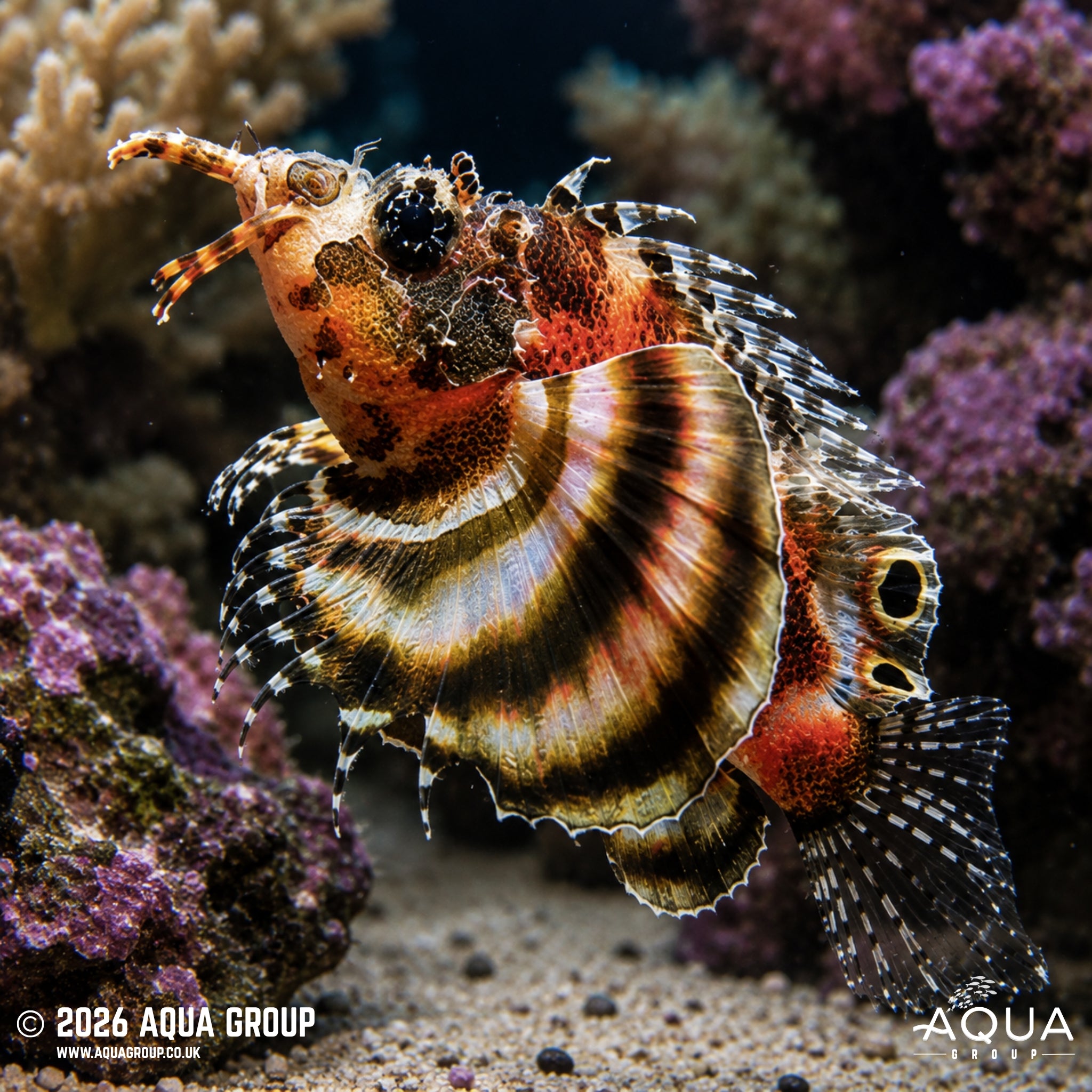
The Fumanchu Lionfish, Dendrochirus biocellatus, is a distinctive dwarf lionfish recognised by its broad red, brown and cream body bands, two prominent eyespots on the rear dorsal fin and long moustache-like appendages extending beneath the mouth. Also known as the Fu Manchu Lionfish, Twinspot Lionfish or Ocellated Lionfish, this secretive Indo-Pacific predator naturally shelters beneath reef ledges and inside caves before emerging to hunt small fish and crustaceans. Its unusual appearance and compact adult size make it highly desirable, but its specialist feeding requirements, predatory behaviour and venomous spines mean it is best suited to experienced marine fishkeepers.
Common Name:
Fumanchu Lionfish, Fu Manchu Lionfish, Twinspot Lionfish, Two-spot Lionfish, Ocellated Lionfish, Twinspot Turkeyfish.
Scientific Name (Latin):
Dendrochirus biocellatus
Maximum Size:
Usually around 12–13 cm when fully grown.
Water Type:
Marine
Origin / Natural Habitat:
Indo-West Pacific, occurring from East Africa and the western Indian Ocean eastwards through Southeast Asia and the western Pacific, north to southern Japan and south to northern Australia.
Fumanchu Lionfish inhabit coral-rich lagoons, rocky reefs and sheltered reef slopes. They are strongly associated with caves, overhangs and narrow crevices, where they remain concealed during brighter daylight periods before becoming more active under subdued lighting.
Water Parameters:
Temperature: 24–28°C
pH Range: 8.1–8.4
Hardness or Salinity: Marine salinity 1.023–1.026 specific gravity; maintain stable salinity, strong oxygenation, efficient filtration and consistently high water quality.
Temperament:
Predatory, secretive and generally solitary. The Fumanchu Lionfish is usually calm towards fish that are too large to swallow, but it will hunt small fish, shrimps and other crustaceans.
It may become territorial towards other dwarf lionfish or bottom-oriented predators, particularly when caves and shelter are limited. Avoid aggressive tank mates that may nip its fins, facial appendages or venomous dorsal spines.
Diet:
Obligate carnivore and ambush predator. In the wild, this species feeds primarily on small shrimps, crabs and reef fish captured from close range.
Newly introduced specimens can be difficult to convert onto non-living foods and may initially require live marine or brackish shrimp to trigger a feeding response. Suitable options may include live mysid shrimp, marine glass shrimp or appropriately sourced ghost shrimp.
Gradually transition the fish onto whole or chopped marine prawns, shrimp, mysis, krill, lancefish, silversides, squid and mussel by presenting the food with long feeding tongs. Avoid routine use of freshwater feeder fish, mammalian meat or excessively fatty foods.
Minimum Tank Size:
A minimum aquarium volume of approximately 150 litres is recommended for one adult, with a broad footprint, numerous caves and efficient filtration. A larger aquarium is advisable when keeping it with other substantial predatory fish.
Behaviour & Activity:
A slow-moving, cryptic ambush predator that spends much of the day resting beneath ledges, inside caves or against shaded rockwork. It often perches on the substrate or reef structure using its pectoral fins.
Activity typically increases around dusk, after dark and during feeding. When prey approaches, the lionfish moves slowly into position before striking rapidly with its expandable mouth. Established specimens may learn to approach the aquarium front when they associate their keeper with food.
Reef Safe:
Reef Safe with Caution
Fumanchu Lionfish do not normally consume coral tissue or deliberately damage established corals. However, ornamental shrimps, small crabs and any fish that can fit inside the lionfish’s expandable mouth are at serious risk.
Its fins and deliberate movements may brush against loosely secured corals. It is therefore most suitable for a carefully planned reef or FOWLR aquarium without small fish or valuable mobile crustaceans.
Special Requirements or Care Notes:
The dorsal spines are venomous and can inflict an extremely painful wound. Never handle the fish directly, always confirm its location before placing hands near caves or rockwork, and use long tools for feeding and aquarium maintenance. Any sting should be treated seriously and prompt professional medical advice should be obtained.
Provide several deep caves, shaded overhangs and narrow retreats that allow the fish to remain concealed during the day. Subdued areas are particularly important, as this species may remain stressed or hidden continuously in brightly illuminated aquariums without adequate shelter.
Select only an alert specimen with clear eyes, intact fins and a well-filled body. Confirm that it is feeding before purchase whenever possible. Fumanchu Lionfish can be more difficult to establish than many other lionfish and may refuse motionless frozen foods after import.
Use feeding tongs rather than hand-feeding and move the food gently to imitate living prey. Once established, provide controlled meals several times per week rather than excessive daily feeding. Overfeeding can cause obesity, digestive problems and declining water quality.
Choose tank mates according to body depth as well as length because the lionfish can swallow surprisingly large prey. Avoid small gobies, cardinalfish, dartfish, ornamental shrimps and similarly sized crustaceans.
Protect pump intakes, securely position rockwork and use a fitted aquarium cover. Quarantine is strongly recommended, but the quarantine aquarium should contain suitable shelter and be managed carefully so the fish continues to feed.
Suitable for:
Experienced fishkeepers
Availability:
Rare or occasional in trade
All images are a visual representation of the fish you will receive, made to be as accurate as possible. Please note that Mother Nature is a wonderful thing, and variation in patterns and colours will occur — that is part of the unique beauty of these animals.
Order and get 89 reward points
Earn points by signing up for our rewards program