


Description
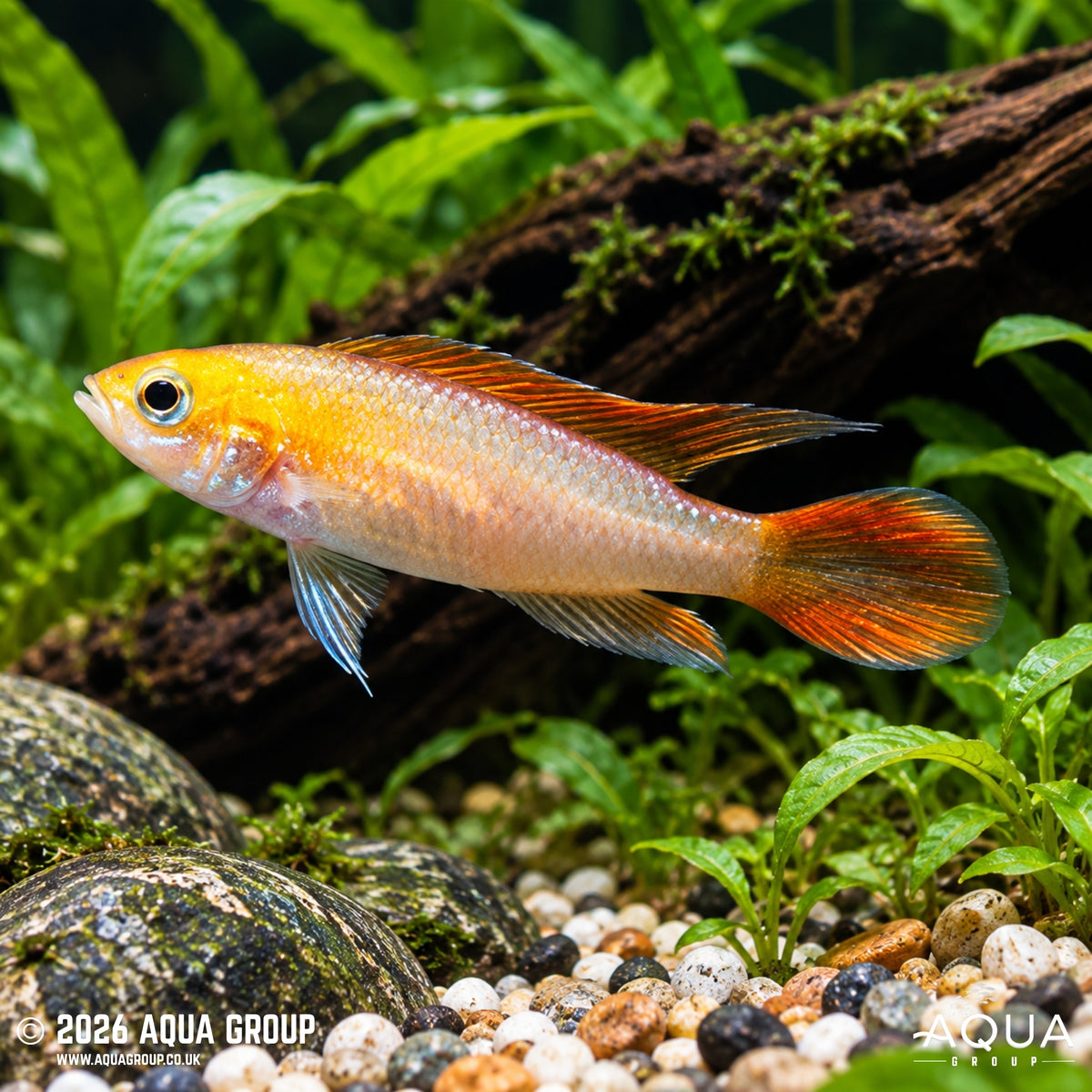
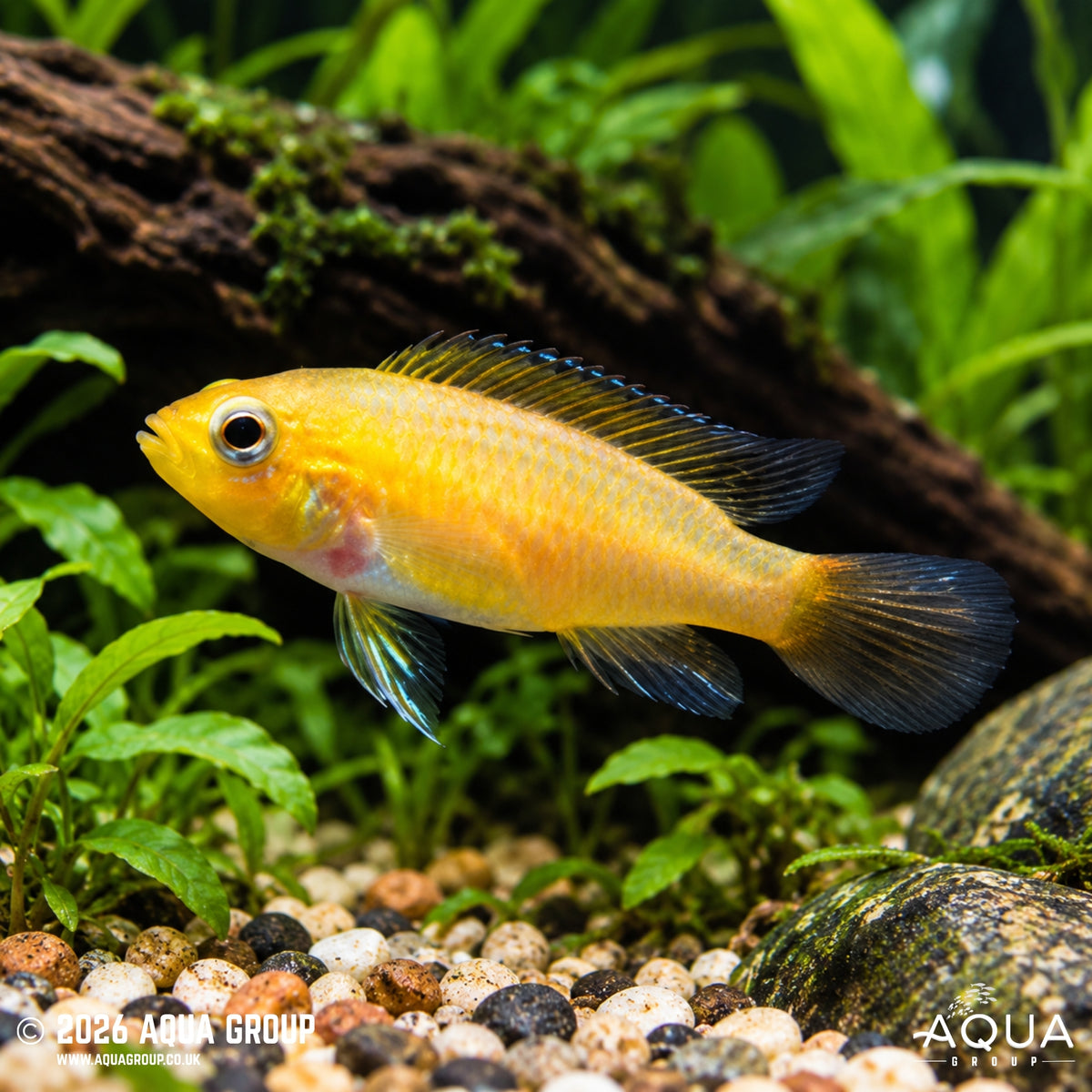
Flame Red Agassizii Dwarf Cichlid (Apistogramma agassizii)
The Flame Red Agassizii Dwarf Cichlid is a colourful freshwater dwarf cichlid admired for its intense red-orange finnage, elegant body shape and fascinating behaviour. This captive-bred colour form of Apistogramma agassizii is best suited to mature planted aquariums with soft décor, caves, stable water quality and peaceful tankmates. It is a rewarding feature fish for calm community setups, but it still has typical dwarf cichlid territorial behaviour, especially when breeding.
Common Name:
Flame Red Agassizii Dwarf Cichlid, Flame Red Agassizii, Agassiz’s Dwarf Cichlid, Agassizii Apistogramma
Scientific Name (Latin):
Apistogramma agassizii
Strain / Form:
Flame Red captive-bred colour strain
Maximum Size:
Approximately 6–8 cm
Water Type:
Freshwater
Origin / Natural Habitat:
Wild Apistogramma agassizii are native to South America, where they occur in Amazonian river systems and slow-moving tributaries.
In the wild, they are often associated with shallow marginal areas, leaf litter, submerged roots, branches, quiet backwaters and soft acidic freshwater.
The Flame Red form is a captive-bred aquarium strain, but it still benefits from a mature, well-structured aquarium with caves, wood, plants, shaded areas and calm open spaces.
Water Parameters:
Temperature: 24–28°C
pH Range: 5.5–7.2
Hardness: Soft to moderately hard
Ammonia/Nitrite: 0 ppm
Nitrate: Kept low and stable
Flow: Gentle to moderate preferred
Temperament:
Semi-aggressive / Territorial
Flame Red Agassizii Dwarf Cichlids are generally peaceful for a cichlid, but they can become territorial around caves, females or breeding sites.
Males may display strongly and defend space, especially in smaller aquariums. Females can become very protective when guarding eggs or fry.
They are best kept with calm dither fish and peaceful community species that will not harass them or compete aggressively near the bottom.
Diet:
Carnivore / Micro-predator
The Flame Red Agassizii Dwarf Cichlid naturally feeds on small invertebrates, insect larvae, worms and tiny crustaceans.
Offer high-quality micro pellets, small cichlid granules and fine sinking foods as the staple diet.
Supplement with frozen or live foods such as daphnia, cyclops, brineshrimp, bloodworm, mosquito larvae and finely chopped meaty foods.
A varied diet helps support colour, condition and breeding behaviour.
Minimum Tank Size:
Approximately 75 litres for a pair
Larger aquariums of 90–120 litres or more are recommended for trios, community setups or aquariums with multiple territories.
Provide several caves, coconut huts, wood, leaf litter and visual barriers so fish can establish territories and retreat when needed.
Behaviour & Activity:
The Flame Red Agassizii Dwarf Cichlid spends much of its time close to the lower and middle areas of the aquarium.
Males often display by spreading their fins, intensifying colour and patrolling territories, while females may remain closer to caves and sheltered areas.
This species is a cave spawner. Females usually take the leading role in guarding eggs and fry, and their territorial behaviour can increase strongly during breeding.
Community Suitability:
Peaceful to Semi-Aggressive Community Fish
The Flame Red Agassizii Dwarf Cichlid is suitable for mature, calm community aquariums with carefully selected tankmates.
Suitable tankmates include small peaceful tetras, pencilfish, rasboras, hatchetfish, otocinclus, small corydoras with care and other calm soft-water community fish.
Avoid aggressive cichlids, fin-nippers, boisterous barbs, large predatory fish, very small shrimp, overly active bottom dwellers and other similar dwarf cichlids in small aquariums.
Special Requirements or Care Notes:
Keep in a mature aquarium with stable water quality and plenty of cover.
Provide caves, wood, plants, leaf litter and shaded areas to help reduce stress and allow natural territory formation.
Avoid bright, bare aquariums and unstable new setups.
Soft, slightly acidic water is ideal, especially if breeding is intended.
Do not overcrowd the lower levels of the aquarium, as this species uses caves and bottom territories.
Pairs or trios should be monitored, as compatibility can vary between individuals.
If breeding occurs, females may become highly protective of eggs and fry.
Regular small water changes and low nitrate are recommended for long-term health.
Suitable for:
Intermediate
Availability:
Availability can vary depending on season, supplier and colour strain.
All images are a visual representation of the fish you will receive, made to be as accurate as possible. Please note that Mother Nature is a wonderful thing, and variation in patterns and colours will occur — that is part of the unique beauty of these animals.
Order and get 7 reward points
Earn points by signing up for our rewards program