

Description
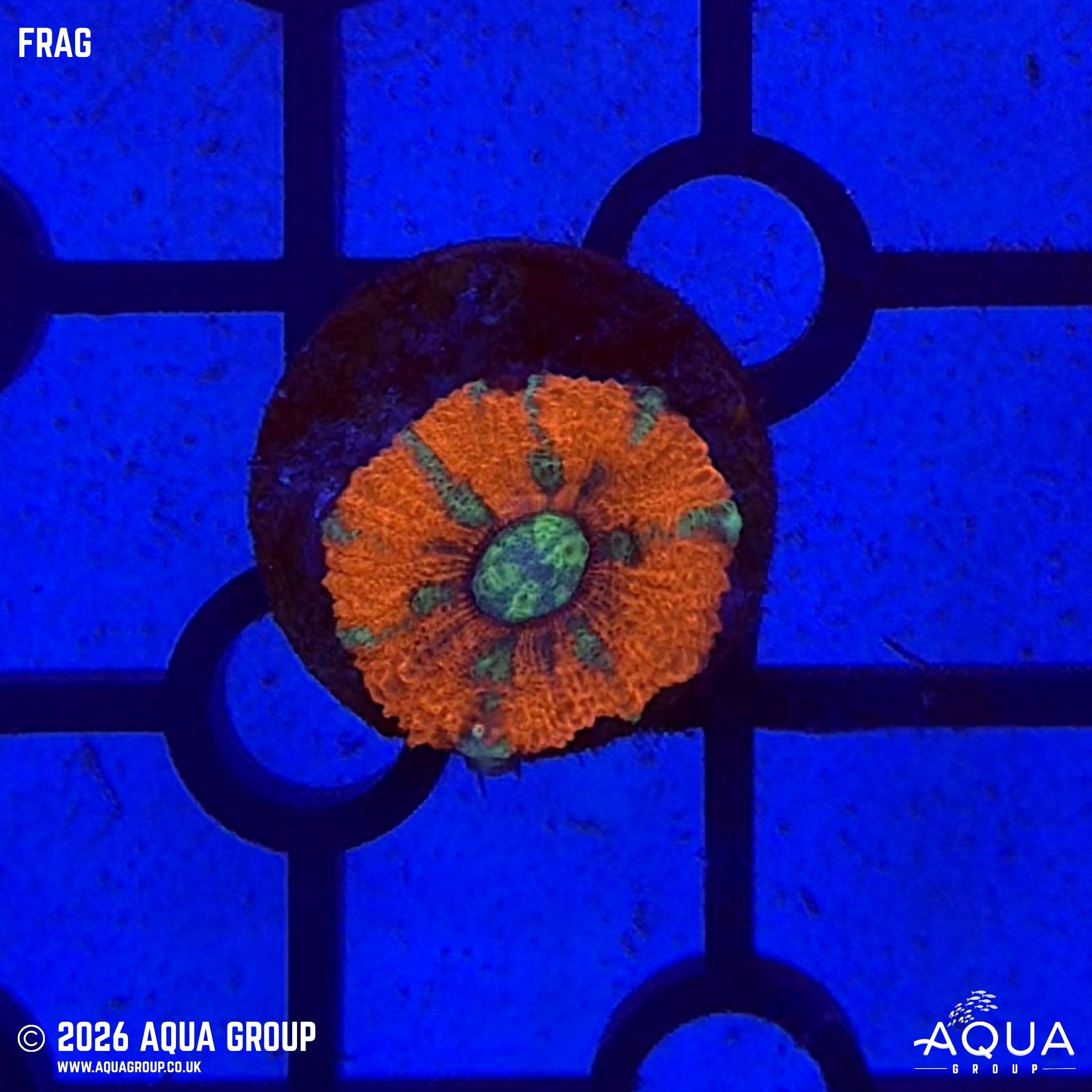
Fire and Ice Acan (Micromussa lordhowensis)
The Fire and Ice Acan, Micromussa lordhowensis, is a colourful large polyp stony coral, admired for its bold contrast of fiery red, orange and icy blue or pale-toned patterning. Commonly known in the hobby as an Acan Lord or Acan Coral, this coral is highly popular for its fleshy polyps, strong colour variation and attractive rounded growth pattern. It is generally hardy once settled, making it a brilliant choice for a mature reef aquarium with stable parameters, gentle flow and moderate lighting.
Common Name:
Fire and Ice Acan, Acan Coral, Acan Lord, Lord Coral, Micromussa Lord.
Scientific Name (Latin):
Micromussa lordhowensis
Historically and commonly traded as Acanthastrea lordhowensis.
Coral Type:
LPS Coral
Growth Form:
Fleshy encrusting to clustered polyp growth form, with rounded individual corallites and inflated tissue.
Water Type:
Marine
Origin / Natural Habitat:
Micromussa and Acan-style corals are found in Indo-Pacific reef habitats, often growing over hard reef surfaces, rocky structures and lower reef areas where they receive indirect flow and moderate lighting. In aquariums, they are best placed where the fleshy polyps can expand without being blasted by flow or crowded by aggressive neighbouring corals.
Water Parameters:
Temperature: 24–26°C
pH Range: 8.1–8.4
Salinity: SG 1.024–1.026
Alkalinity: 7–10 dKH
Calcium: 400–450 ppm
Magnesium: 1250–1350 ppm
Nitrate: Low but detectable
Phosphate: Low but detectable
Lighting:
Medium
Fire and Ice Acan generally does best under low to moderate reef lighting. Avoid placing it directly under very intense lighting without acclimation, as excessive light can cause colour fading, tissue stress or poor expansion. Lower-to-middle placement with gradual light acclimation is usually safest.
Flow:
Low
Gentle, indirect flow is ideal. Flow should be enough to keep the coral clean and prevent detritus from settling between the polyps, but not strong enough to constantly fold, compress or retract the fleshy tissue.
Placement:
Best placed on stable lower rockwork or a secure lower-to-middle area of the aquarium. Avoid sharp rock contact against the fleshy tissue and allow space around the coral so the polyps can inflate fully without being stung or shaded by neighbouring corals.
Temperament / Aggression:
Semi-aggressive
Fire and Ice Acan should be given space from other corals. While not usually one of the most aggressive LPS corals, it can still irritate or sting nearby corals through direct contact or feeding response. Keep away from aggressive LPS corals with long sweeper tentacles.
Feeding:
Photosynthetic, but benefits from feeding
This coral receives much of its energy from lighting through its symbiotic zooxanthellae, but it can benefit from occasional target feeding. Suitable foods include mysis shrimp, finely chopped meaty marine foods, LPS pellets, reef roids-style foods and specialist coral feeds. Feed when the polyps are open and feeding tentacles are visible.
Growth Rate:
Slow to moderate
Growth is usually steady in stable reef systems with consistent alkalinity, calcium, magnesium, lighting and flow. Regular feeding can support fuller tissue, improved colour and stronger growth.
Special Requirements or Care Notes:
Best kept in a mature, stable reef aquarium with gentle flow, moderate lighting and consistent water chemistry. Avoid sudden swings in alkalinity, salinity or lighting intensity. The fleshy tissue can be damaged by rough handling, sharp rockwork or excessive direct flow. Dip and acclimate carefully before adding to the aquarium, and monitor for tissue recession, pest irritation or competition from neighbouring corals.
Suitable for:
Beginner to Intermediate reefkeepers
Availability:
Regularly available in the coral trade / Availability can vary depending on colour intensity, pattern, supplier naming and season.
All images are a visual representation of the coral you will receive, made to be as accurate as possible. Please note that Mother Nature is a wonderful thing, and variation in patterns, colours and growth form will occur — that is part of the unique beauty of these animals.
Order and get 40 reward points
Earn points by signing up for our rewards program