

Description
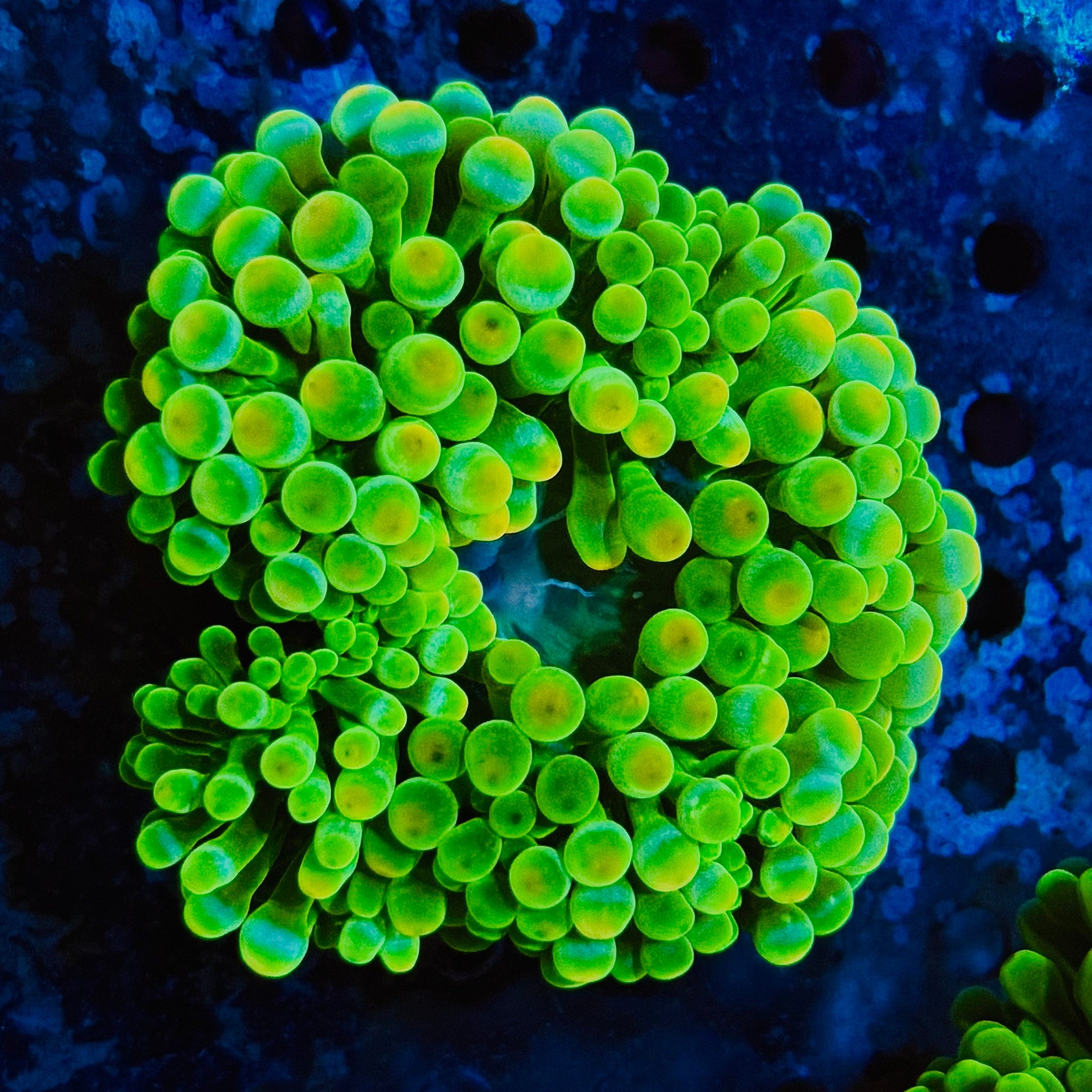
Fibre Optic Bubble Tip Anemone (Entacmaea quadricolor)
The Fibre Optic Bubble Tip Anemone, Entacmaea quadricolor, is a stunning colour form of the popular Bubble Tip Anemone, admired for its bright tentacle tips, glowing colouration and flowing movement under reef lighting. This variety can create a beautiful focal point in a mature marine aquarium, especially when settled into rockwork where it can extend naturally and display its bubble-tipped tentacles. Like all anemones, it requires stable water quality, suitable lighting and careful placement, making it best suited to established reef aquariums rather than new or unstable systems.
Common Name:
Fibre Optic Bubble Tip Anemone, Bubble Tip Anemone, BTA, Bubble Anemone, Bulb-Tip Anemone, Bulb Tentacle Anemone.
Scientific Name (Latin):
Entacmaea quadricolor
Maximum Size:
Can reach around 30 cm across the oral disc in suitable conditions, although size will vary depending on age, feeding, lighting and aquarium stability.
Water Type:
Marine
Origin / Natural Habitat:
Entacmaea quadricolor is found across the tropical Indo-Pacific, including reef regions of the Red Sea, Indian Ocean and Pacific Ocean. In the wild, Bubble Tip Anemones are usually associated with reef flats, reef slopes, rock crevices and coral-rich reef structure. They often anchor their foot deep within rockwork, extending their tentacles into the light and water movement while keeping the base protected.
Water Parameters:
Temperature: 24–27°C
pH Range: 8.1–8.4
Hardness or Salinity: SG 1.023–1.026
Temperament:
Semi-aggressive by contact. Bubble Tip Anemones are not aggressive in the same way as fish, but they can sting neighbouring corals and sessile invertebrates if they are too close. They may move around the aquarium until they find a suitable position, so space should be left around them and nearby corals should be monitored carefully.
Diet:
Photosynthetic with carnivorous feeding. Bubble Tip Anemones contain symbiotic zooxanthellae that help provide energy under suitable reef lighting. They will also benefit from occasional feeding with small meaty marine foods such as mysis shrimp, finely chopped prawn, mussel, clam, krill or other suitable marine-origin foods. Feed small portions only, as large or excessive feeds can cause stress and water quality issues.
Minimum Tank Size:
A practical minimum of around 150–200 litres is recommended for a single specimen, with larger aquariums preferred for long-term stability. The aquarium should be mature, stable and equipped with suitable reef lighting, good filtration and protected pumps or wavemakers.
Behaviour & Activity:
A sessile but mobile anemone that may remain in one place for long periods once settled, or move if unhappy with light, flow, water quality or foot placement. It will usually attach its foot into a secure rock crevice and extend its tentacles into moderate, indirect flow. Tentacle shape can vary, and bubble tips may appear strongly on some specimens while others display longer, more extended tentacles depending on conditions. It may also split naturally when mature or under certain environmental triggers.
Reef Safe:
Reef Safe with Caution
Fibre Optic Bubble Tip Anemones can be kept successfully in reef aquariums, but they should be treated with caution. They can sting nearby corals, move across the aquarium, shade or irritate neighbouring livestock and may occasionally catch very small or weakened fish. They are best placed with space around them and away from delicate corals that could be damaged if the anemone moves.
Special Requirements or Care Notes:
Best added to a mature aquarium that has been stable for several months. Strong reef lighting is important, along with moderate, indirect flow rather than a harsh direct blast. Pump guards or anemone-safe covers are strongly recommended, as wandering anemones can be seriously damaged by wavemakers or filter intakes. Avoid sudden changes in salinity, temperature, alkalinity or lighting intensity. Do not attempt to forcibly remove the anemone from rockwork, as damaging the foot can be fatal. Clownfish may choose to host in this species, but hosting is not guaranteed and is not required for the anemone’s survival.
Suitable for:
Intermediate fishkeepers
Availability:
Specialist reef invertebrate / Availability can vary depending on colour, size, supplier and propagation
All images are a visual representation of the anemone you will receive, made to be as accurate as possible. Please note that Mother Nature is a wonderful thing, and variation in size, colour, tentacle shape and pattern will occur — that is part of the unique beauty of these animals.
Order and get 65 reward points
Earn points by signing up for our rewards program