

Description
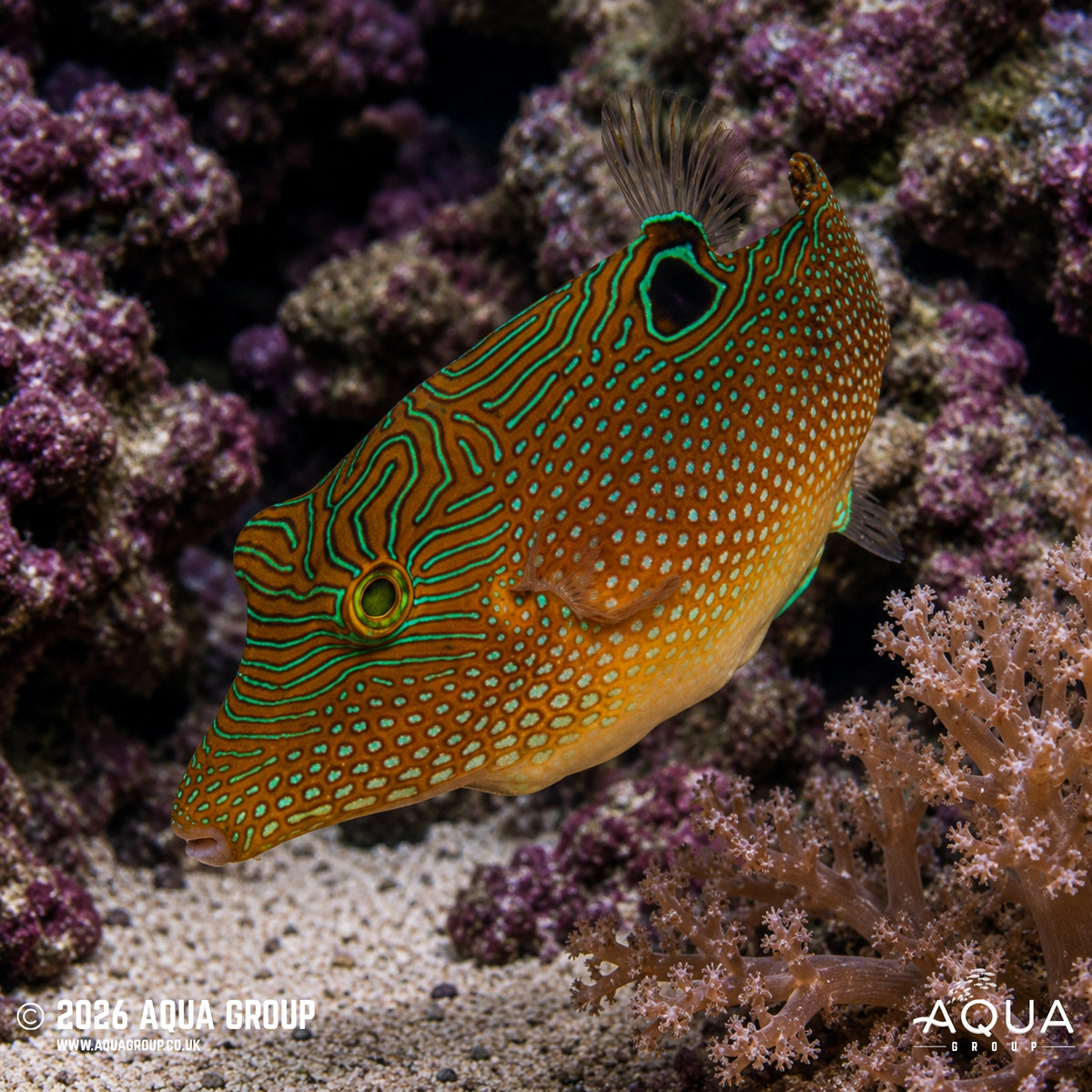
False-eye Toby (Canthigaster solandri)
The False-eye Toby is a small and characterful marine pufferfish recognised for its intricate blue spotting, warm brown to orange body tones and distinctive dark false eyespot near the rear of the dorsal area. Intelligent, inquisitive and constantly exploring its surroundings, this species can become a highly engaging aquarium inhabitant. Although considerably smaller than many larger puffers, it remains an opportunistic predator and may nip corals or consume ornamental invertebrates, making it best suited to carefully planned marine aquariums.
Common Name:
False-eye Toby, False-eye Puffer, Spotted Sharpnose Puffer
Scientific Name (Latin):
Canthigaster solandri
Maximum Size:
Approximately 11–12 cm
Water Type:
Marine
Origin / Natural Habitat:
The False-eye Toby occurs throughout tropical Indo-Pacific reef environments and is associated with lagoons, coral reefs, rocky reef areas and sheltered reef slopes.
It typically remains close to reef structure where it searches rockwork, coral surfaces and crevices for small prey and edible material.
Water Parameters:
Temperature: 24–26°C
pH Range: 8.1–8.4
Salinity: SG 1.024–1.026
Nitrate: Low and stable
Ammonia/Nitrite: 0 ppm
Temperament:
Semi-Aggressive
The False-eye Toby is generally confident and inquisitive but may become territorial towards similarly shaped fish or other small puffers.
It is usually best kept as a single specimen unless the aquarium is particularly spacious and tankmates are carefully selected.
Diet:
Omnivore / Carnivore
The False-eye Toby naturally feeds on a variety of small benthic organisms including crustaceans, molluscs, worms and other reef-associated foods.
In the aquarium, offer a varied diet including frozen mysis, chopped prawn, mussel, cockle, krill and other meaty marine foods.
Occasional hard-shelled foods can help encourage natural biting behaviour and provide useful wear for the continuously growing teeth.
Minimum Tank Size:
Approximately 150 litres
Although relatively small, this is an active and intelligent fish that benefits from plenty of swimming room together with complex rockwork for exploration.
Behaviour & Activity:
The False-eye Toby is an inquisitive daytime fish that spends much of its time exploring rockwork, caves and reef surfaces.
It may investigate new objects within the aquarium and often becomes responsive to feeding and activity outside the tank.
Provide plenty of caves, overhangs and open swimming areas.
Its compact size does not remove the need for careful aquascaping, as it will continually investigate crevices and hard surfaces while searching for food.
Reef Safe:
With Caution
The False-eye Toby should be considered reef safe with caution.
It may nip at soft corals, fleshy LPS corals, zoanthids and other sessile invertebrates, while ornamental shrimp, snails, crabs and other small mobile invertebrates may also be eaten.
Individual behaviour varies, but this species cannot be considered completely reliable in a delicate reef display.
Special Requirements or Care Notes:
Provide a mature marine aquarium with stable water chemistry, substantial rockwork and plenty of areas to explore.
Offer a varied diet containing both softer marine foods and occasional harder foods to support natural tooth wear.
Avoid housing the False-eye Toby with very aggressive tankmates that may harass it, as well as very small ornamental invertebrates that may be viewed as prey.
Like other puffers, it should never be deliberately encouraged to inflate, as inflation is a stress response.
Care should also be taken during transfer and handling. Moving the fish submerged where practical reduces the chance of it gulping air.
Good filtration and regular maintenance are important because puffers can be messy feeders.
Suitable for:
Intermediate
Availability:
Availability can vary depending on season, collection area and supplier.
All images are a visual representation of the fish you will receive, made to be as accurate as possible. Please note that Mother Nature is a wonderful thing, and variation in patterns and colours will occur — that is part of the unique beauty of these animals.
Order and get 25 reward points
Earn points by signing up for our rewards program