

Description
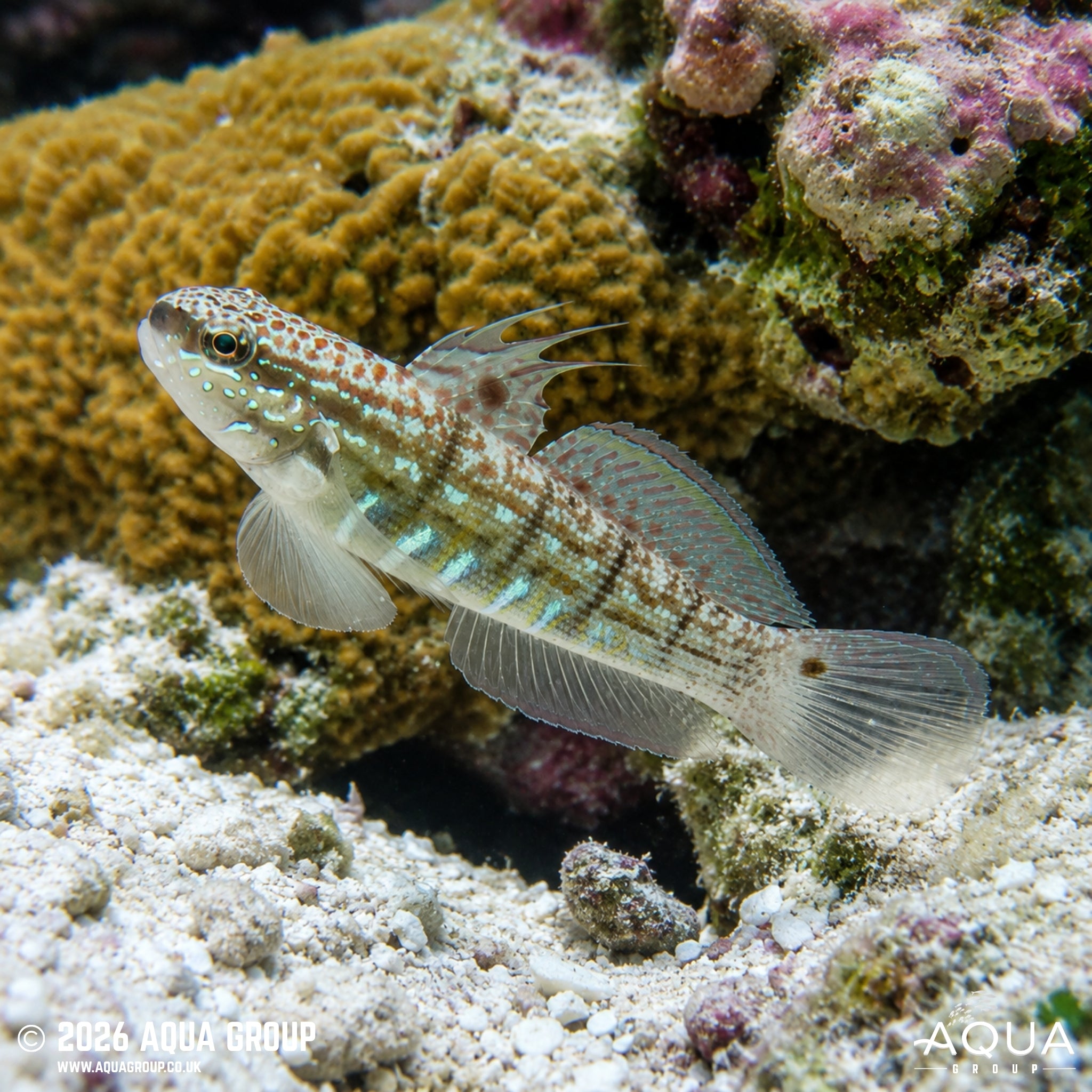
Dragon Goby (Amblygobius semicinctus)
The Dragon Goby, Amblygobius semicinctus, is a peaceful and useful marine goby, admired for its elongated body, subtle banded markings and natural sand-sifting behaviour. Also known as the Halfbarred Goby, this species spends much of its time working across the substrate, taking mouthfuls of sand and sifting out tiny foods before expelling the clean sand through its gills. It is a brilliant choice for mature marine aquariums with a suitable sand bed, helping to keep the substrate turned over while adding natural behaviour and character to the lower areas of the aquarium.
Common Name:
Dragon Goby, Halfbarred Goby, Half-Barred Goby, Sand Sifting Goby, Sleeper Goby.
Scientific Name (Latin):
Amblygobius semicinctus
Maximum Size:
Around 11 cm, making it a manageable medium-sized sand-sifting goby.
Water Type:
Marine
Origin / Natural Habitat:
Found in the Indian Ocean, including the Western Indian Ocean and areas towards the Andaman Sea. In the wild, Dragon Gobies inhabit shallow sandy areas of protected bays, lagoons, estuaries and reef-associated habitats. They are usually found around sand and rubble substrates, where pairs may excavate burrows beneath rocks, coral pieces or reef structure.
Water Parameters:
Temperature: 24–27°C
pH Range: 8.1–8.4
Hardness or Salinity: SG 1.020–1.025
Temperament:
Peaceful to mildly territorial. Dragon Gobies are generally safe with most peaceful marine community fish, but they may defend a chosen burrow or feeding area. They are usually best kept singly or as a confirmed pair. Avoid housing with aggressive predators, very boisterous feeders or territorial bottom-dwelling fish that may outcompete or harass them.
Diet:
Omnivorous sand-sifter and micro-predator. In the wild, this species feeds by sifting sand for algae, detritus, tiny invertebrates and organic matter. In the aquarium, it should be offered a varied diet including frozen mysis shrimp, enriched brineshrimp, cyclops, copepod-based foods, finely chopped meaty marine foods, algae-based foods and quality sinking marine pellets. Food should be allowed to reach the substrate so the goby can feed naturally.
Minimum Tank Size:
A practical minimum of around 200–300 litres is recommended for a single specimen, with larger aquariums preferred for pairs or mature reef systems. Provide a suitable sand bed, open substrate areas, mature rockwork, rubble and secure hiding places.
Behaviour & Activity:
A bottom-dwelling sand-sifting goby that spends much of its time moving across the substrate, taking in mouthfuls of sand and filtering out small foods. This behaviour helps keep the upper sand layer turned over, but it can also move sand around the aquarium. Low-placed corals, clam mantles or delicate frags may be dusted with sand if placed too close to the goby’s regular working area. A secure lid is recommended, as gobies can jump when startled.
Reef Safe:
Reef Safe with Caution
Dragon Gobies do not normally nip corals, clam mantles or sessile invertebrates. However, their sand-sifting and burrowing behaviour can disturb low-placed corals, small frags and unsecured rockwork. They are best suited to reef aquariums with open sand areas and an aquascape designed to tolerate natural sand movement.
Special Requirements or Care Notes:
Best kept in a mature aquarium with an established sand bed and enough natural microfauna to support grazing. Avoid sterile new systems or bare-bottom aquariums, as this species relies heavily on substrate-based feeding behaviour. Rockwork should be stable and ideally placed securely before sand is added, so digging does not cause collapse. Supplement feeding regularly, as sand-sifting gobies can become thin if the sand bed does not provide enough natural food.
Suitable for:
Intermediate fishkeepers
Availability:
Occasionally available in the marine aquarium trade / Availability can vary depending on size, supplier and import season
All images are a visual representation of the fish you will receive, made to be as accurate as possible. Please note that Mother Nature is a wonderful thing, and variation in patterns and colours will occur — that is part of the unique beauty of these animals.
Order and get 30 reward points
Earn points by signing up for our rewards program