


Description
Dragon Wrasse (Novaculichthys taeniourus)
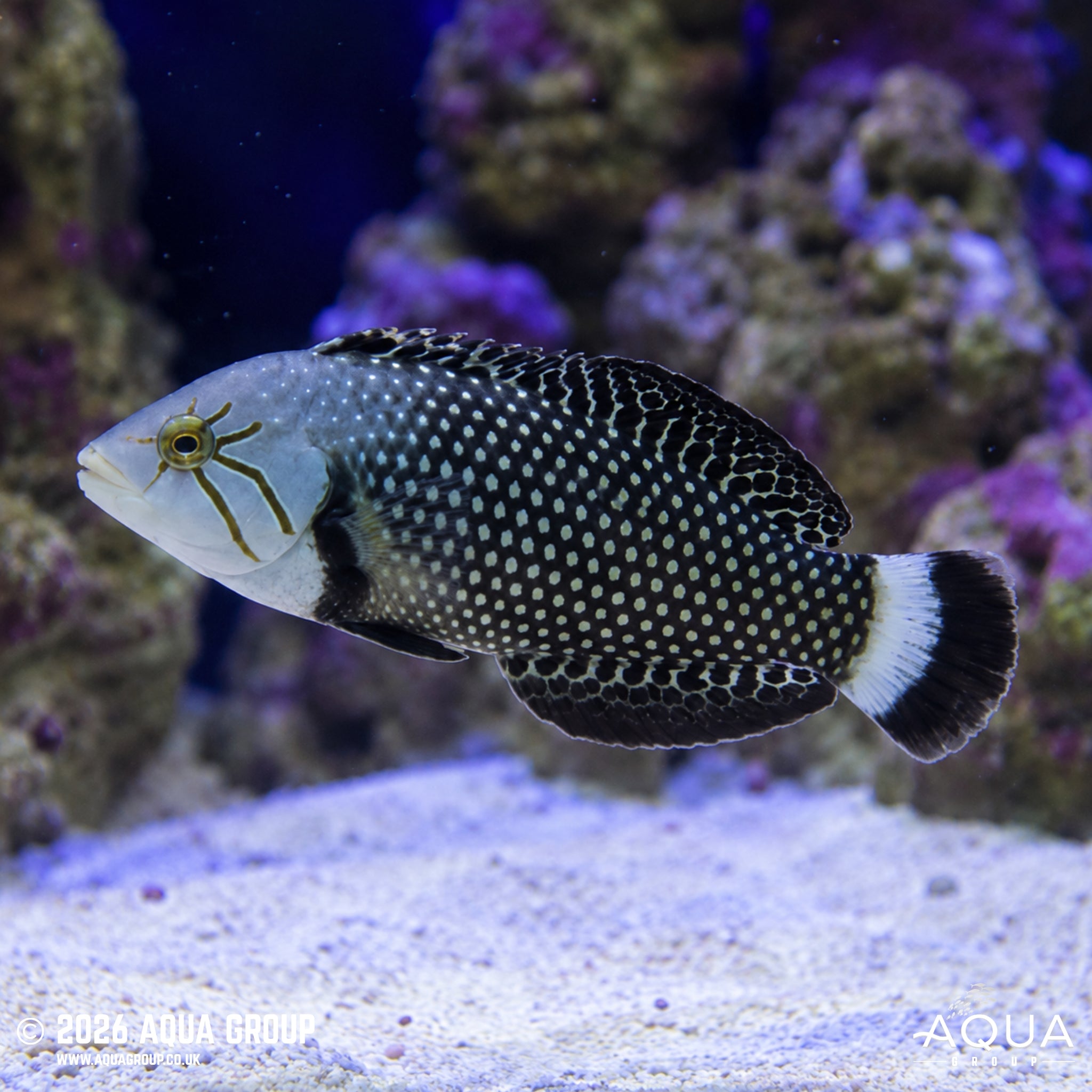
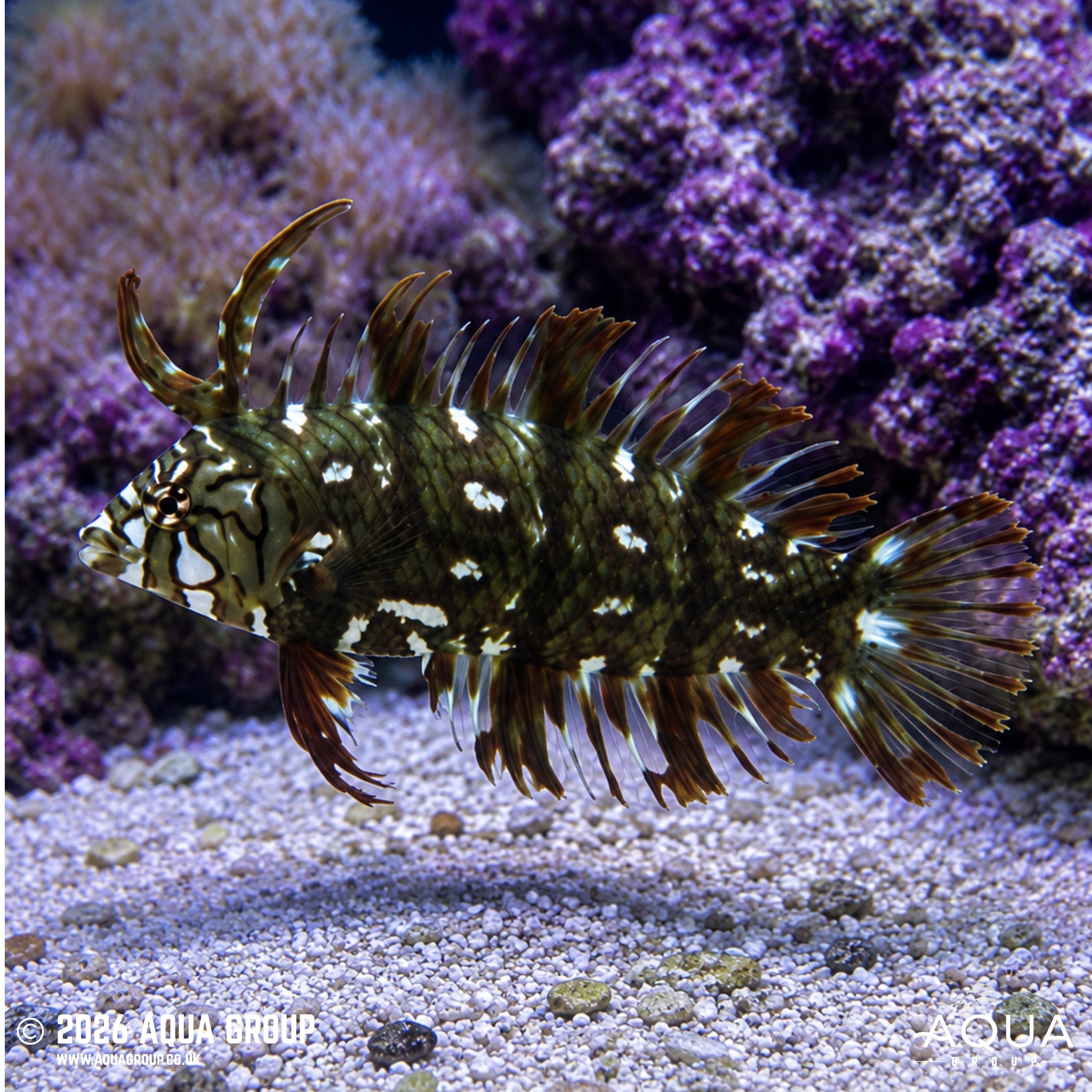
The Dragon Wrasse (Novaculichthys taeniourus) is a dramatic Indo-Pacific marine wrasse known for its remarkable transformation from juvenile to adult. Juveniles display a burgundy-brown body, irregular white markings and elongated dorsal and pelvic fin rays that resemble drifting seaweed, while mature fish develop a powerful body with contrasting dark, pale and greenish markings. Also known as the Rockmover Wrasse or Reindeer Wrasse, this intelligent and highly active predator spends much of its day turning rubble and searching the substrate for crustaceans, molluscs and other invertebrates. Its adult size, destructive foraging behaviour and increasingly assertive temperament make it best suited to a large fish-only marine aquarium.
Common Name:
Dragon Wrasse, Rockmover Wrasse, Reindeer Wrasse, Masked Wrasse, Carpet Wrasse
Scientific Name (Latin):
Novaculichthys taeniourus
Maximum Size:
Up to approximately 30 cm in total length. Juveniles are often offered at a small size, but they develop into deep-bodied, powerful adults requiring substantial permanent accommodation.
Water Type:
Marine
Origin / Natural Habitat:
Widely distributed across tropical Indo-Pacific waters, including the Red Sea, East Africa, the Indian Ocean, Southeast Asia, southern Japan, northern Australia, Hawaii and numerous Pacific islands, with the range extending into the tropical eastern Pacific.
It inhabits shallow reef flats, lagoons, exposed reef areas and rocky or coral-rubble habitats. Juveniles often remain close to algae, rubble and branching structures, while adults patrol larger territories containing sand, rock and loose coral material.
Water Parameters:
Temperature: 24–28°C
pH Range: 8.1–8.4
Salinity: 1.020–1.025 SG
Temperament:
Semi-aggressive and increasingly assertive with age. Juveniles may initially appear relatively peaceful, but mature Dragon Wrasses can intimidate small, timid or slow-feeding fish and may behave territorially towards other wrasses.
Keep with robust marine fish that are too large to be viewed as prey. Avoid delicate bottom dwellers, ornamental invertebrates and similarly shaped wrasses unless the aquarium is exceptionally spacious.
Diet:
A carnivorous predator that naturally feeds on crustaceans, molluscs, brittle stars, sea urchins, worms and other benthic invertebrates uncovered beneath stones and rubble.
In the aquarium, offer a varied diet of chopped prawn, mussel, clam, cockle, squid, krill, mysis shrimp and other marine-origin foods. Larger specimens may also accept quality sinking carnivore pellets.
Hard-shelled foods provide useful feeding enrichment and help reproduce its natural crushing and foraging behaviour. Feed juveniles two or three modest meals daily, while adults can receive controlled portions according to their size and body condition.
Minimum Tank Size:
A minimum aquarium volume of approximately 750 litres is recommended for long-term care, with a tank length of at least 180 cm strongly preferred.
A larger aquarium is advisable when the fish is maintained with other substantial wrasses or territorial marine species. A broad footprint with open sand and securely arranged rockwork is particularly important.
Behaviour & Activity:
An extremely active daytime fish that spends much of its time searching the substrate and turning over shells, rubble and small rocks to expose hidden prey.
Juveniles move with an exaggerated, swaying swimming style that resembles a loose piece of seaweed or debris. Their elongated fin rays and irregular markings gradually disappear as they mature.
Adults become stronger, faster and more destructive. They may overturn surprisingly large pieces of rubble, rearrange loose decorations and excavate around rock structures while hunting.
At night, when frightened or during periods of stress, the Dragon Wrasse buries itself beneath the sand. This is normal behaviour and should not be mistaken for the fish being lost or deceased.
Reef Safe:
Not Reef Safe
The Dragon Wrasse is unsuitable for a conventional reef aquarium. It will prey upon ornamental shrimps, crabs, hermit crabs, snails, clams, worms, brittle stars, sea urchins and other mobile invertebrates.
Although healthy coral tissue is not its primary food, the fish may overturn coral pieces, move rubble, undermine rockwork and damage corals while searching for prey. It is best maintained in a large fish-only or fish-only-with-live-rock aquarium.
Special Requirements or Care Notes:
A deep bed of fine, soft sand is essential. Provide a minimum depth of approximately 7–10 cm across a substantial section of the aquarium so the wrasse can bury itself safely at night.
Avoid coarse coral gravel or sharp substrate, which may damage the mouth, skin and scales during normal burying and foraging behaviour.
All major rock structures must be positioned directly on the aquarium base or secure supports before the substrate is added. Adults are powerful rock movers and may cause loosely supported structures to collapse.
Use heavy, stable pieces of rock and avoid small decorations that can be carried, overturned or pushed against the aquarium glass.
A tightly fitted aquarium cover is essential. Dragon Wrasses are strong jumpers and may escape through small gaps around cables, pipework, overflow boxes and feeding openings.
Provide powerful biological filtration, efficient protein skimming, strong oxygenation and regular mechanical filtration. This active carnivore produces a considerable waste load and frequently suspends sand and debris while foraging.
Avoid ornamental crustaceans, molluscs, echinoderms and delicate clean-up crew animals. Compatibility risks increase significantly as the fish matures and develops stronger jaws.
Select an alert specimen with clear eyes, an intact mouth and a rounded body profile. Mouth damage caused during collection or repeated contact with aquarium glass may prevent normal feeding.
The fish may remain buried for several days after introduction. Do not search through the substrate unnecessarily, provided water quality remains stable and the specimen appeared healthy during acclimatisation.
A carefully managed quarantine period is recommended. Include a secure container of fine sand and monitor medication closely, as wrasses may react poorly to sudden salinity changes, low oxygen levels and aggressive treatment regimes.
Suitable for:
Experienced fishkeepers
Availability:
Occasional in trade
All images are a visual representation of the fish you will receive, made to be as accurate as possible. Please note that Mother Nature is a wonderful thing, and variation in patterns and colours will occur — that is part of the unique beauty of these animals.
Order and get 30 reward points
Earn points by signing up for our rewards program