

Description
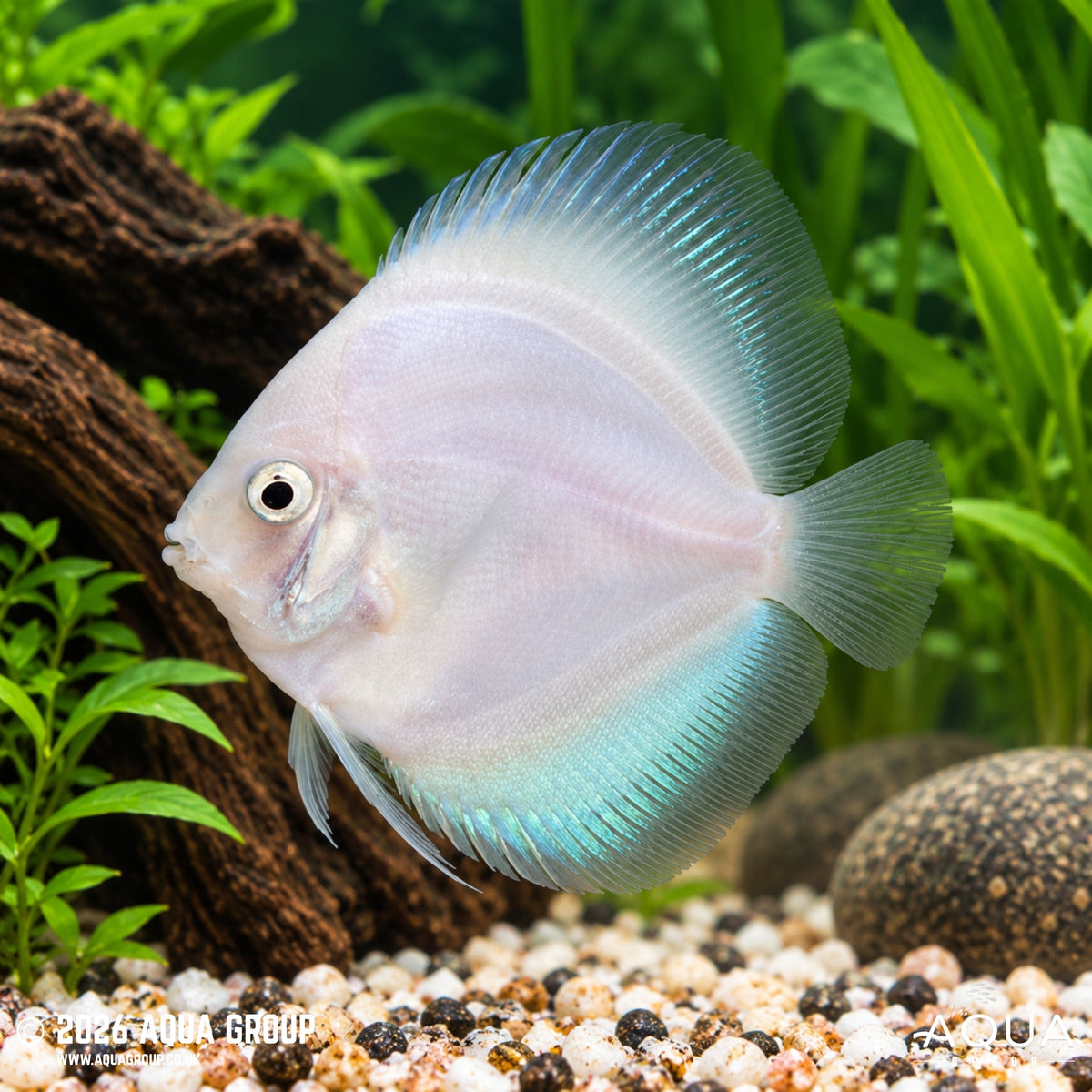
Discus Snow White – Symphysodon sp.
The Snow White Discus is an elegant freshwater cichlid admired for its beautiful white to ivory colouration, rounded body shape and graceful swimming behaviour. This selectively bred Discus variety creates a striking centrepiece in large, mature tropical aquariums, particularly against darker backgrounds and natural driftwood. Peaceful and social, Snow White Discus are best suited to experienced aquarists who can provide consistently warm water, excellent filtration and carefully maintained aquarium conditions.
Common Name: Snow White Discus, White Discus, Snow White Discus Fish
Scientific Name (Latin): Symphysodon sp.
Strain / Form: Snow White captive-bred colour variety
Maximum Size: Approximately 15–20 cm in body diameter, with additional height from the dorsal and anal fins.
Water Type: Freshwater
Origin / Natural Habitat: Wild Discus originate from the Amazon basin in South America, including regions of Brazil, Peru and Colombia.
In their natural habitat, Discus inhabit warm, slow-moving rivers, sheltered tributaries, flooded forests and areas with submerged roots, branches and natural cover.
These environments typically feature warm water, gentle currents and soft, often acidic conditions.
The Snow White Discus is a selectively bred aquarium variety rather than a naturally occurring wild colour form.
In the aquarium, it thrives in mature, spacious setups with open swimming areas, driftwood, tall plants and stable water chemistry.
Water Parameters: Temperature: 28–30°C pH Range: 6.0–7.5 Hardness: Soft to moderately soft preferred Ammonia/Nitrite: 0 ppm Nitrate: Ideally below 20 ppm, with lower levels preferred Flow: Gentle to moderate preferred Oxygenation: Good oxygenation and filtration essential
Temperament: Peaceful / Occasionally Territorial
Snow White Discus are generally peaceful cichlids and are best kept with other Discus or carefully selected calm tankmates.
They are social fish that benefit from living in groups, where they develop natural interaction and a social hierarchy.
Dominant individuals may occasionally chase weaker fish, particularly during feeding or when establishing territories.
Breeding pairs can become protective of their chosen spawning area.
Diet: Omnivore / Specialist Discus Diet
Snow White Discus require a varied, nutritious diet to support healthy growth, body condition and long-term wellbeing.
Offer high-quality Discus granules, specialist pellets and suitable slow-sinking cichlid foods as their staple diet.
Supplement with frozen or live foods such as brineshrimp, mysis shrimp, daphnia, bloodworm and other appropriately sized aquatic invertebrates.
Feed smaller portions regularly, ensuring that all fish receive enough food.
Avoid overfeeding, as uneaten food can quickly affect water quality in warm Discus aquariums.
Minimum Tank Size: Approximately 300 litres for a small group of adults, with 400–450 litres or more preferred for additional swimming space and greater water stability.
Larger aquariums are recommended for mixed Discus communities or bigger groups.
A spacious aquarium with adequate height, open swimming areas and excellent filtration is essential.
Behaviour & Activity: The Snow White Discus is a graceful, relatively slow-moving cichlid that spends much of its time swimming through the middle areas of the aquarium.
When settled, Discus can become confident and interactive, often approaching the front of the aquarium when their keeper is nearby.
Newly introduced fish may initially be shy and retreat among plants or driftwood until they feel secure.
Groups establish a natural social hierarchy, while compatible pairs may develop courtship and breeding behaviour.
Their pale white colouration is particularly striking against dark substrate, driftwood and green aquatic plants.
Community Suitability: Specialist Peaceful Community Fish
Snow White Discus are best suited to dedicated Discus aquariums or carefully planned warm-water community setups.
Suitable tankmates include Cardinal Tetras, Rummy Nose Tetras, Sterbai Corydoras, suitable peaceful catfish and other calm community fish that can tolerate sustained temperatures of approximately 28–30°C.
Avoid aggressive cichlids, fin-nippers, boisterous barbs, fast competitive feeders, large predators and species that require cooler water.
Tankmates should be selected carefully to prevent stress and ensure the Discus receive sufficient food.
Special Requirements or Care Notes: Snow White Discus require a mature aquarium with excellent water quality and stable environmental conditions.
Maintain consistently warm water, ideally around 28–30°C, and avoid sudden temperature fluctuations.
Keep nitrate levels low through appropriate filtration, controlled feeding and regular partial water changes.
Soft, slightly acidic water is preferred, although captive-bred fish may tolerate a wider range of conditions depending on how they were raised.
Check the supplier's existing water parameters and acclimate carefully.
Provide driftwood, tall plants and shaded areas while leaving plenty of open swimming space.
Discus are social fish and should generally be kept in groups of at least five or six. An established compatible breeding pair may be maintained separately in a suitable aquarium.
Avoid introducing individual fish into established groups without considering size differences, social behaviour and potential bullying.
Snow White Discus can show natural variation in white intensity, cream undertones and fin colouration.
Because of their pale appearance, any damage, marks or changes in condition may be more noticeable than on darker Discus varieties.
A varied diet, stable warm water and regular maintenance are essential for maintaining good health.
Quarantine and careful observation of new arrivals are recommended before introducing them into an established Discus aquarium.
Suitable for: Intermediate to experienced
Availability: Common to occasional, depending on supplier, size, breeding quality and colour strain.
All images are a visual representation of the fish you will receive, made to be as accurate as possible. Please note that Mother Nature is a wonderful thing, and variation in patterns and colours will occur — that is part of the unique beauty of these animals.
Order and get 30 reward points
Earn points by signing up for our rewards program