

Description
DaVinci Clownfish (Amphiprion ocellaris)
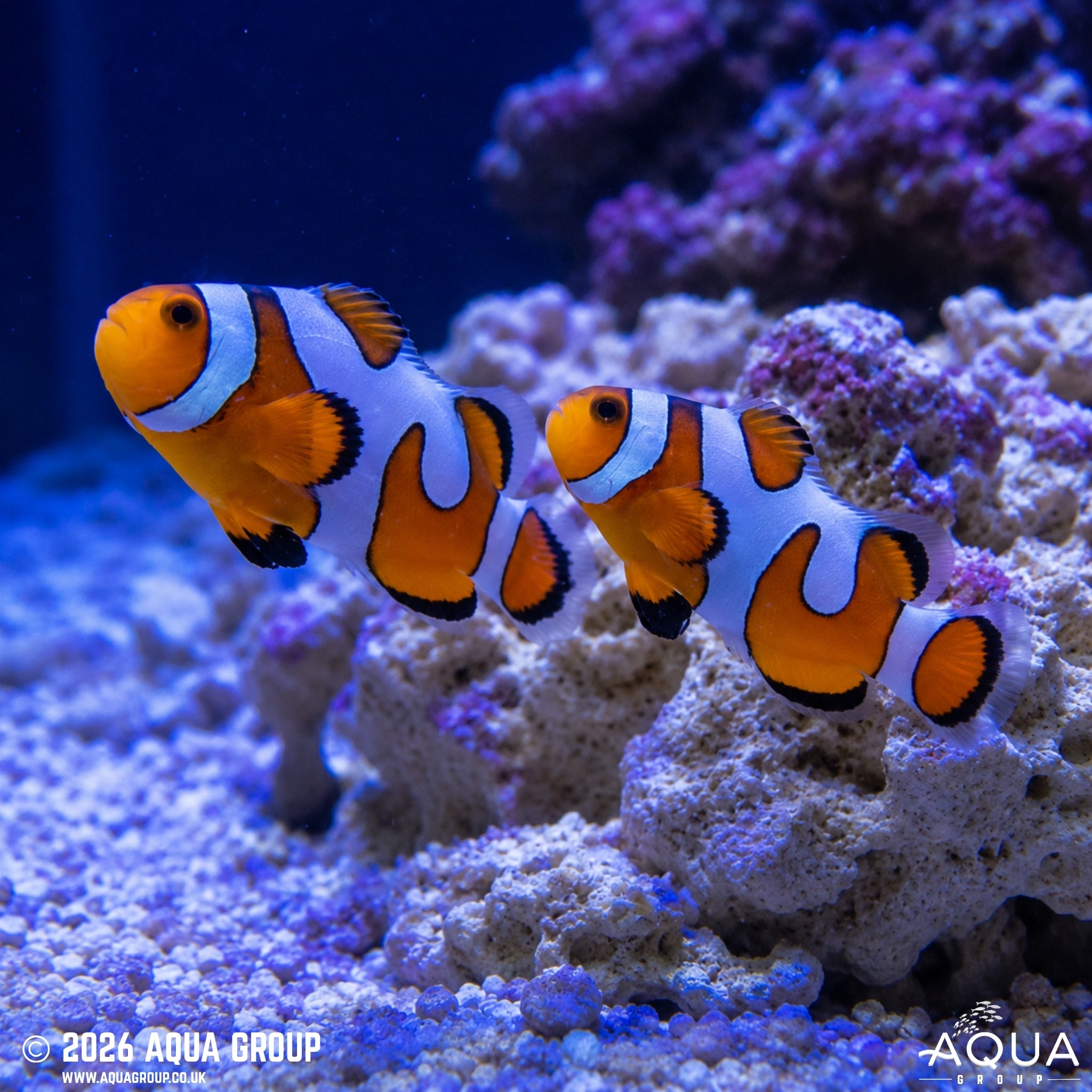
The DaVinci Clownfish, Amphiprion ocellaris, is a beautiful captive-bred designer clownfish known for its artistic, irregular white patterning over a bright orange body. Instead of the standard clean vertical bars seen on a normal Ocellaris Clownfish, the DaVinci form displays flowing, curved markings that can look almost hand-painted. Each fish is unique, making this a highly attractive choice for reef aquariums, fish-only marine systems and aquarists looking for a hardy clownfish with a more unusual designer appearance.
Common Name:
DaVinci Clownfish, DaVinci Ocellaris Clownfish, Designer Ocellaris Clownfish, Ocellaris Clownfish, False Percula Clownfish, Common Clownfish.
Scientific Name (Latin):
Amphiprion ocellaris
Maximum Size:
Up to around 11 cm in the wild, though most aquarium specimens are usually closer to 7–9 cm.
Water Type:
Marine
Origin / Natural Habitat:
The DaVinci Clownfish is a captive-bred designer form of Amphiprion ocellaris. The natural form of this species is found across the eastern Indian Ocean and western Pacific, including areas around the Andaman and Nicobar Islands, Thailand, Malaysia, Indonesia, Singapore, the Philippines, Taiwan, the Ryukyu Islands and north-western Australia. In the wild, Ocellaris Clownfish live on shallow coral reefs and sheltered lagoons, usually close to host anemones and reef structure where they can retreat for safety.
Water Parameters:
Temperature: 24–27°C
pH Range: 8.1–8.4
Hardness or Salinity: SG 1.020–1.025
Temperament:
Generally peaceful, but can become territorial once settled, especially when kept as a bonded pair or when defending a chosen area of the aquarium. Usually suitable for peaceful to moderately active marine community aquariums. Avoid keeping multiple clownfish pairs together in smaller systems, as territorial disputes can occur.
Diet:
Omnivorous. DaVinci Clownfish are usually easy to feed and will accept a wide range of prepared marine foods. Offer a varied diet including quality marine pellets, flakes, frozen mysis shrimp, enriched brineshrimp, finely chopped seafood, copepod-based foods and occasional algae-based foods. A varied diet will help maintain colour, body condition and natural activity.
Minimum Tank Size:
A practical minimum of around 75 litres is recommended for a single fish or bonded pair, with larger aquariums preferred for mixed reef communities or systems with more active tank mates.
Behaviour & Activity:
An active, confident and interactive clownfish that usually chooses a favourite area of the aquarium and spends much of its time close to that territory. It may host an anemone, but this is not required, and many captive-bred clownfish will instead adopt a coral, rock structure, corner or other sheltered area. Like other clownfish, they form a size-based pair structure, with the larger individual becoming female. A secure lid is recommended, as startled marine fish can jump.
Reef Safe:
Reef Safe
DaVinci Clownfish are considered reef safe and do not normally nip corals or clam mantles. They are suitable for reef aquariums, fish-only systems and mixed marine displays. If they choose to host certain corals, they may occasionally irritate the coral by constantly rubbing against it, but this is behaviour-related rather than feeding damage.
Special Requirements or Care Notes:
Best kept singly or as a bonded pair. Captive-bred specimens are usually hardy, well adapted to aquarium life and quick to accept prepared foods. An anemone is not essential and should only be added to mature aquariums with suitable lighting, flow and stable water quality. Provide clean, stable marine water, good oxygenation and enough rockwork or shelter for the fish to establish a secure territory.
Suitable for:
Beginner to Intermediate fishkeepers
Availability:
Designer captive-bred morph / Availability can vary depending on grade, pattern, size and supplier
All images are a visual representation of the fish you will receive, made to be as accurate as possible. Please note that Mother Nature is a wonderful thing, and variation in patterns and colours will occur — that is part of the unique beauty of these animals.
Order and get 75 reward points
Earn points by signing up for our rewards program