


Description
Daisy Parrotfish (Chlorurus sordidus)
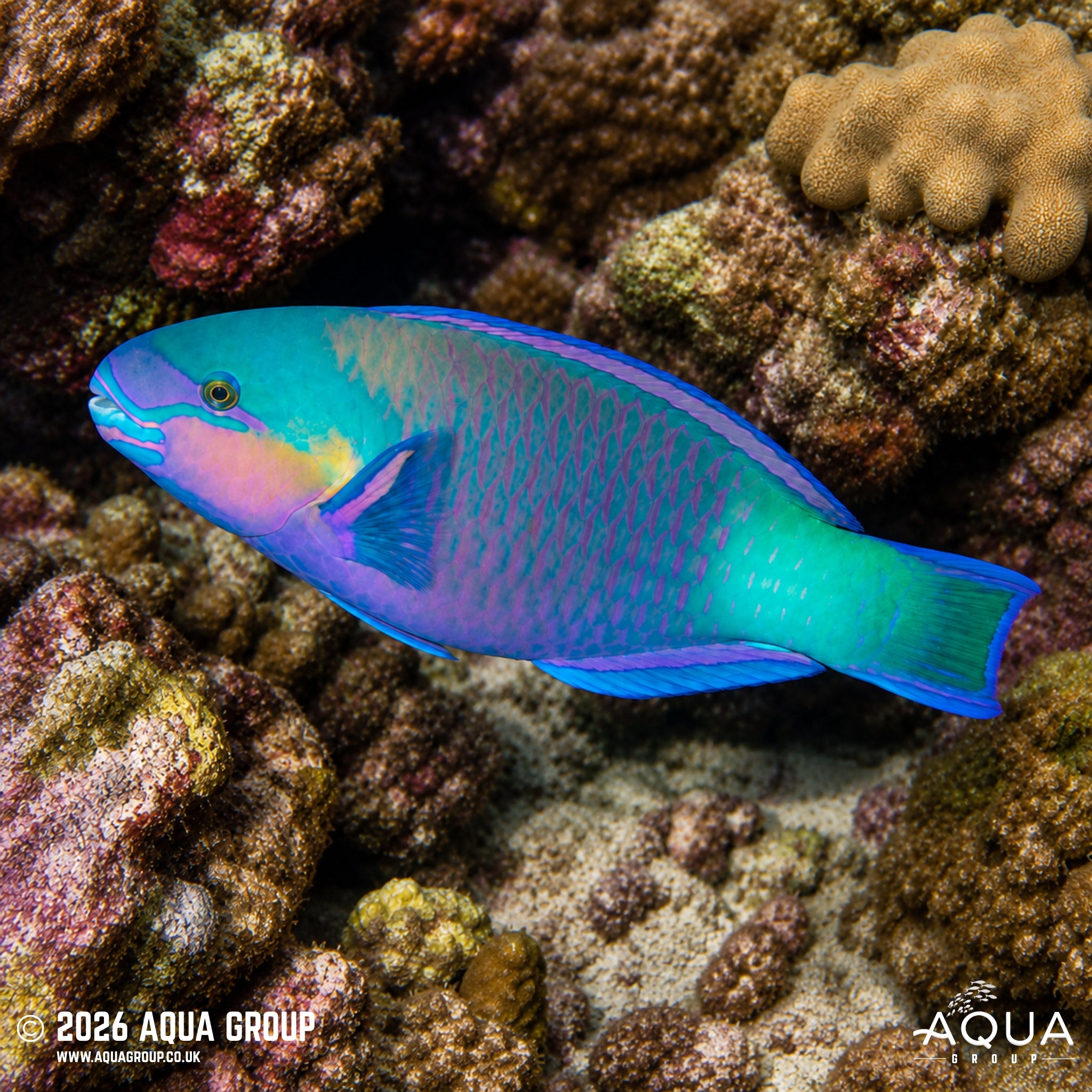
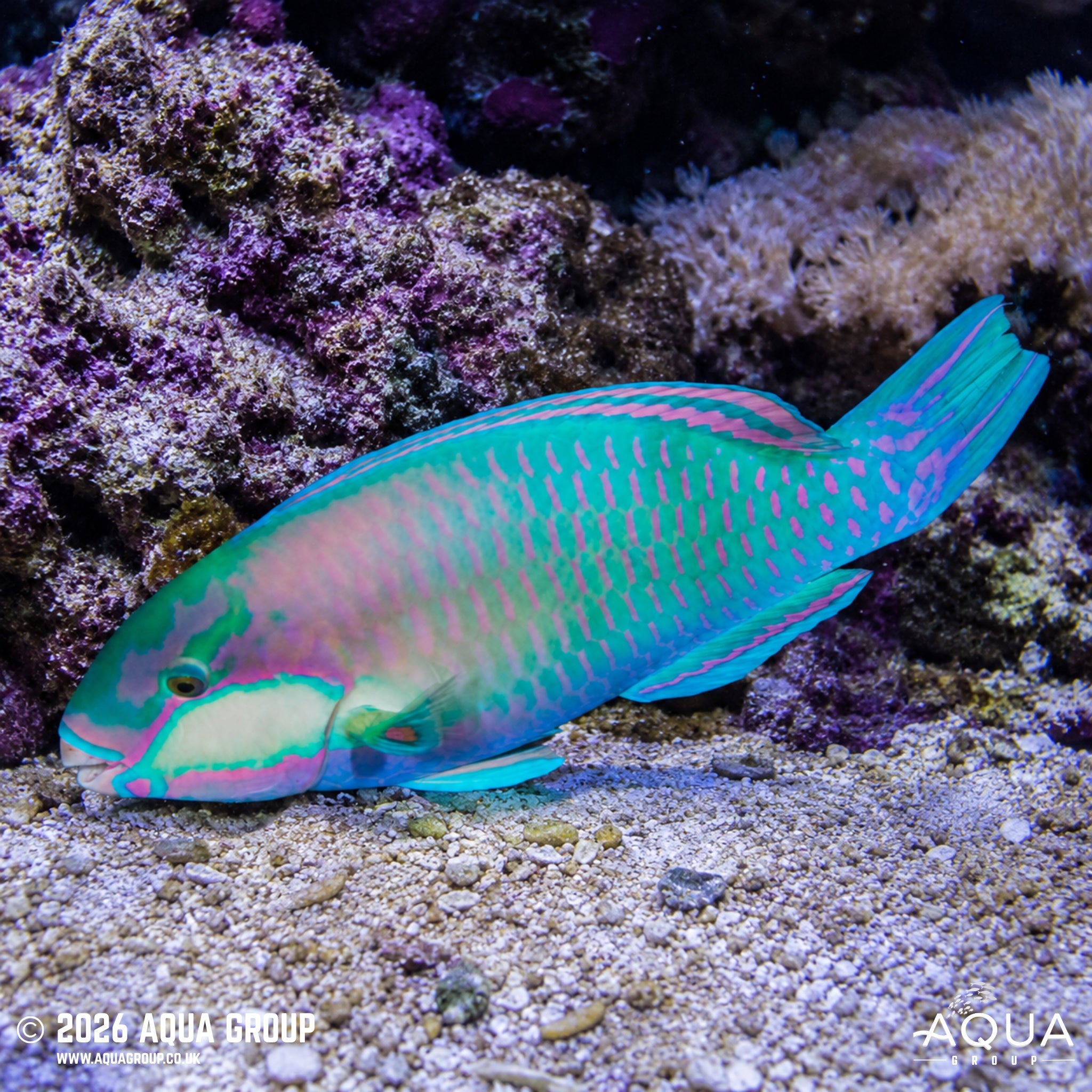
The Daisy Parrotfish (Chlorurus sordidus) is a large and highly active Indian Ocean reef fish valued for its dramatic colour development and constant algae-grazing behaviour. Also known as the Bullethead Parrotfish, Burnt Parrotfish or Indian Bullethead Parrotfish, juveniles and initial-phase fish display variable brown, grey and white patterns, while mature terminal-phase males develop vivid green, turquoise, pink and purple coloration. This powerful reef grazer requires an exceptionally spacious marine aquarium with extensive swimming room, mature rockwork and heavy-duty filtration.
Common Name:
Daisy Parrotfish, Bullethead Parrotfish, Indian Bullethead Parrotfish, Burnt Parrotfish, Green Parrotfish, Shabby Parrotfish
Scientific Name (Latin):
Chlorurus sordidus
Formerly classified as Scarus sordidus.
Maximum Size:
Up to approximately 40 cm in total length. Aquarium accommodation must be planned around a large, deep-bodied and continuously active adult.
Water Type:
Marine
Origin / Natural Habitat:
Native to the tropical Red Sea and Indian Ocean, including eastern African reefs, island groups of the western and central Indian Ocean, Christmas Island and the Cocos Islands.
It inhabits coral-rich reef flats, open reef pavement, lagoons, outer reefs and reef drop-offs at depths from very shallow water to approximately 50 metres. Juveniles are frequently associated with coral rubble areas, while initial-phase fish may form large travelling groups between feeding and sleeping grounds.
Water Parameters:
Temperature: 24–28°C
pH Range: 8.1–8.4
Salinity: 1.020–1.025 SG
Temperament:
Generally peaceful towards unrelated large fish but active, powerful and potentially territorial towards other parrotfish or similarly shaped grazing species.
Its constant movement and substantial adult size may intimidate small, timid or sedentary tank mates. It should be maintained with robust marine fish capable of competing for food without harassing it.
Diet:
Primarily herbivorous, feeding naturally on benthic algae and associated organic material scraped from reef surfaces.
In the aquarium, provide frequent portions of dried marine algae, nori, spirulina-based flakes, herbivore pellets and frozen foods containing marine algae. Mature live rock with established algal growth is extremely important.
Small quantities of mysis shrimp, enriched brine shrimp and other marine foods may also be accepted. Feed several modest meals daily to support its high activity level and continuous grazing behaviour.
Minimum Tank Size:
A minimum aquarium volume of approximately 1,500 litres is recommended for long-term care, with a long, wide aquarium footprint and extensive open swimming room.
A system of 2,000 litres or more is preferable for a fully grown adult or when the fish is maintained alongside other large, active reef species.
Behaviour & Activity:
An extremely active daytime grazer that spends much of its time travelling across the aquarium and scraping algae from rock surfaces with its fused beak-like teeth.
Juveniles and initial-phase fish may show brown, grey, striped or spotted patterns. Terminal-phase males become predominantly green to turquoise with pink or purple scale margins and contrasting facial coloration.
This species is a protogynous hermaphrodite, meaning females or initial-phase individuals may transition into mature terminal-phase males under suitable social conditions.
At night, parrotfish commonly retreat to a protected sleeping area within the rockwork. Some individuals may produce a thin mucus covering while resting.
Reef Safe:
Not Reef Safe
The Daisy Parrotfish should not be considered safe for a conventional coral reef aquarium. Although it feeds mainly on algae, its powerful beak scrapes directly across calcareous rock and reef surfaces and may damage encrusting corals or living coral skeletons while grazing.
Its large body can also dislodge unsecured coral pieces, disturb rock structures and produce substantial quantities of fine sediment. It is best maintained in a very large fish-only or fish-only-with-live-rock aquarium.
Special Requirements or Care Notes:
This species requires public-aquarium-scale accommodation or an exceptionally large private marine system. Juveniles should not be purchased unless suitable permanent adult housing is already available.
Provide extensive open swimming space alongside substantial, securely positioned rockwork. The aquascape should offer broad grazing surfaces, caves and sheltered sleeping areas without restricting movement.
Powerful biological filtration, efficient protein skimming, strong water circulation and excellent oxygenation are essential. Large parrotfish feed heavily and produce a considerable waste load.
Mature live rock and natural algal growth should be available at all times. A sterile or recently established aquarium is unsuitable, even when prepared herbivore foods are offered.
The fused dental plates grow and wear through constant grazing. Suitable natural rock surfaces are therefore important for normal feeding behaviour and dental maintenance.
Do not house with highly aggressive triggers, large territorial wrasses or other fish likely to harass or injure it. Multiple large parrotfish may fight unless maintained in an exceptionally spacious system.
Choose a specimen with a rounded abdomen, intact mouth, clear eyes and an active grazing response. Damage to the beak or mouth can severely affect the fish’s ability to feed.
A secure aquarium cover is recommended, particularly during acclimatisation or territorial disturbance.
Suitable for:
Expert only
Availability:
Rare or occasional in trade
All images are a visual representation of the fish you will receive, made to be as accurate as possible. Please note that Mother Nature is a wonderful thing, and variation in patterns and colours will occur — that is part of the unique beauty of these animals.
Order and get 90 reward points
Earn points by signing up for our rewards program