

Description
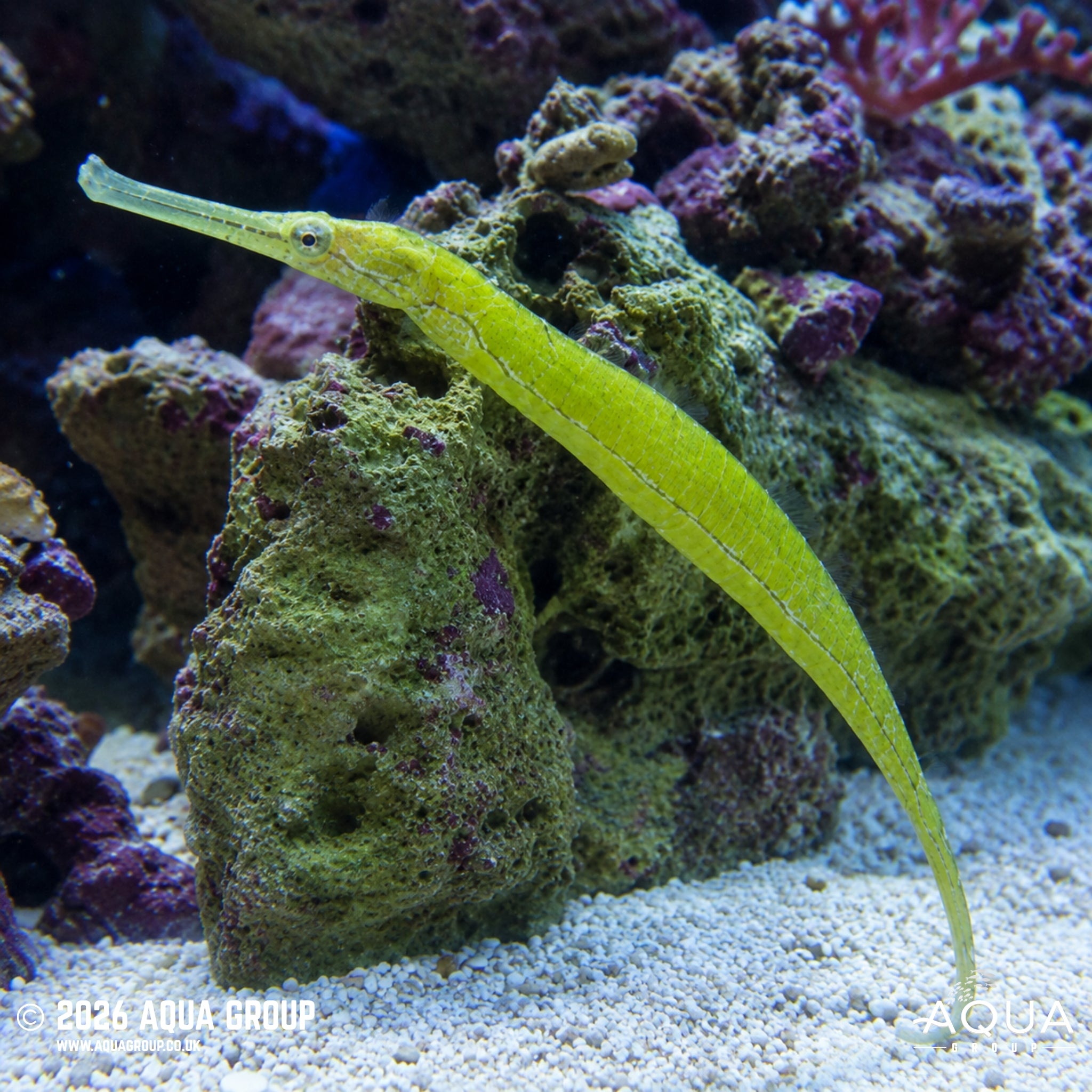
Crocodile Pipefish (Syngnathoides biaculeatus)
The Crocodile Pipefish, Syngnathoides biaculeatus, is a distinctive Indo-Pacific pipefish recognised by its long angular body, tubular snout, mottled green, brown or grey colouration and unusual prehensile tail. Also known as the Alligator Pipefish, Double-ended Pipefish or Double-end Pipehorse, it inhabits sheltered seagrass beds, macroalgae, mangrove margins and shallow coastal lagoons where its elongated body blends closely with surrounding vegetation. This specialised ambush feeder consumes tiny crustaceans and small fish by drawing them rapidly into its narrow mouth. Although captivating and capable of captive reproduction, its demanding feeding requirements, weak swimming ability and need for a peaceful, mature aquarium make it suitable only for experienced marine fishkeepers.
Common Name:
Crocodile Pipefish, Alligator Pipefish, Double-ended Pipefish, Double-end Pipehorse, Spiraltail Pipefish.
Scientific Name (Latin):
Syngnathoides biaculeatus
Maximum Size:
Usually around 20–26 cm when fully grown, with exceptional specimens reported at approximately 29 cm.
Water Type:
Marine
Origin / Natural Habitat:
Widely distributed throughout the tropical Indo-West and Central Pacific, from the Red Sea and East Africa across the Indian Ocean and Southeast Asia to Japan, Australia, Samoa and Tonga.
Crocodile Pipefish inhabit shallow, protected coastal waters including bays, lagoons, estuaries and mangrove areas, generally at depths of approximately 0–10 metres. They are closely associated with seagrass beds, macroalgae and floating vegetation, which provide camouflage, shelter and access to small crustacean prey. Juveniles may cling to floating algae, plant debris or Sargassum near the surface.
Water Parameters:
Temperature: 24–28°C
pH Range: 8.1–8.4
Hardness or Salinity: Marine salinity 1.023–1.026 specific gravity; maintain exceptionally stable salinity, gentle to moderate flow, strong oxygenation and consistently excellent water quality.
Temperament:
Peaceful, slow-moving and highly vulnerable to competition. Crocodile Pipefish do not normally threaten suitably sized community fish, although very small shrimps, fish fry and tiny crustaceans may be consumed.
Avoid aggressive, territorial or fast-feeding tank mates. Triggerfish, puffers, hawkfish, large wrasses, dottybacks and active damsels may harass the pipefish, damage its body or prevent it from feeding adequately.
Diet:
Carnivorous micro-predator. In the wild, this species feeds on small shrimps, amphipods, mysid crustaceans and other tiny aquatic animals, with occasional very small fish also taken.
In the aquarium, offer enriched live or frozen mysis shrimp, copepods, amphipods, Artemia and other appropriately sized marine crustaceans. Larger adults may accept small whole marine shrimp and finely chopped crustacean foods.
Newly imported specimens frequently prefer live moving prey and may refuse conventional frozen foods. Confirm that the exact fish is feeding before purchase whenever possible and transition gradually onto nutritionally varied frozen foods.
Feed small portions at least three or four times daily. Food should be delivered close to the pipefish because it is a deliberate feeder and cannot compete effectively with active marine fish.
Minimum Tank Size:
A minimum aquarium volume of approximately 300 litres is recommended for one adult or a compatible pair, with a tall or spacious footprint, extensive artificial or living macroalgae and numerous secure attachment points.
A larger aquarium is advisable when maintaining a group or combining the pipefish with other specialist syngnathids.
Behaviour & Activity:
A slow and deliberate fish that spends much of its time positioned vertically, diagonally or horizontally among seagrass, macroalgae and branching aquarium structure.
The prehensile tail is used to grip vegetation and other suitable surfaces, allowing the fish to remain stable while waiting for prey. Its mottled colouration can vary according to habitat and surroundings, providing effective camouflage among green, brown or grey plant growth.
Crocodile Pipefish swim using rapid movements of the small dorsal and pectoral fins. They are inefficient swimmers and can struggle in strong, turbulent aquarium flow.
Like seahorses and other pipefish, this species exhibits male pregnancy. The female transfers eggs to the male, which carries the developing young within a specialised brood area beneath the body or tail until they are released.
Reef Safe:
Reef Safe with Caution
Crocodile Pipefish do not normally damage healthy corals, anemones, clams or established ornamental invertebrates. They are unlikely to disturb aquascaping and are generally peaceful within a suitable reef environment.
However, very small ornamental shrimps, crustacean larvae, fish fry, copepods and amphipods may be consumed. Conventional high-flow reef aquariums containing aggressive or fast-feeding fish are often unsuitable despite the species’ coral-safe behaviour.
Special Requirements or Care Notes:
This species requires a mature, peaceful aquarium designed around its specialised needs. Provide abundant macroalgae, artificial seagrass, branching rockwork or other smooth structures that can be safely grasped with the prehensile tail.
Water movement should be gentle to moderate throughout most of the aquarium. Avoid powerful pumps or turbulent flow that forces the pipefish to swim continuously or prevents it from holding position while feeding.
Protect all pump and overflow intakes with fine guards. The elongated body and tail can be drawn into unprotected equipment, particularly when the fish is exploring or resting.
Feeding is the most important husbandry consideration. Establish a reliable supply of appropriately sized live or frozen crustaceans before obtaining the fish. A mature refugium connected to the aquarium can help support natural copepod and amphipod populations but is unlikely to provide the entire diet.
Target feed using a pipette or feeding station positioned near the pipefish’s preferred attachment area. Observe each meal carefully to confirm that food is swallowed rather than merely inspected.
Do not keep with fast-feeding clownfish, tangs, anthias, large wrasses or other active species unless the aquarium is exceptionally spacious and individual feeding can be guaranteed. Suitable companions include other peaceful pipefish, seahorses and gentle small fish with similar environmental requirements.
Avoid stinging corals and anemones in areas where the pipefish is likely to anchor its tail. Strongly stinging large-polyp corals may injure its delicate skin.
Select only an alert specimen with clear eyes, an undamaged snout, straight body, intact tail and a gently filled abdomen. A hollow body profile, rapid breathing, skin lesions or repeated failure to feed are serious warning signs.
Quarantine is strongly recommended, but the quarantine aquarium must include smooth hitching structures, subdued flow and frequent access to suitable foods. Bare, brightly lit tanks with no attachment points can cause significant stress.
Pipefish may be sensitive to copper and other strong medications. Treatment should be undertaken only in a separate hospital system using carefully selected medication and experienced guidance.
A secure aquarium cover is essential. Crocodile Pipefish have been observed leaving the water and clinging to floating vegetation when threatened, so all openings around cables, pipework and overflows should be covered.
Captive breeding is possible, but newly released young are exceptionally small and require intensive feeding with appropriately sized live plankton. Breeding should only be attempted by experienced aquarists with suitable live-food cultures and dedicated rearing systems.
Suitable for:
Experienced marine fishkeepers
Availability:
Rare or occasional in trade
All images are a visual representation of the fish you will receive, made to be as accurate as possible. Please note that Mother Nature is a wonderful thing, and variation in patterns and colours will occur — that is part of the unique beauty of these animals.
Order and get 35 reward points
Earn points by signing up for our rewards program