

Description
Clown Wartskin Anglerfish (Antennarius maculatus)
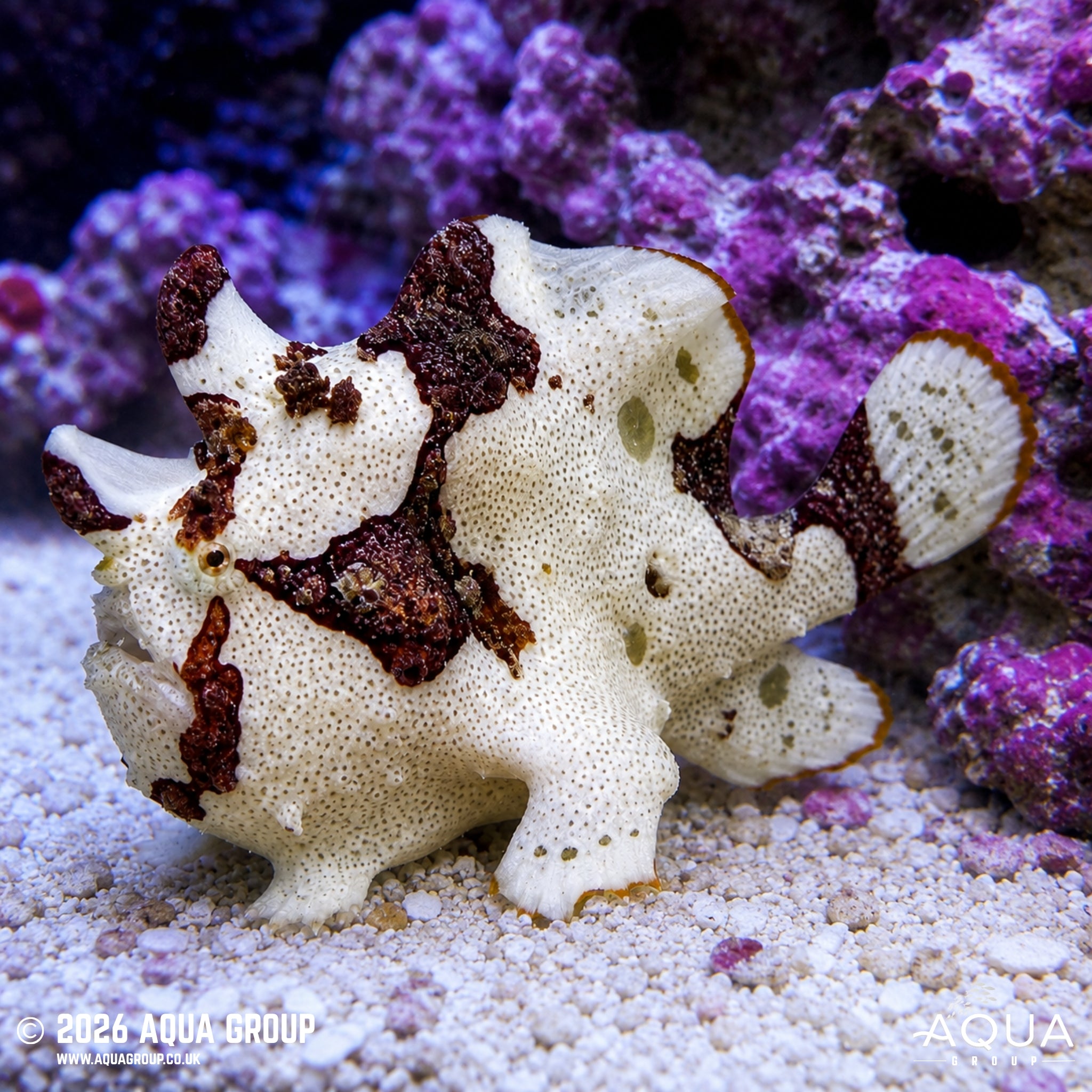
The Clown Wartskin Anglerfish, Antennarius maculatus, is an extraordinary Indo-West Pacific ambush predator recognised by its rounded body, wart-like skin texture and highly variable clown-like patterning. Also known as the Warty Frogfish, Clown Anglerfish or Wartskin Frogfish, it uses a modified dorsal spine tipped with a lure to attract small fish and crustaceans within striking distance. Rather than swimming continuously, this unusual fish often “walks” across rockwork using its modified pectoral fins and relies on exceptional camouflage to remain concealed. Its fascinating appearance and feeding behaviour make it highly desirable, but it requires carefully selected tank mates, controlled feeding and experienced marine care.
Common Name:
Clown Wartskin Anglerfish, Wartskin Anglerfish, Warty Frogfish, Clown Anglerfish, Clown Frogfish, Warty Anglerfish.
Scientific Name (Latin):
Antennarius maculatus
Maximum Size:
Usually around 10–15 cm when fully grown, with a reported scientific maximum of approximately 15 cm.
Water Type:
Marine
Origin / Natural Habitat:
Indo-West Pacific, ranging from the Maldives and Mauritius eastwards through Indonesia, Singapore, the Philippines and Papua New Guinea to the Solomon Islands.
Clown Wartskin Anglerfish inhabit tropical coral and rocky reefs, commonly resting among sponges, encrusting organisms, coral growth and complex rockwork. Their colour, skin texture and irregular body outline allow them to imitate surrounding reef material while waiting for prey.
Water Parameters:
Temperature: 24–28°C
pH Range: 8.1–8.4
Hardness or Salinity: Marine salinity 1.023–1.026 specific gravity; stable salinity, good oxygenation, efficient biological filtration and consistently high water quality are important.
Temperament:
Predatory, generally solitary and territorial towards similar anglerfish. The Clown Wartskin Anglerfish is not normally aggressive in the conventional sense, but it will attempt to swallow almost any fish or crustacean that fits inside its highly expandable mouth.
Potential prey can include animals approaching the anglerfish’s own body length. More than one frogfish should not normally be housed together because larger individuals may consume smaller companions.
Diet:
Obligate carnivore and specialised ambush predator. In the wild, this species feeds mainly on small reef fish, shrimps and other crustaceans attracted by its moving lure.
Newly introduced specimens may initially require live marine shrimp or small live fish to trigger a feeding response. Suitable live foods may include marine glass shrimp or appropriately sourced saltwater feeder shrimp.
Gradually transition the fish onto whole or chopped marine prawns, shrimp, krill, lancefish, silversides, squid and other vitamin-enriched marine foods presented with long feeding tongs. Move the food gently near the lure to imitate living prey.
Avoid routine use of freshwater feeder fish, mammalian meat or excessively fatty foods. These do not provide an appropriate long-term marine diet and may introduce disease or nutritional imbalance.
Minimum Tank Size:
A minimum aquarium volume of approximately 150 litres is recommended for one adult, with a broad footprint, mature rockwork and several sheltered perching areas. A larger aquarium is advisable when housing it with other suitably sized marine fish.
Behaviour & Activity:
A sedentary ambush predator that may remain almost motionless for extended periods while blending into rockwork, sponge growth or coral surroundings. It uses modified pectoral and pelvic fins to grip surfaces and move across the aquarium in a walking motion.
The first dorsal spine forms a flexible fishing lure, known as an illicium, with a fleshy tip resembling a small fish or invertebrate. The anglerfish waves this lure near its mouth and strikes with extremely rapid suction when prey approaches.
Colouration is exceptionally variable. Individuals may be white, cream, yellow, orange, red, brown or black, with spots, patches and irregular markings. Colour can gradually change in response to age, diet and surroundings, although an exact colour transformation cannot be guaranteed.
Reef Safe:
Reef Safe with Caution
Clown Wartskin Anglerfish do not normally consume healthy coral tissue or deliberately damage established corals. However, ornamental shrimps, small crabs and any fish that can be swallowed are at serious risk.
The fish may perch on coral colonies, sponges or other sessile organisms and can cause temporary irritation or localised damage through repeated contact. Its compatibility is therefore determined mainly by predation risk rather than direct coral feeding.
Special Requirements or Care Notes:
Choose tank mates with extreme care. Body depth is as important as length because frogfish can swallow surprisingly large prey. Avoid gobies, cardinalfish, dartfish, clownfish, small wrasses, ornamental shrimps and other animals that may fit inside its mouth.
Do not house the Clown Wartskin Anglerfish with aggressive fish that may bite its lure, fins or textured skin. Triggerfish, puffers, large wrasses and persistent fin-nippers are unsuitable companions.
Provide mature rockwork, caves, overhangs and stable perching surfaces. Moderate, well-distributed water movement is suitable, but avoid directing powerful flow across its preferred resting area. Protect pump and overflow intakes because the fish may climb onto equipment.
Confirm that the specimen is feeding before purchase whenever possible. Newly imported frogfish can be reluctant to accept non-living food, and conversion should be gradual. Use feeding tongs rather than fingers, as the feeding strike is extremely fast.
Feed controlled meals rather than large portions every day. Adults generally require an appropriately sized meal two or three times per week. Overfeeding can lead to obesity, regurgitation, digestive problems and rapid deterioration in water quality.
Never offer prey that is excessively large. Frogfish may swallow animals they cannot digest safely, potentially resulting in internal injury, regurgitation or death.
A secure aquarium cover is recommended. Quarantine should include suitable shelter and a reliable feeding plan, as bare or brightly illuminated systems may cause stress and make feeding establishment more difficult.
Suitable for:
Experienced fishkeepers
Availability:
Rare or occasional in trade
All images are a visual representation of the fish you will receive, made to be as accurate as possible. Please note that Mother Nature is a wonderful thing, and variation in patterns and colours will occur — that is part of the unique beauty of these animals.
Order and get 119 reward points
Earn points by signing up for our rewards program