

Description
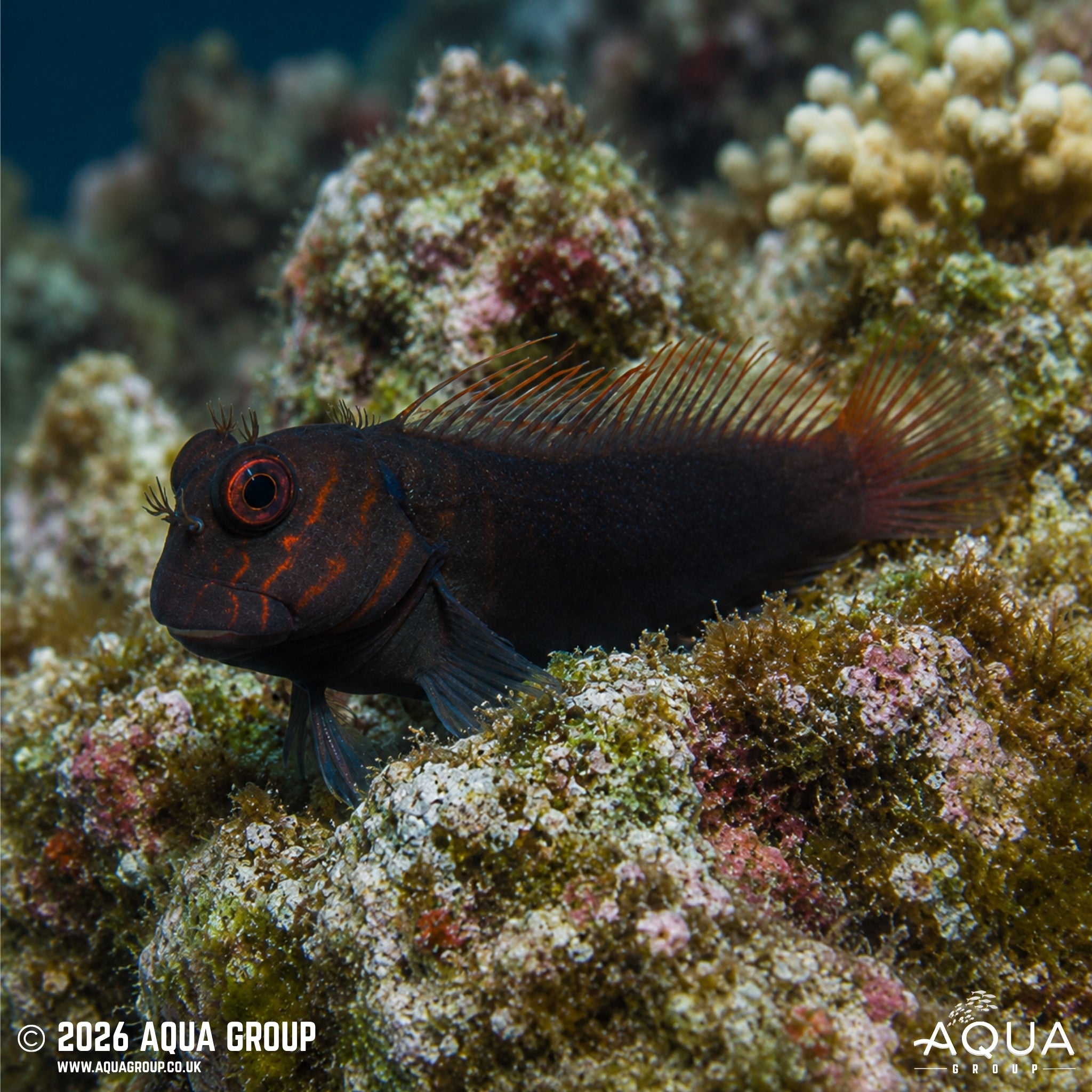
Chestnut Eyelash Blenny (Cirripectes castaneus)
The Chestnut Eyelash Blenny, Cirripectes castaneus, is an unusual and characterful marine combtooth blenny, appreciated for its rich brown to chestnut colouration, patterned face, expressive eyes and natural grazing behaviour. Also known as the Chestnut Blenny, Spotted-Chin Blenny or Muzzled Rockskipper, this species is not as commonly seen in the aquarium trade as many other blennies, making it an interesting choice for mature reef aquariums with established rockwork and natural algae growth. It is generally peaceful, reef suitable and full of personality, but it should be provided with regular algae-based feeding and suitable grazing surfaces.
Common Name:
Chestnut Eyelash Blenny, Chestnut Blenny, Chestnut Eyelash-Blenny, Spotted-Chin Blenny, Muzzled Rockskipper, Rockskipper Blenny.
Scientific Name (Latin):
Cirripectes castaneus
Maximum Size:
Around 9–10 cm, making it a small marine blenny suitable for mature aquariums with enough rockwork and grazing area.
Water Type:
Marine
Origin / Natural Habitat:
Found across the Indo-West Pacific, including the Red Sea, East Africa, the Indian Ocean, southern Japan, Micronesia, Tonga and surrounding reef regions. In the wild, Chestnut Eyelash Blennies are associated with shallow reef habitats, wave-swept algal ridges, rocky reef flats and coralline substrates. They are usually found close to rockwork, where they can graze and retreat quickly into shelter.
Water Parameters:
Temperature: 24–27°C
pH Range: 8.1–8.4
Hardness or Salinity: SG 1.020–1.025
Temperament:
Peaceful to mildly territorial. Chestnut Eyelash Blennies are generally suitable for peaceful marine communities, but they may defend a favourite hole, crevice or grazing area. They can show territorial behaviour towards similar blennies or fish that compete for the same rockwork. Best kept as a single specimen unless the aquarium is large and carefully planned.
Diet:
Omnivorous grazer with a strong algae-feeding element. In the aquarium, provide regular algae-based foods such as nori, spirulina flakes, herbivore pellets, marine algae sheets and frozen foods containing algae. Small meaty foods such as frozen mysis shrimp, enriched brineshrimp, cyclops and copepod-based foods can also be offered as part of a varied diet. Mature rockwork with natural film algae and biofilm is very beneficial.
Minimum Tank Size:
A practical minimum of around 100–150 litres is recommended for a single specimen, with larger aquariums preferred for mixed reef communities or if housing alongside other rock-dwelling fish. Provide mature live rock, caves, crevices and natural grazing surfaces.
Behaviour & Activity:
A rock-associated blenny that spends much of its time perched on hard surfaces, watching its surroundings and grazing from rockwork. It may hop between ledges, retreat into crevices when startled and establish a favourite resting hole. Like many blennies, it has a curious and expressive personality once settled. A secure lid is recommended, as small marine fish can jump when startled.
Reef Safe:
Reef Safe with Caution
Chestnut Eyelash Blennies are generally suitable for reef aquariums and do not normally damage corals. However, as with many grazing blennies, occasional picking at coral surfaces, clam mantles or fleshy sessile invertebrates may occur, especially if the fish is underfed or natural grazing is limited. Keeping the fish well fed with algae-based foods helps reduce unwanted picking behaviour.
Special Requirements or Care Notes:
Best kept in a mature aquarium with established rockwork and visible grazing areas. Avoid sterile new systems with very little algae or biofilm, as this species benefits from natural grazing throughout the day. Do not rely on it as the sole algae-control method, and supplement regularly with algae-rich foods. Avoid housing with aggressive blennies, large hawkfish, predatory fish or overly dominant tank mates that may force it away from feeding areas.
Suitable for:
Beginner to Intermediate fishkeepers
Availability:
Uncommon in the marine aquarium trade / Availability can vary depending on supplier, collection region and import season
All images are a visual representation of the fish you will receive, made to be as accurate as possible. Please note that Mother Nature is a wonderful thing, and variation in patterns and colours will occur — that is part of the unique beauty of these animals.
Order and get 20 reward points
Earn points by signing up for our rewards program