

Description
Celebes Halfbeak – Nomorhamphus liemi
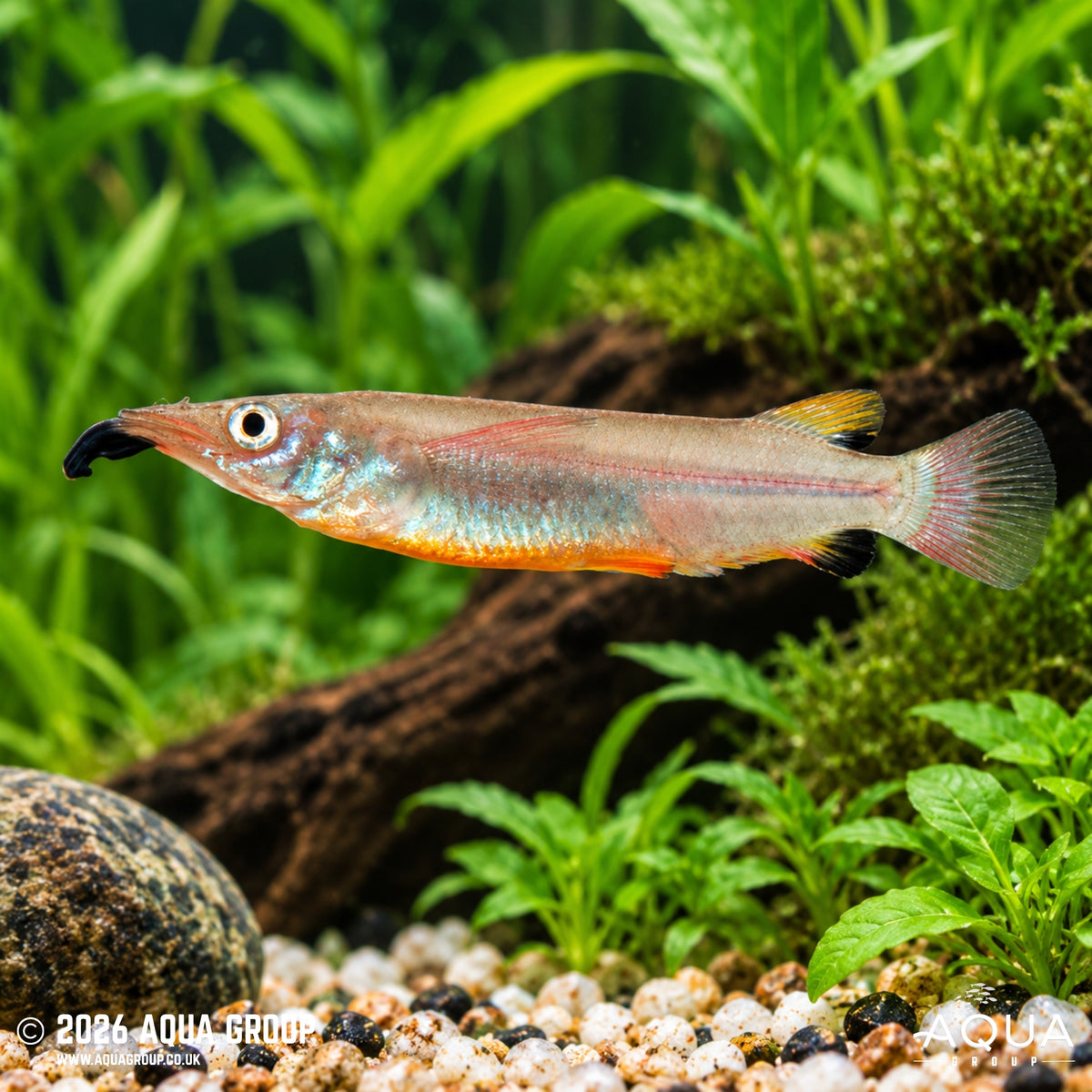
The Celebes Halfbeak is a fascinating freshwater livebearer admired for its unusual elongated lower jaw, slender body shape and attractive red, black and yellow fin markings. Also known as Liem’s Halfbeak or Sulawesi Halfbeak, this distinctive surface-dwelling fish makes an interesting addition to mature freshwater aquariums with carefully selected tankmates. Active, inquisitive and unusual in appearance, Celebes Halfbeaks are best suited to aquarists who can provide stable water conditions, appropriate surface feeding and plenty of swimming space.
Common Name:
Celebes Halfbeak, Liem’s Halfbeak, Sulawesi Halfbeak, Celebes Halfbeak Livebearer
Scientific Name (Latin):
Nomorhamphus liemi
Maximum Size:
Approximately 7–9 cm, with females generally growing larger than males.
Water Type:
Freshwater
Origin / Natural Habitat:
The Celebes Halfbeak originates from southern Sulawesi, formerly known as Celebes, in Indonesia.
In the wild, it inhabits freshwater streams and flowing waterways, including clear, well-oxygenated habitats with overhanging vegetation and sheltered surface areas.
These environments provide opportunities to feed on insects and other small organisms that fall onto the water surface.
In the aquarium, Celebes Halfbeaks thrive in mature setups with open surface swimming space, floating vegetation, gentle to moderate flow and clean, oxygen-rich water.
Water Parameters:
Temperature: 20–26°C, ideally around 22–24°C
pH Range: 6.5–8.0
Hardness: Soft to moderately hard (approximately 5–15 dGH)
Ammonia/Nitrite: 0 ppm
Nitrate: Kept low and stable
Flow: Gentle to moderate, with good surface movement
Oxygenation: Good oxygenation and filtration essential
Temperament:
Peaceful to Semi-Aggressive / Territorial Between Males
Celebes Halfbeaks are generally peaceful towards suitable tankmates but may show territorial behaviour towards members of their own species.
Males can display, chase or spar with rival males, particularly when kept in smaller aquariums or when competing for females.
They are best maintained in carefully planned groups containing more females than males.
Providing sufficient surface swimming space, floating plants and visual barriers helps reduce aggression and allows less dominant individuals to retreat.
Diet:
Carnivore / Surface Insectivore
Celebes Halfbeaks naturally feed on flying insects, insect larvae and other small animals found at or near the water surface.
Offer a varied diet of small floating carnivore pellets, suitable floating flakes and insect-based aquarium foods.
Supplement regularly with live or frozen foods such as mosquito larvae, fruit flies, bloodworm, daphnia, brineshrimp and small aquatic invertebrates.
Live and frozen foods are particularly useful for newly introduced specimens, which may initially be reluctant to accept prepared foods.
Because this species feeds primarily near the surface, ensure food remains accessible in the upper water column.
A varied insect-rich diet helps maintain strong colouration, healthy growth and breeding condition.
Minimum Tank Size:
Approximately 100–120 litres for a small group
A longer aquarium with a generous surface area is preferred over a tall aquarium.
Larger aquariums are recommended for groups containing multiple males or mixed community setups.
Provide floating plants, sheltered surface areas and open swimming space to allow natural movement and reduce competition.
Behaviour & Activity:
The Celebes Halfbeak is an active surface-dwelling fish that spends much of its time patrolling the uppermost levels of the aquarium.
Its distinctive elongated lower jaw is adapted for capturing insects and other small prey near the water surface.
Males may display their colourful fins and lower-jaw markings during courtship or territorial interactions.
Females are generally larger and fuller-bodied, while males tend to show more pronounced colouration.
Unlike egg-laying species, Celebes Halfbeaks are livebearers, with females giving birth to relatively large, fully formed fry.
These fish can be nervous when startled and are capable of jumping considerable distances, making a secure aquarium cover essential.
Community Suitability:
Specialist Community Fish
Celebes Halfbeaks can be kept in carefully planned freshwater community aquariums with peaceful fish that tolerate similar water conditions.
Suitable tankmates may include peaceful danios, compatible rasboras, small rainbowfish, suitable bottom-dwelling catfish and other calm species that do not compete aggressively at the surface.
Midwater and bottom-dwelling fish are generally preferable to highly competitive surface feeders.
Avoid aggressive cichlids, fin-nippers, large predators, very small fish or fry that may be eaten, and boisterous surface-dwelling species.
Care should also be taken when keeping Celebes Halfbeaks with other halfbeak species, as territorial disputes may occur.
Special Requirements or Care Notes:
Celebes Halfbeaks should be kept in mature aquariums with stable water quality, good filtration and appropriate oxygenation.
A secure, tight-fitting aquarium lid is essential, as this species is an excellent jumper and may leap when startled.
Provide floating vegetation, tall background plants and shaded surface areas to create a secure environment. Avoid sudden movements around the aquarium, particularly during the initial settling period.
For group keeping, a ratio of approximately one male to two or three females is recommended where possible. Males may become territorial, so avoid overcrowding the surface and provide plenty of visual barriers.
This species benefits from cooler tropical conditions compared with many common livebearers. Avoid maintaining it permanently at excessively warm temperatures. Freshwater is suitable for long-term care, and routine salt addition is not necessary. Celebes Halfbeaks can be sensitive to sudden changes in water chemistry and should be acclimated carefully.
Their elongated lower jaws are delicate and may become damaged through collisions with aquarium glass or during rough handling. Use appropriate containers and take care during transport to minimise stress and physical injury. This species is a livebearer, with females producing relatively small broods of well-developed young.
Suitable for:
Intermediate to experienced
Availability:
Occasional specialist availability, depending on supplier, import season and availability of captive-bred specimens.
All images are a visual representation of the fish you will receive, made to be as accurate as possible. Please note that Mother Nature is a wonderful thing, and variation in patterns and colours will occur — that is part of the unique beauty of these animals.
Order and get 5 reward points
Earn points by signing up for our rewards program