

Description
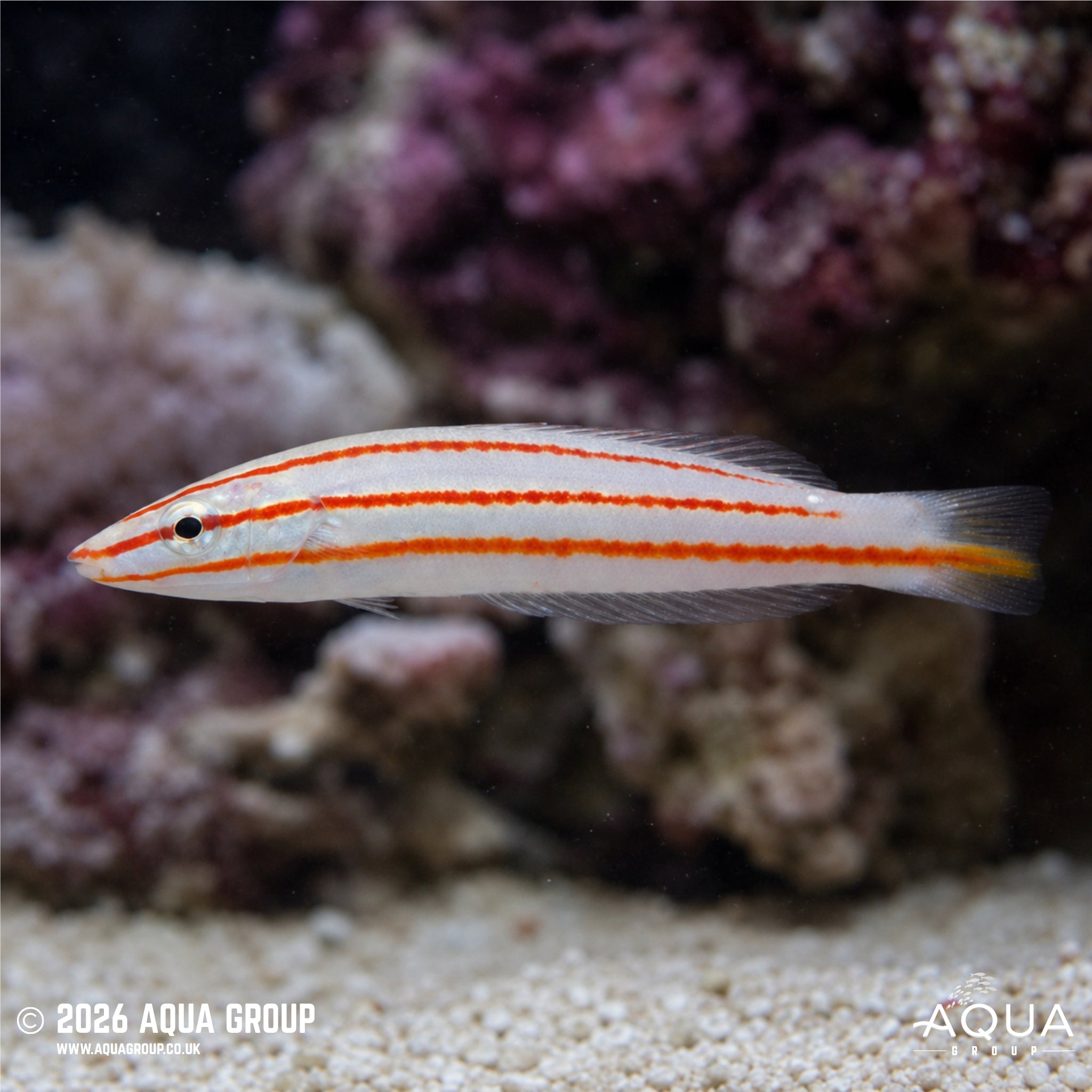
Candy Cane Wrasse (Hologymnosus doliatus)
The Candy Cane Wrasse is a large and highly active marine wrasse with a slender body, striking juvenile patterning and a dramatic change in colour and appearance as it matures. Juveniles are often especially eye-catching, while adults develop a more elongated, powerful profile suited to constant movement across open reef areas. Due to its substantial adult size, predatory diet and energetic behaviour, this species is best suited to large, established marine aquariums with experienced care.
Common Name:
Candy Cane Wrasse, Longface Wrasse, Pastel Ringwrasse
Scientific Name (Latin):
Hologymnosus doliatus
Maximum Size:
Approximately 50 cm
FishBase records a maximum total length of around 50 cm for this species.
Water Type:
Marine
Origin / Natural Habitat:
The Candy Cane Wrasse has a broad Indo-Pacific distribution, ranging from East Africa and South Africa eastwards to Samoa and the Line Islands. It inhabits seaward reefs, particularly areas containing mixed sand, rubble and coral, from approximately 1–35 metres depth.
Water Parameters:
Temperature: 24–26°C
pH Range: 8.1–8.4
Salinity: SG 1.024–1.026
Nitrate: Low and stable
Ammonia/Nitrite: 0 ppm
Temperament:
Semi-Aggressive / Predatory
The Candy Cane Wrasse is an active predator rather than a consistently aggressive fish, but its adult size and feeding behaviour mean smaller tankmates may be at risk.
Juveniles and females are naturally found in small groups, while mature males are typically solitary and territorial, patrolling comparatively large areas of reef.
Diet:
Carnivore / Predatory
In nature, Hologymnosus doliatus feeds mainly on fishes and crustaceans, particularly shrimp, with smaller amounts of brittle stars and polychaete worms also recorded.
In the aquarium, offer a varied carnivorous diet including frozen mysis, krill, chopped prawn, mussel, squid and pieces of marine fish. Quality carnivore pellets may also be accepted once the fish is established.
Minimum Tank Size:
Approximately 1,000 litres
This species can reach around 50 cm and develops into a powerful, highly active swimmer. Long-term accommodation therefore requires a very large aquarium with extensive open swimming space.
Behaviour & Activity:
The Candy Cane Wrasse is an energetic daytime fish that spends much of its time moving above and around reef structure in search of prey.
Juveniles are commonly observed in groups close to the bottom, while adults move higher above the substrate. Mature males become solitary and defend extensive areas.
Provide substantial open swimming room alongside secure rockwork, rubble zones and areas of sand.
A tightly fitted aquarium lid is essential, as large wrasses are strong and capable jumpers.
Reef Safe:
Reef Safe with Caution
The Candy Cane Wrasse should not be considered reef safe with ornamental invertebrates.
Its natural diet includes shrimp, other crustaceans, brittle stars and worms, while smaller fishes may also be consumed.
Although it is not primarily a coral-feeding species, its predatory behaviour towards mobile reef inhabitants makes it unsuitable for conventional mixed reef aquariums containing valuable shrimp, crabs or other vulnerable invertebrates.
Special Requirements or Care Notes:
This species should only be purchased with its eventual adult size fully considered. Juveniles may initially appear suitable for moderate aquariums, but adults can reach approximately 50 cm.
Provide a very large, mature aquarium with powerful filtration, strong oxygenation and substantial open swimming space.
Rockwork should be secure and arranged so the fish has both large open areas and sheltered retreat sites.
Choose tankmates carefully. Smaller fishes, ornamental shrimp and other crustaceans should be considered potential prey.
Mature males can become territorial, so keeping multiple large individuals together requires exceptional space and careful planning.
A secure lid is essential throughout the fish's life.
Suitable for:
Intermediate
Availability:
Availability can vary depending on season, collection area and supplier.
All images are a visual representation of the fish you will receive, made to be as accurate as possible. Please note that Mother Nature is a wonderful thing, and variation in patterns and colours will occur — that is part of the unique beauty of these animals.
Order and get 45 reward points
Earn points by signing up for our rewards program