

Description
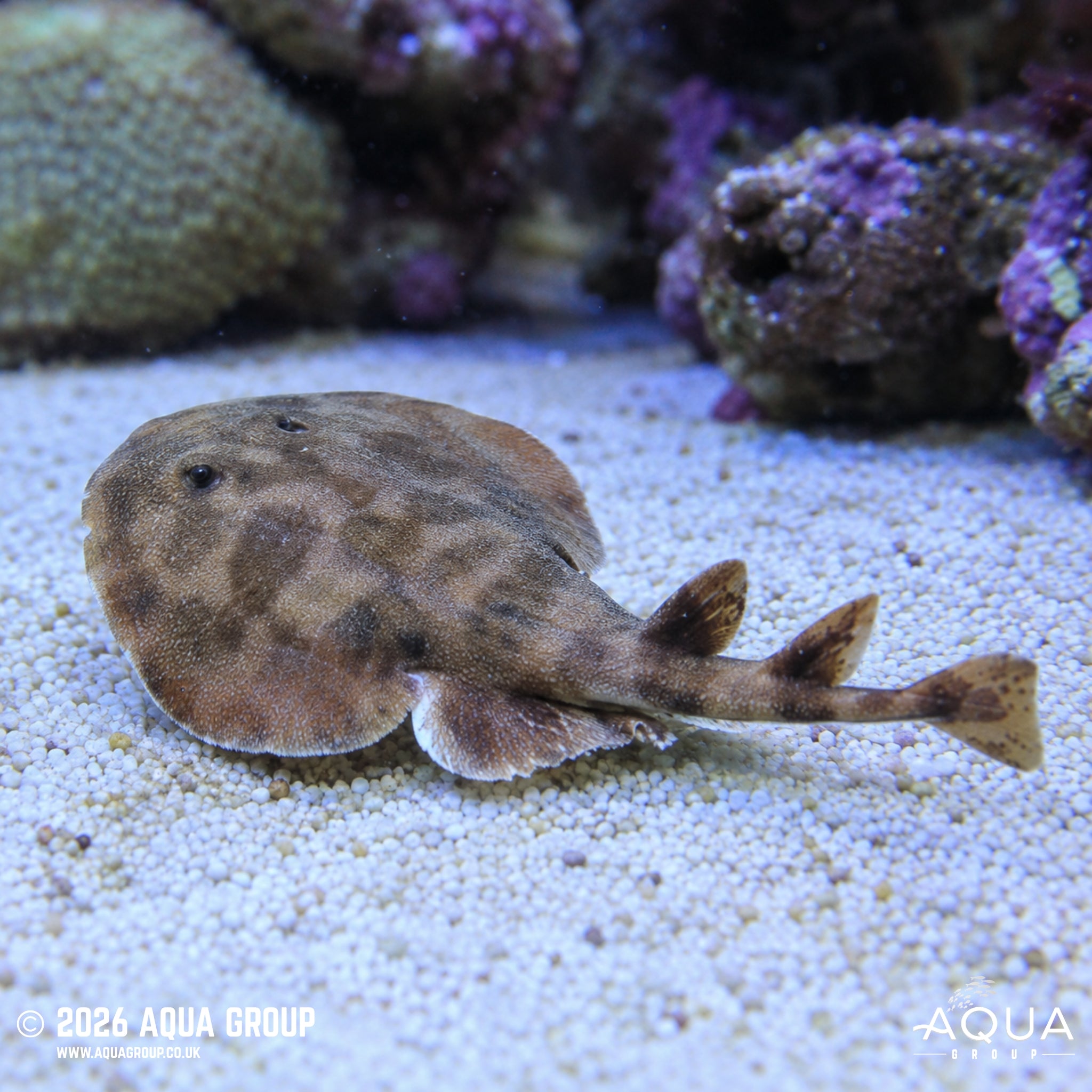
Brown Electric Ray (Narcine brunnea)
The Brown Electric Ray, Narcine brunnea, is an unusual bottom-dwelling marine ray recognised by its rounded pectoral disc, short tail and generally plain brown upper surface. Also known as the Brown Numbfish, this compact electric ray possesses specialised organs capable of producing an electrical discharge for defence and prey capture. It naturally rests on or buries beneath soft coastal sediments while searching for worms, crustaceans and other benthic animals. Although relatively small compared with many marine rays, its specialised feeding requirements, electrical defence and need for an open soft-sand aquarium make it suitable only for expert marine fishkeepers.
Common Name:
Brown Electric Ray, Brown Numbfish, Electric Ray, Numbfish.
Scientific Name (Latin):
Narcine brunnea
Maximum Size:
Approximately 22 cm in total length when fully grown.
Water Type:
Marine
Origin / Natural Habitat:
Indo-West Pacific, ranging from coastal waters off Pakistan eastwards through the northern Indian Ocean and Southeast Asia to the Gulf of Thailand.
Brown Electric Rays are demersal animals associated with continental coastal waters. Detailed habitat information is limited, but they are adapted to soft-bottom environments containing sand, silt or mud, where they can rest partially concealed while locating small benthic prey.
Water Parameters:
Temperature: 24–28°C
pH Range: 8.0–8.4
Hardness or Salinity: Marine salinity 1.023–1.026 specific gravity; exceptionally stable salinity, strong oxygenation, efficient biological filtration and consistently excellent water quality are essential.
Temperament:
Generally peaceful and sedentary, but predatory towards small bottom-dwelling animals. The Brown Electric Ray is unlikely to pursue active fish through open water, although small gobies, shrimps, crabs, worms and other animals resting close to the substrate may be consumed.
When frightened, restrained or disturbed, it may produce an electrical discharge. It should never be handled directly or deliberately provoked.
Diet:
Carnivorous benthic predator. Detailed dietary studies of Narcine brunnea are limited, but small electric rays typically feed on marine worms, crustaceans, molluscs and other animals located within or upon soft sediment.
In the aquarium, offer marine worms, whole or chopped prawns, mysis shrimp, krill, clam, mussel, cockle, squid and small pieces of marine fish. Place food directly onto the substrate near the ray using long feeding tongs.
Newly imported specimens may initially require live marine shrimp, suitable marine worms or gently moving food to trigger a feeding response. Transition gradually onto varied frozen marine foods and confirm that the ray is feeding reliably before purchase whenever possible.
Minimum Tank Size:
A minimum aquarium volume of approximately 400 litres is recommended for one adult, with a broad footprint and a substantial uninterrupted area of soft substrate. Floor space is considerably more important than aquarium height.
Behaviour & Activity:
A slow-moving bottom-dwelling ray that spends much of its time resting on sand or partially buried beneath the substrate. It may remain motionless for extended periods, with only its eyes and breathing openings visible.
Activity may increase during subdued lighting or after dark, when the ray moves across the aquarium floor searching for food. It swims by gently undulating the outer edges of its rounded pectoral disc rather than making rapid open-water movements.
Specialised electric organs are positioned within the broad disc. These can produce a shock used for defence and may also assist with subduing small prey.
Reef Safe:
Not Reef Safe
Brown Electric Rays are not expected to consume coral tissue deliberately, but they may eat ornamental shrimps, small crabs, worms, molluscs and small bottom-dwelling fish.
Their burying and movement across the substrate can cover low-positioned corals with sand, disturb unsecured frags and damage delicate colonies placed on the aquarium floor. This species is best maintained in a specialist soft-bottom or FOWLR aquarium rather than a conventional mixed reef system.
Special Requirements or Care Notes:
Provide a deep, uninterrupted bed of very fine, soft marine sand. Avoid coarse gravel, sharp shell fragments and crushed coral, as abrasive substrates can damage the ray’s underside, disc margins and delicate skin.
Leave most of the aquarium floor open. Position rockwork securely on the aquarium base before adding sand so the ray cannot undermine unstable structures. Avoid narrow gaps where its disc could become trapped or injured.
The Brown Electric Ray can produce an electrical shock. Never handle the animal directly, place hands close to a concealed specimen or deliberately encourage it to discharge. Always confirm its position before aquarium maintenance and use long tools when working near the substrate.
Target feeding is often necessary because the ray may not actively compete with faster fish. Place sinking food close to its mouth and confirm that it eats before removing the feeding tools. Remove uneaten food promptly so it does not decompose beneath the sand.
Select only a specimen with clear eyes, even breathing, intact disc margins and a well-filled body. Redness, abrasions, curled disc edges, rapid respiration or refusal to feed should be treated seriously.
Avoid triggerfish, puffers, large wrasses and other species likely to bite, harass or repeatedly disturb the ray. Suitable companions should mainly occupy the middle or upper water levels, be too large to swallow and remain calm around the substrate.
Like other sharks and rays, this species may be highly sensitive to copper-based medications and certain other treatments. Medication should only be administered in a separate hospital system under experienced aquatic veterinary guidance.
Maintain strong overall oxygenation without directing powerful current across the ray’s preferred resting area. Protect pump and overflow intakes and use a secure aquarium cover.
Quarantine should take place in a spacious system containing fine sand or another smooth, non-abrasive resting surface. Published captive-care information for this species remains extremely limited, so conservative husbandry and close observation are essential.
Suitable for:
Expert only
Availability:
Rare
All images are a visual representation of the fish you will receive, made to be as accurate as possible. Please note that Mother Nature is a wonderful thing, and variation in patterns and colours will occur — that is part of the unique beauty of these animals.
Order and get 100 reward points
Earn points by signing up for our rewards program