

Description
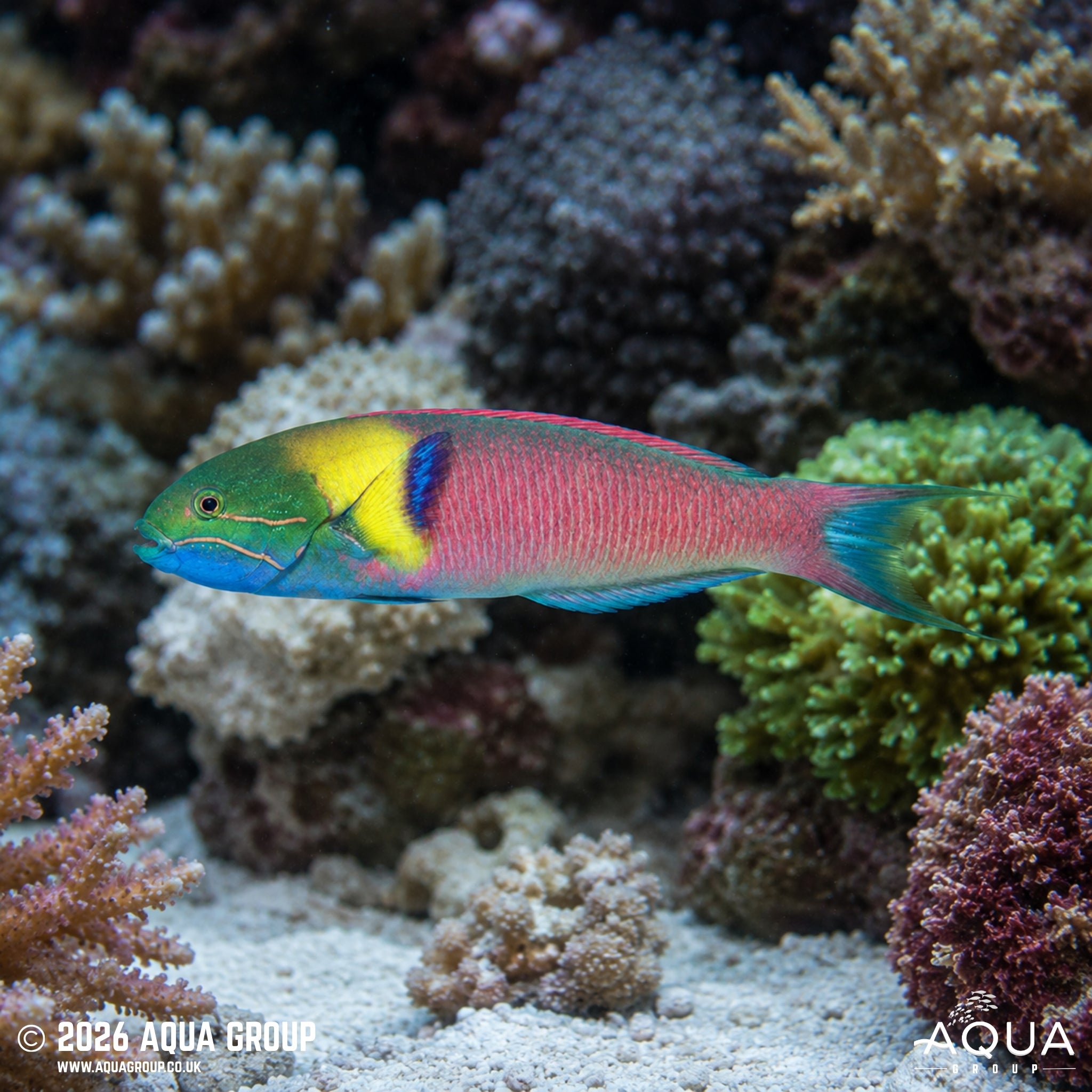
Blunt Head Wrasse (Thalassoma amblycephalum)
The Blunt Head Wrasse, Thalassoma amblycephalum, is a colourful, fast-moving and highly active marine wrasse, recognised for its rounded head shape, lively swimming behaviour and striking colour changes between juvenile, female and male phases. Also known as the Blunthead Wrasse, Bluntheaded Wrasse or Blunt-Headed Wrasse, this species belongs to the bold and energetic Thalassoma group of wrasses. It is best suited to large, mature marine aquariums with robust tank mates, open swimming space and plenty of rockwork.
Common Name:
Blunt Head Wrasse, Blunthead Wrasse, Bluntheaded Wrasse, Blunt-Headed Wrasse.
Scientific Name (Latin):
Thalassoma amblycephalum
Maximum Size:
Around 16–17 cm, making it a medium-sized but extremely active wrasse that needs more swimming space than its length alone may suggest.
Water Type:
Marine
Origin / Natural Habitat:
Found across the Indo-Pacific, including parts of the Indian Ocean, Indonesia, southern Japan, Australia, New Zealand, Lord Howe Island and central Pacific reef regions. In the wild, Blunt Head Wrasse occur over shallow lagoon reefs, seaward reefs and reef flats, often in aggregations. They are active daytime swimmers that move across reef areas in search of small planktonic foods and invertebrates.
Water Parameters:
Temperature: 24–27°C
pH Range: 8.1–8.4
Hardness or Salinity: SG 1.020–1.025
Temperament:
Semi-aggressive. Blunt Head Wrasse are active, confident and can become boisterous, especially as they mature. They are best kept with peaceful but robust marine fish that will not be easily intimidated. Avoid very small gobies, firefish, pipefish, seahorses, delicate wrasses or slow-feeding species that may be stressed, outcompeted or viewed as prey.
Diet:
Carnivorous planktivore and opportunistic invertebrate feeder. In the wild, this species feeds mainly on crustacean zooplankton. In the aquarium, offer a varied diet including frozen mysis shrimp, enriched brineshrimp, krill, cyclops, copepod-based foods, chopped prawn, clam, mussel and high-quality marine pellets. Because this is a very active wrasse, regular feeding is important to maintain condition and reduce unwanted hunting pressure on small invertebrates.
Minimum Tank Size:
A practical minimum of around 500–800 litres is recommended for a single specimen, with larger aquariums preferred for long-term adult care. Provide open swimming space, mature rockwork, caves, crevices and strong filtration.
Behaviour & Activity:
A fast, active daytime wrasse that spends much of its time swimming through open areas and inspecting rockwork for food. It is far more boisterous than many smaller reef wrasses and needs plenty of room to patrol naturally. Like other Thalassoma wrasses, it may use rockwork for shelter and may also dive towards the substrate when frightened. A tight-fitting lid is essential, as this species is a strong jumper when startled.
Reef Safe:
Reef Safe with Caution
Blunt Head Wrasse do not normally eat coral tissue, but they are risky with some reef invertebrates. They may eat small shrimp, small crabs, snails, fan worms, pods and other mobile invertebrates, and larger specimens may threaten very small fish. They are best described as reef safe with caution because they can be kept around corals, but are not ideal for delicate invertebrate-focused reef aquariums.
Special Requirements or Care Notes:
Best suited to intermediate to experienced marine fishkeepers with larger aquariums and robust tank mates. This species should not be added to small peaceful reef systems or tanks containing very delicate fish. Provide a secure lid, plenty of swimming room, mature rockwork and a varied meaty diet. Avoid mixing with very similar Thalassoma wrasses unless the aquarium is extremely large and carefully planned. Juveniles may appear manageable when small, but adults become fast, confident and assertive.
Suitable for:
Intermediate to Experienced fishkeepers
Availability:
Occasionally available in the marine aquarium trade / Availability can vary depending on supplier, size, colour phase and import season
All images are a visual representation of the fish you will receive, made to be as accurate as possible. Please note that Mother Nature is a wonderful thing, and variation in patterns and colours will occur — that is part of the unique beauty of these animals.
Order and get 50 reward points
Earn points by signing up for our rewards program