

Description
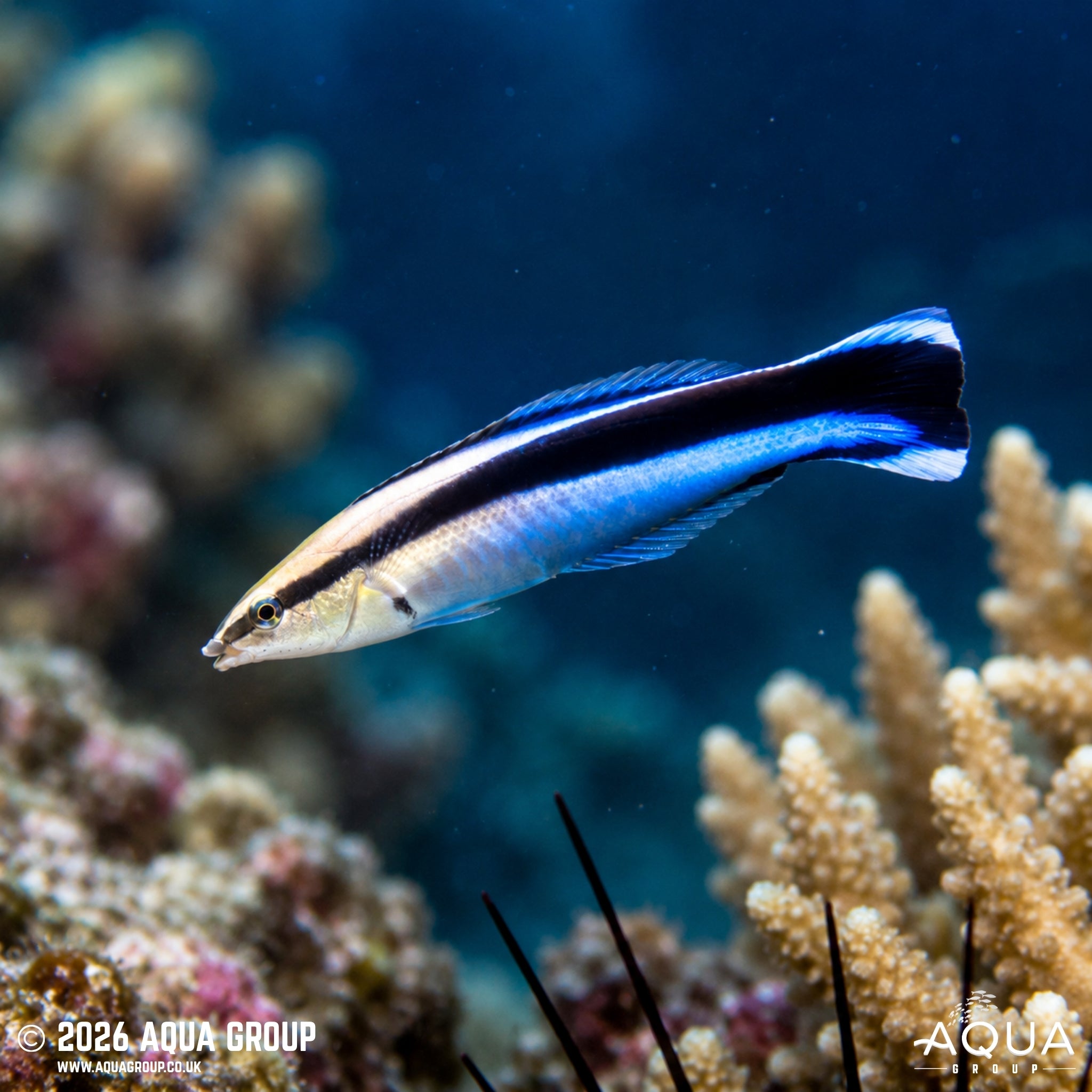
Bluestreak Cleaner Wrasse (Labroides dimidiatus)
The Bluestreak Cleaner Wrasse, Labroides dimidiatus, is one of the most recognisable cleaner fish in the marine hobby, admired for its slender body, bright blue and black stripe patterning and fascinating cleaning behaviour. In the wild, this species sets up cleaning stations where larger reef fish visit to have parasites, dead tissue and mucus removed. It can be a beautiful and active addition to a mature marine aquarium, but it should be treated as a specialist species because long-term success depends heavily on regular feeding, suitable tank mates and the fish adapting well to aquarium foods.
Common Name:
Bluestreak Cleaner Wrasse, Cleaner Wrasse, Blue Cleaner Wrasse, Common Cleaner Wrasse, Blue-Streaked Cleaner Wrasse.
Scientific Name (Latin):
Labroides dimidiatus
Maximum Size:
Around 10–14 cm, making it a small but highly active wrasse.
Water Type:
Marine
Origin / Natural Habitat:
Found widely across tropical Indo-Pacific reef regions, including the Red Sea, East Africa, the Indian Ocean and the Western Pacific. In the wild, Bluestreak Cleaner Wrasse inhabit coral-rich inner lagoons, subtidal reef flats and seaward reefs. They are closely associated with cleaning stations, where other fish visit them to have ectoparasites, damaged tissue and mucus removed.
Water Parameters:
Temperature: 24–27°C
pH Range: 8.1–8.4
Hardness or Salinity: SG 1.020–1.025
Temperament:
Peaceful, but highly active and persistent. Bluestreak Cleaner Wrasse are usually not aggressive, but they may repeatedly inspect or clean other fish, which can irritate some tank mates if the aquarium is too small or the fish are unwilling to be cleaned. Best kept with peaceful to moderately robust marine fish in a mature aquarium with enough activity and space.
Diet:
Specialist cleaner and carnivorous feeder. In the wild, this species feeds heavily on ectoparasites, mucus and dead tissue from other fish. In the aquarium, it must be offered a varied diet of small meaty foods such as frozen mysis shrimp, enriched brineshrimp, cyclops, copepod-based foods, finely chopped seafood and high-quality small marine pellets if accepted. Several small feeds per day are strongly recommended. This species should not be relied upon as a complete parasite treatment, and its cleaning behaviour alone is not a substitute for quarantine or proper disease management.
Minimum Tank Size:
A practical minimum of around 300 litres is recommended for a single specimen, with larger mature aquariums preferred. Larger systems with a stable fish population, open swimming space, mature rockwork and regular feeding opportunities offer a much better chance of long-term success.
Behaviour & Activity:
An active, intelligent and constantly moving wrasse that spends much of its time swimming around the aquarium, inspecting fish and rockwork. It may set up a preferred cleaning area and display to other fish by using a distinctive swimming motion. Unlike sand-sleeping wrasses, Bluestreak Cleaner Wrasse usually shelter within rockwork rather than burying in sand. A tight-fitting lid is essential, as wrasses are well known for jumping when startled.
Reef Safe:
Reef Safe
Bluestreak Cleaner Wrasse are considered reef safe and do not normally nip corals, clam mantles or sessile invertebrates. They are suitable for mature reef aquariums, but their specialist feeding needs and active cleaning behaviour mean they should be selected carefully rather than treated as a simple beginner wrasse.
Special Requirements or Care Notes:
Best suited to experienced marine fishkeepers. This species can be challenging long-term because some individuals fail to adapt fully to prepared foods and may slowly lose condition. Choose specimens that are already feeding well where possible. Avoid newly set up aquariums, very small systems or tanks with overly aggressive fish that may prevent feeding. Quarantine and careful acclimation are recommended, but the fish must be monitored closely to ensure it eats consistently during the settling period. Cleaner Wrasse should not be purchased solely as a cure for parasites such as marine white spot, as proper quarantine and treatment protocols are still required.
Suitable for:
Experienced fishkeepers
Availability:
Regularly available in the marine aquarium trade / Long-term success can vary depending on individual feeding response, supplier condition and aquarium suitability
All images are a visual representation of the fish you will receive, made to be as accurate as possible. Please note that Mother Nature is a wonderful thing, and variation in patterns and colours will occur — that is part of the unique beauty of these animals.
Order and get 17 reward points
Earn points by signing up for our rewards program