

Description
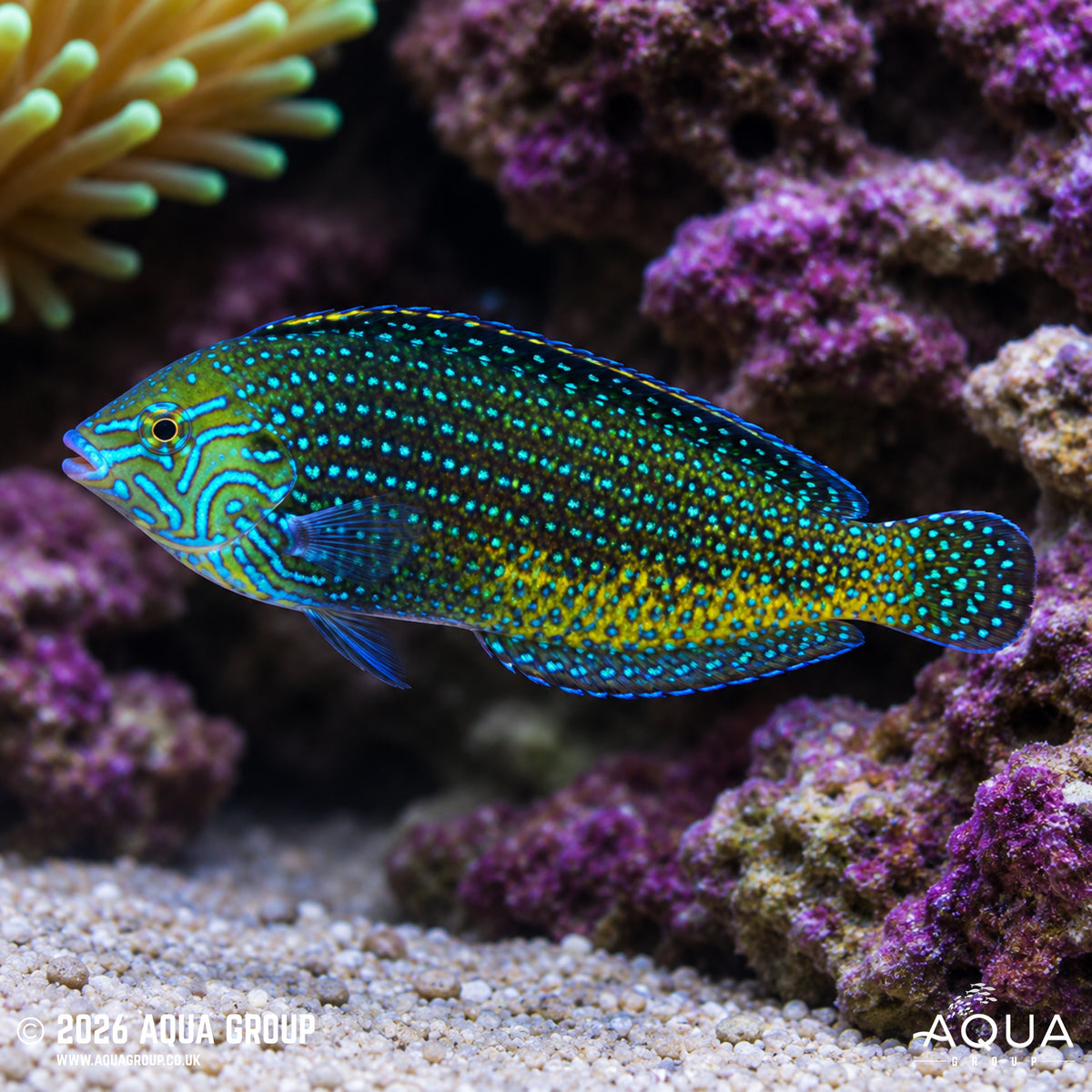
Bluespotted Wrasse (Macropharyngodon cyanoguttatus)
The Bluespotted Wrasse is a striking and elegant marine wrasse recognised for its intricate blue spotting, refined patterning and graceful swimming behaviour. Like other leopard wrasses, it is a specialised species that spends much of the day searching mature rockwork and substrate for tiny invertebrate prey. Best suited to experienced marine aquarists, it requires a well-established aquarium, a soft sandbed and a steady supply of suitable foods.
Common Name:
Bluespotted Wrasse, Blue Spotted Leopard Wrasse
Scientific Name (Latin):
Macropharyngodon cyanoguttatus
Maximum Size:
Approximately 12–15 cm
Water Type:
Marine
Origin / Natural Habitat:
The Bluespotted Wrasse is associated with tropical Indo-Pacific reef environments where it inhabits coral-rich reefs, rubble zones and sandy areas close to established rockwork.
It spends much of the day actively foraging across reef surfaces for small crustaceans and other tiny invertebrates before burying itself beneath the sand at night.
Water Parameters:
Temperature: 24–26°C
pH Range: 8.1–8.4
Salinity: SG 1.024–1.026
Nitrate: Low and stable
Ammonia/Nitrite: 0 ppm
Temperament:
Peaceful
The Bluespotted Wrasse is generally peaceful towards unrelated marine fish and is best housed with calm to moderately active tankmates.
Avoid aggressive species that may intimidate it or prevent it from feeding successfully.
Diet:
Carnivore / Micro-Predator
The Bluespotted Wrasse naturally feeds on copepods, amphipods and other tiny reef-associated invertebrates.
In the aquarium, offer a varied diet including frozen mysis, enriched brine shrimp, copepods, finely chopped marine foods and quality small marine pellets.
Several small meals throughout the day are beneficial.
Minimum Tank Size:
Approximately 250 litres
A mature aquarium with extensive established rockwork and a generous soft sandbed is strongly recommended.
Behaviour & Activity:
The Bluespotted Wrasse is an active daytime forager that spends much of its time moving through rockwork and searching the substrate for food.
At night, or when frightened, it naturally buries itself beneath the sand.
A soft, fine sandbed several centimetres deep is therefore essential.
Once established, it can become a highly visible and graceful aquarium inhabitant.
Reef Safe:
Reef Safe With Caution
The Bluespotted Wrasse does not normally damage healthy coral tissue.
However, very small crustaceans and other tiny mobile invertebrates may be consumed while the fish is foraging.
It is therefore best considered reef safe with caution.
Special Requirements or Care Notes:
This species should only be introduced to a mature, biologically established marine aquarium.
A soft, fine sandbed is essential for natural sleeping and refuge behaviour.
Avoid coarse or sharp substrate that could damage the fish while burying.
A well-established population of natural microfauna is highly beneficial, particularly during acclimation.
New specimens can be sensitive to transport and may be reluctant to accept prepared foods initially.
Monitor feeding closely and offer small foods several times throughout the day.
A tightly fitted aquarium lid is essential, as leopard wrasses are capable jumpers.
Avoid aggressive tankmates and excessive competition at feeding time.
Stable water chemistry, excellent oxygenation and consistently high water quality are particularly important for long-term success.
Suitable for:
Experienced
Availability:
Availability can vary depending on season, collection area and supplier.
All images are a visual representation of the fish you will receive, made to be as accurate as possible. Please note that Mother Nature is a wonderful thing, and variation in patterns and colours will occur — that is part of the unique beauty of these animals.
Order and get 130 reward points
Earn points by signing up for our rewards program