

Description
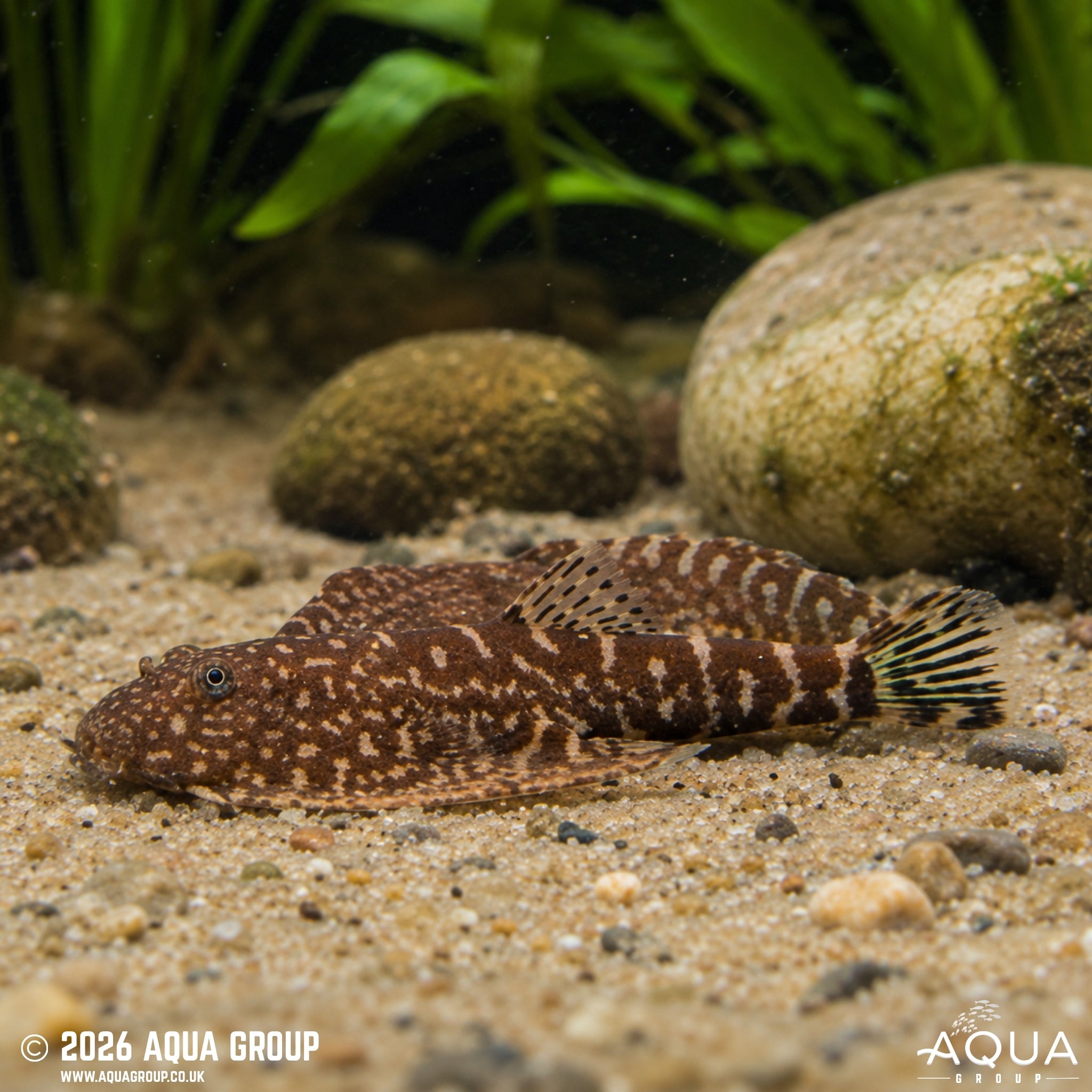
Blue Tail Borneo Loach (Gastromyzon sp. SK03)
The Blue Tail Borneo Loach, Gastromyzon sp. SK03, is a specialist hillstream loach with a flattened sucker-like body, patterned brown to olive upper surface and attractive blue tones in the tail and fins. Also known as the Blue Tail Borneo Sucker or Blue Tail Hillstream Loach, this rheophilic species is adapted for life on smooth rocks in fast, oxygen-rich streams. It is peaceful and fascinating to watch, but it is not a general community “algae eater” and needs a mature aquarium with high oxygen, strong water movement and constant grazing surfaces.
Common Name:
Blue Tail Borneo Loach, Blue Tail Borneo Sucker, Blue Tail Hillstream Loach, Borneo Sucker Loach, Gastromyzon SK03.
Scientific Name (Latin):
Gastromyzon sp. SK03
Unidentified trade form; may be confused with related blue-finned Gastromyzon species.
Maximum Size:
Usually around 4–6 cm, depending on the exact species and collection form.
Water Type:
Freshwater
Origin / Natural Habitat:
Borneo, most likely from clear, shallow, fast-flowing hill streams and rocky river systems. Gastromyzon species are adapted to clean, oxygen-saturated water with smooth stones, boulders, current, biofilm and aufwuchs growth. They cling to rock surfaces using their flattened body and specialised fins, grazing as they move.
Water Parameters:
Temperature: 20–24°C
pH Range: 6.5–7.5
Hardness or Salinity: Soft to moderately hard freshwater; stable, clean and highly oxygenated water is essential.
Temperament:
Peaceful, but may show mild territorial behaviour with its own kind over favourite rocks or feeding spots. It is not aggressive towards other fish and is best kept with calm species that enjoy cooler, well-oxygenated water. Avoid large, aggressive or very boisterous tank mates.
Diet:
Biofilm and aufwuchs grazer with a need for supplementary feeding. In the aquarium, provide mature surfaces with natural algae and biofilm, plus sinking algae wafers, spirulina foods, fine sinking pellets, Repashy-style gel foods, blanched courgette, cucumber, spinach and occasional small frozen foods such as daphnia, cyclops or brineshrimp. They should not be expected to survive only by cleaning glass algae.
Minimum Tank Size:
A minimum of 75 litres is recommended for a small group, with 90 litres or more preferred. A long, shallow footprint with strong flow and plenty of rock surface is much better than a tall, still aquarium.
Behaviour & Activity:
A bottom and rock-surface dwelling loach that spends much of its time clinging to stones, glass, wood and broad surfaces while grazing. It is best kept in a small group of at least 3–5, provided there is enough space and feeding area. They are most comfortable in aquariums with rounded river stones, strong oxygenation, open flow channels and quieter resting areas.
Aquarium Category:
Community Fish
Suitable for specialist cool-tropical communities with peaceful fish such as White Cloud Mountain Minnows, small danios, peaceful hillstream loaches, smaller rheophilic barbs, Stiphodon gobies in suitable setups and other calm species that enjoy similar flow and temperature. Avoid warm tropical community tanks, aggressive cichlids, large predators, fin-nippers and fish that dislike strong water movement.
Special Requirements or Care Notes:
This species needs a mature, well-oxygenated aquarium with strong filtration, added flow and excellent water quality. Use smooth river stones, pebbles, sand or fine gravel, and bright enough lighting to encourage natural biofilm growth. Avoid newly set up aquariums, low-oxygen tanks, dirty substrate and prolonged high temperatures. Extra aeration is strongly recommended, especially during warm weather. A secure lid is sensible, as hillstream loaches can climb glass and explore gaps.
Suitable for:
Intermediate fishkeepers
Availability:
Occasional / specialist import / usually wild-caught where relevant
All images are a visual representation of the fish you will receive, made to be as accurate as possible. Please note that Mother Nature is a wonderful thing, and variation in patterns and colours will occur — that is part of the unique beauty of these animals.
Order and get 10 reward points
Earn points by signing up for our rewards program