

Description
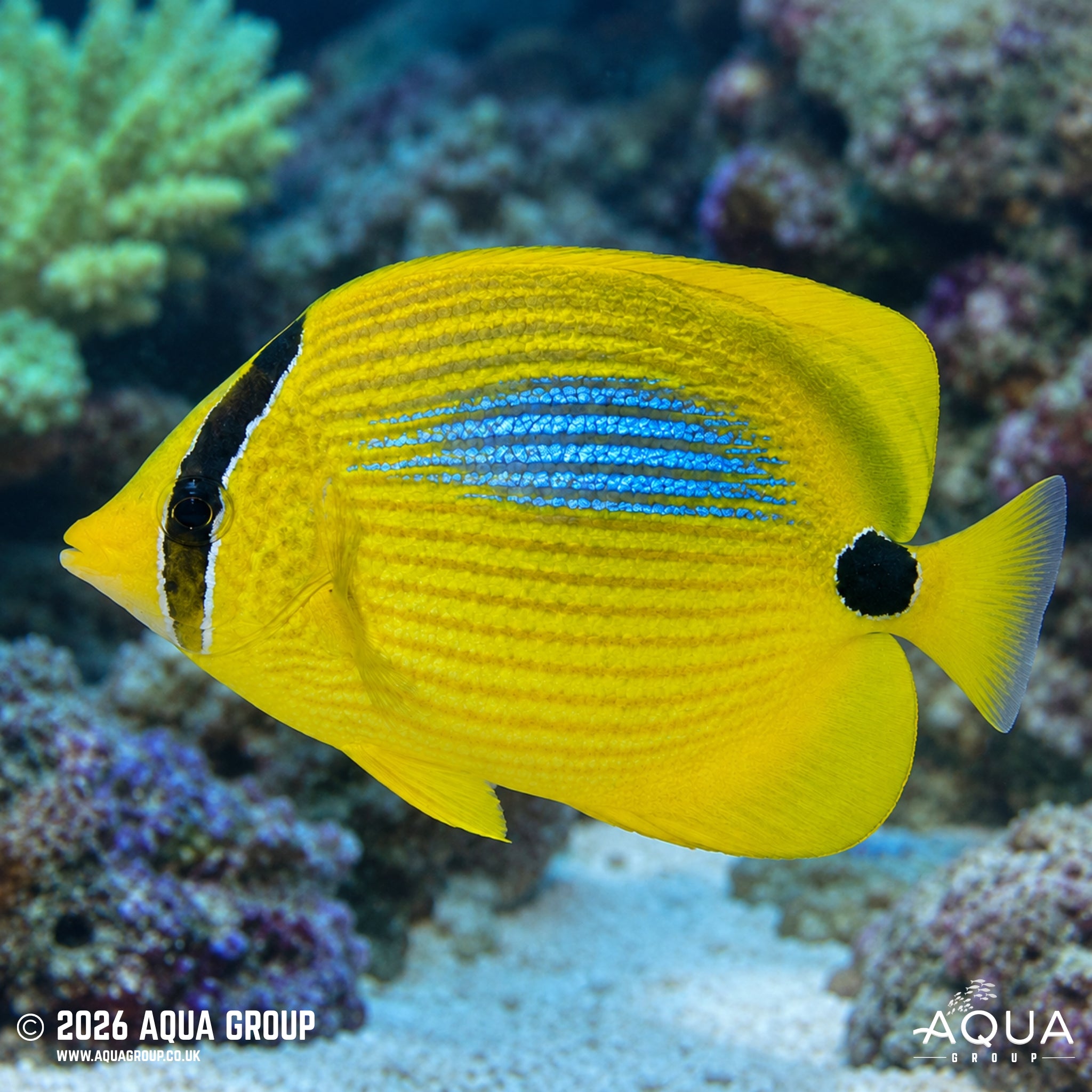
Blue Spot Butterflyfish (Chaetodon plebeius)
The Blue Spot Butterflyfish, Chaetodon plebeius, is a striking Western Pacific reef fish recognised by its bright yellow body, elongated blue patch across the upper sides, dark eye band and contrasting black spot near the base of the tail. Also known as the Bluespot Butterflyfish, Blueblotch Butterflyfish or Blue-dash Butterflyfish, it inhabits shallow coral-rich lagoons, coastal reefs and outer reef slopes. Adults are highly specialised coral feeders that rely heavily on living coral polyps, particularly Pocillopora species. Although exceptionally attractive, its specialised natural diet and poor adaptability to conventional aquarium foods make it suitable only for expert fishkeepers with appropriate specialist facilities.
Common Name:
Blue Spot Butterflyfish, Bluespot Butterflyfish, Blueblotch Butterflyfish, Blue-blotched Butterflyfish, Blue-dash Butterflyfish, Coral Butterflyfish.
Scientific Name (Latin):
Chaetodon plebeius
Maximum Size:
Approximately 15 cm in total length when fully grown.
Water Type:
Marine
Origin / Natural Habitat:
Western Pacific, from the Andaman Sea and Southeast Asia eastwards to Fiji, north to southern Japan and south to Australia, including the Great Barrier Reef, Coral Sea reefs and Lord Howe Island.
Blue Spot Butterflyfish inhabit shallow coastal reefs, protected lagoons and outer reef slopes at depths of approximately 1–14 metres. They are closely associated with healthy coral growth and are usually encountered alone or in pairs while feeding directly from living coral colonies.
Water Parameters:
Temperature: 24–28°C
pH Range: 8.1–8.4
Hardness or Salinity: Marine salinity 1.023–1.026 specific gravity; exceptionally stable salinity, alkalinity, strong oxygenation and consistently excellent water quality are essential.
Temperament:
Generally peaceful towards unrelated marine fish but potentially territorial towards other butterflyfish, particularly similar-looking species competing for the same feeding areas.
Blue Spot Butterflyfish may be maintained singly or as a confirmed compatible pair in a sufficiently spacious aquarium. Avoid aggressive, highly boisterous or fast-feeding tank mates that may intimidate the fish or prevent it from feeding.
Diet:
Obligate corallivore. Adult Blue Spot Butterflyfish feed primarily on living coral polyps, with a strong natural preference for branching Pocillopora corals.
This highly specialised feeding behaviour makes the species exceptionally difficult to maintain in captivity. Some individuals may investigate finely chopped clam, mussel, mysis shrimp, enriched Artemia, specialist butterflyfish preparations or foods pressed into coral skeletons, but acceptance of substitute foods is unpredictable and may not provide adequate long-term nutrition.
A specimen should never be purchased unless it has been observed feeding consistently on a sustainable prepared diet. Even apparently feeding individuals may gradually lose weight if their nutritional requirements are not met.
Minimum Tank Size:
A minimum aquarium volume of approximately 300 litres is recommended for one adult, with extensive mature rockwork, generous swimming space and a calm, stable environment. A larger aquarium is preferable for a compatible pair.
Behaviour & Activity:
An active daytime reef fish that spends much of its time swimming close to coral colonies and carefully picking individual polyps from their surfaces. It usually occupies the lower and middle areas of the aquarium and remains close to shelter when unsettled.
Wild adults are commonly observed alone or in pairs. A bonded pair may forage closely together and defend a shared feeding territory containing suitable coral growth.
Juveniles may occasionally remove external parasites from other fish, but this cleaning behaviour should not be expected to continue into adulthood.
Reef Safe:
Not Reef Safe
Blue Spot Butterflyfish feed directly on living coral polyps and can rapidly damage branching and small-polyp stony corals, particularly Pocillopora species.
Other stony corals, soft corals, zoanthids, anemones, feather duster worms and clam mantles may also be investigated or consumed. This species is fundamentally incompatible with a conventional display reef aquarium containing valuable corals.
Special Requirements or Care Notes:
This species should be regarded as an expert-only specialist and is generally unsuitable for conventional home aquariums. Its dependence on living coral polyps creates a substantial risk of starvation when an adequate substitute diet cannot be established.
Confirm that the exact specimen is feeding strongly and repeatedly before purchase. Do not rely solely on a brief feeding response, as occasional picking does not prove that the fish is consuming enough food to maintain long-term body condition.
Monitor the abdomen and the area behind the head closely. A hollow stomach, visible pinching behind the head, reduced activity or repeated unsuccessful picking are warning signs of nutritional decline.
Offer several small meals throughout the day and minimise competition from faster fish. Food can be pressed into clean coral skeletons or feeding stones to encourage natural picking behaviour, but this does not guarantee successful acclimation.
Provide extensive mature live rock with numerous caves, overhangs and visual barriers. The aquarium should be fully established, biologically stable and free from sudden changes in temperature, salinity or water chemistry.
Avoid aggressive angelfish, triggerfish, large wrasses and territorial butterflyfish. Calm tank mates that feed without overwhelming the Blue Spot Butterflyfish are preferable.
Quarantine is strongly recommended, but the quarantine system must provide secure shelter and allow intensive feeding observation. Butterflyfish may be vulnerable to external parasites, mouth injuries and transport-related stress.
Select only an alert specimen with clear eyes, intact fins, an undamaged mouth and a full body profile. Damage to the narrow mouth can prevent effective feeding and may rapidly become life-threatening.
A secure aquarium cover is recommended, particularly during acclimation. Maintain strong oxygenation and efficient filtration while avoiding excessive current that prevents the fish from feeding comfortably.
Suitable for:
Expert only
Availability:
Rare or occasional in trade
All images are a visual representation of the fish you will receive, made to be as accurate as possible. Please note that Mother Nature is a wonderful thing, and variation in patterns and colours will occur — that is part of the unique beauty of these animals.
Order and get 40 reward points
Earn points by signing up for our rewards program