


Description
Blue-Sided Fairy Wrasse (Cirrhilabrus cyanopleura)
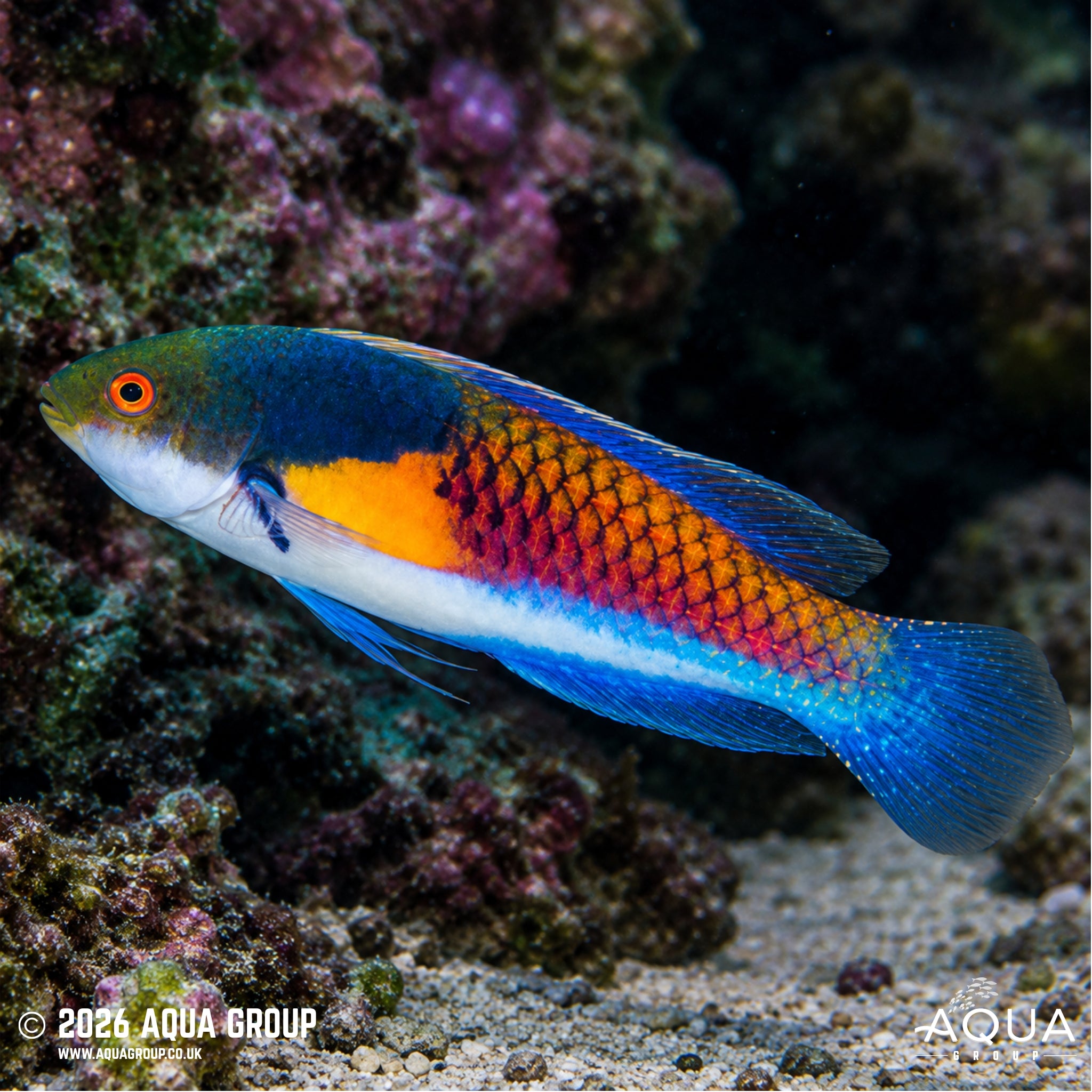
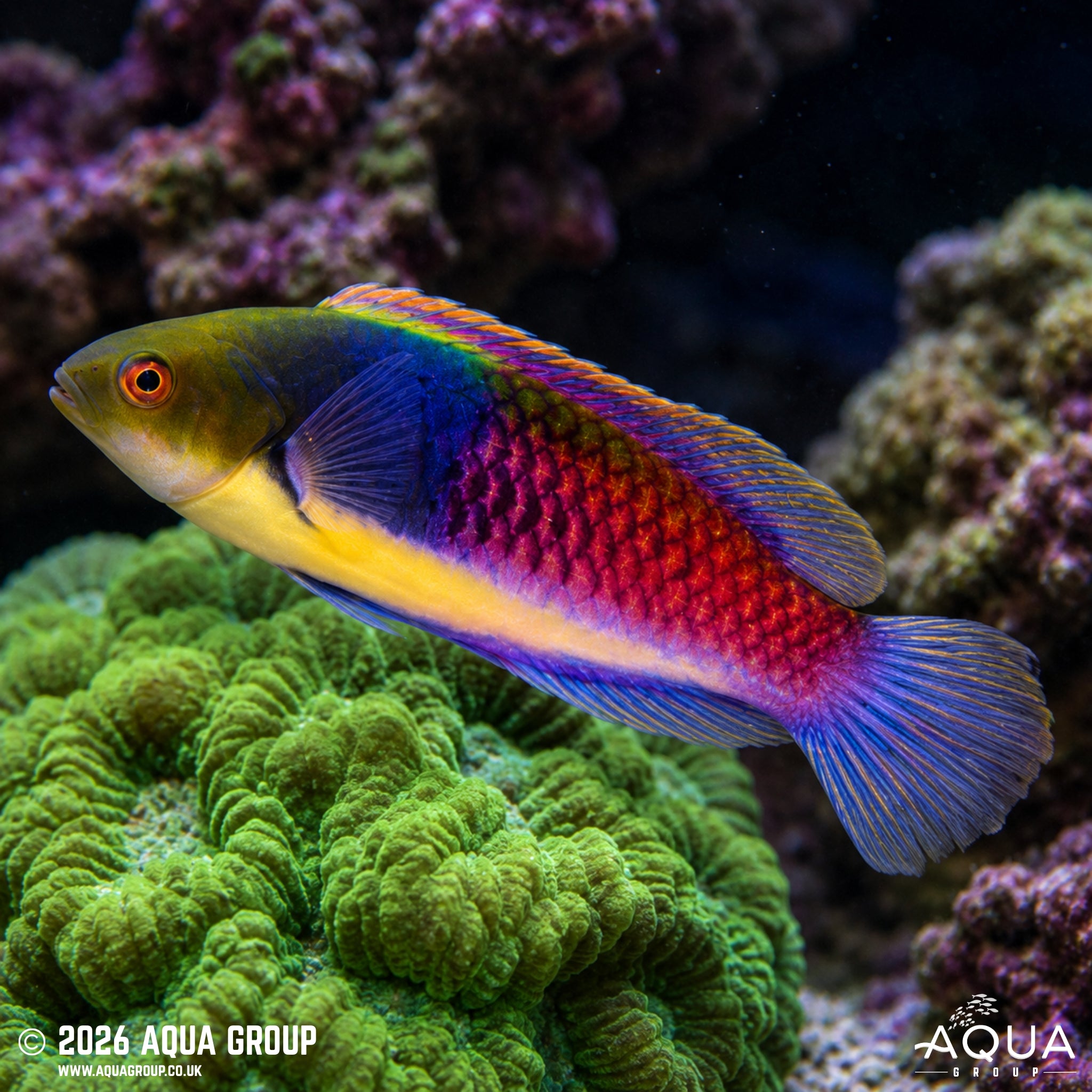
The Blue-Sided Fairy Wrasse (Cirrhilabrus cyanopleura) is a colourful and active Indo-Pacific reef fish prized for its changing blue, violet, red and orange coloration. Also known as the Blueside Wrasse or Blue-Scaled Fairy Wrasse, mature males develop particularly vivid blue-edged scales and contrasting colour across the head, flanks and fins, while females and juveniles display more subdued reddish-brown tones. Peaceful, plankton-feeding and generally reef safe, this attractive wrasse makes an excellent choice for a mature marine aquarium with calm tank mates, generous swimming space and a completely secure cover.
Common Name:
Blue-Sided Fairy Wrasse, Blueside Fairy Wrasse, Blueside Wrasse, Blue-Scaled Fairy Wrasse, Blue-Scaled Wrasse, Coralline Wrasse
Scientific Name (Latin):
Cirrhilabrus cyanopleura
Maximum Size:
Up to approximately 15 cm in standard length. Most aquarium specimens are somewhat smaller, but males can become substantial, active wrasses and should be provided with generous swimming space.
Water Type:
Marine
Origin / Natural Habitat:
Native to the eastern Indian Ocean and western Pacific, including the Andaman Sea, Christmas Island, the Ryukyu Islands, Taiwan, the Philippines, Indonesia, Palau, Papua New Guinea and the Great Barrier Reef.
It inhabits coral-rich and rocky areas along lagoon edges, reef channels and outer reef slopes, commonly at depths of approximately 2–30 metres. Individuals frequently gather in loose groups one or two metres above coral, rock and rubble while feeding from the water column.
Water Parameters:
Temperature: 23–28°C
pH Range: 8.1–8.4
Salinity: 1.020–1.025 SG
Temperament:
Generally peaceful and sociable, although established males may become territorial towards other fairy wrasses, particularly similarly coloured or closely related species. It can be intimidated by highly aggressive fish and should not be kept with tank mates that continually chase or outcompete it.
A single specimen can be maintained successfully. In sufficiently large aquariums, one male may sometimes be kept with one or more females, although all individuals must have adequate space and shelter. Multiple males are not recommended for most home aquariums.
Diet:
A carnivorous zooplankton feeder that naturally captures small drifting animals from the water column.
In the aquarium, offer a varied selection of appropriately sized foods such as mysis shrimp, enriched brine shrimp, copepods, calanus, finely chopped krill and quality marine flakes or pellets. Feed at least twice daily, with several smaller meals especially beneficial for newly introduced or active specimens.
A varied, vitamin-enriched diet containing naturally pigmented marine foods can help maintain strong coloration and body condition.
Minimum Tank Size:
A minimum aquarium volume of approximately 400 litres is recommended for a single adult, with a tank length of at least 120–150 cm preferred. Larger accommodation is necessary when maintaining several fairy wrasses or other active open-water species.
Behaviour & Activity:
An active daytime swimmer that spends much of its time in the middle and upper areas of the aquarium, picking small food particles from the water column. Once settled, it is usually highly visible and may display enhanced coloration during feeding, courtship or territorial interactions.
At night, the fish normally retreats into narrow spaces within the rockwork and may produce a protective mucus cocoon while sleeping. Newly introduced specimens may hide for several days before becoming confident.
Fairy wrasses have a strong instinct to jump upwards when frightened or chased. Even small gaps around cables, pipework and overflow boxes can allow escape.
Reef Safe:
Reef Safe
The Blue-Sided Fairy Wrasse is generally compatible with corals, clams and ornamental invertebrates. It feeds primarily on zooplankton suspended in the water and does not normally disturb coral tissue or established shrimps, crabs and snails.
Very small planktonic crustaceans may naturally be consumed, but the species is not considered a significant threat to normal reef aquarium invertebrates.
Special Requirements or Care Notes:
A tightly fitted aquarium cover is essential. All gaps around pipework, cables, feeding openings and overflow chambers must be securely closed, as fairy wrasses are exceptionally capable jumpers.
Provide ample open swimming space alongside mature live rock containing numerous caves, crevices and shaded retreats. A deep sand bed is not required because this species sleeps within the rockwork rather than burying itself.
Introduce the fish to a calm, established aquarium and avoid highly aggressive tank mates. Newly imported specimens can be sensitive following transport and should be acclimatised carefully while maintaining strong oxygenation and stable water chemistry.
Check prospective specimens for damage around the mouth, snout and jaw, as injuries can occur during collection and transport. Choose an alert fish that is swimming normally and accepting food.
This species is a sequential hermaphrodite, and females may transition into males when social conditions allow. Male coloration can vary significantly according to mood, maturity, collection area and the presence of other wrasses.
When combining fairy wrasses, select species with visibly different coloration and introduce the most assertive or largest male last. Even then, compatibility must be monitored carefully.
Suitable for:
Intermediate fishkeepers
Availability:
Occasional in trade
All images are a visual representation of the fish you will receive, made to be as accurate as possible. Please note that Mother Nature is a wonderful thing, and variation in patterns and colours will occur — that is part of the unique beauty of these animals.
Order and get 35 reward points
Earn points by signing up for our rewards program