


Description
Blue Ring Angelfish (Pomacanthus annularis)
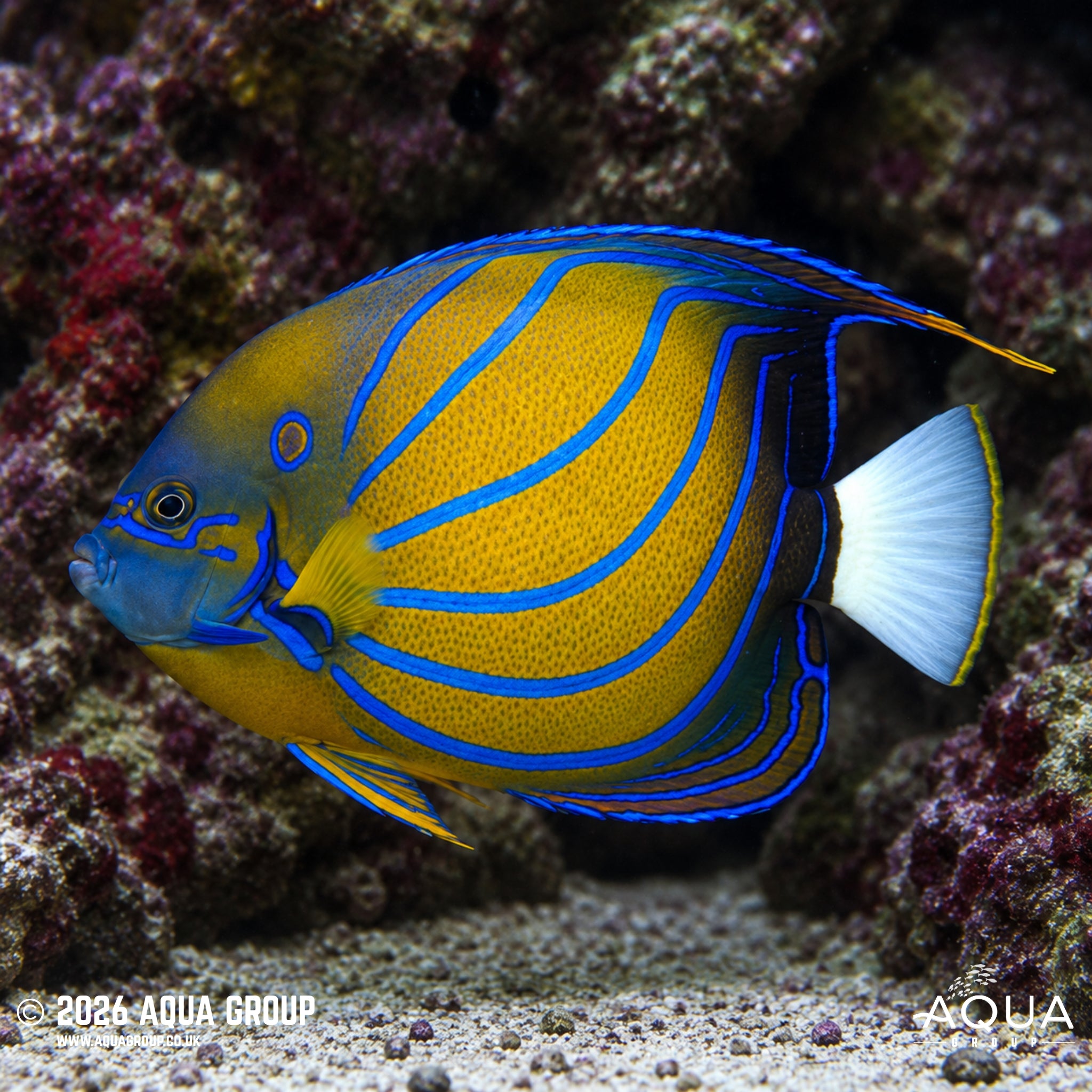
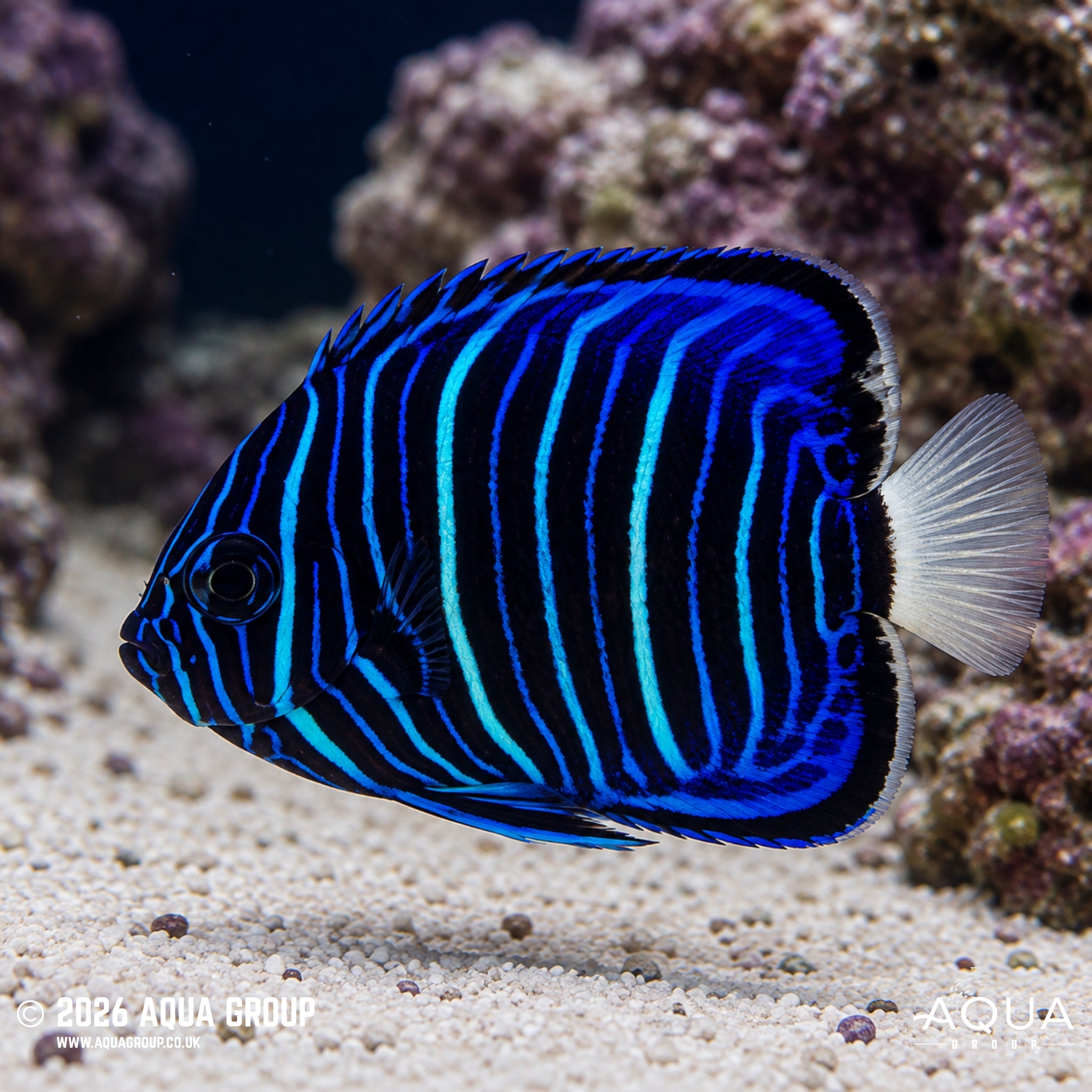
The Blue Ring Angelfish, Pomacanthus annularis, is a magnificent Indo-West Pacific marine fish recognised by its rich golden-brown body, sweeping electric-blue lines and distinctive blue ring above the gill cover. Also known as the Blue-ringed Angelfish or Annularis Angelfish, juveniles begin with a dramatically different pattern of dark blue and white curved bands before transforming into their adult colouration. This large, intelligent and territorial reef browser requires a spacious, mature marine aquarium with extensive rockwork and robust tank mates. Its impressive appearance makes it highly desirable, but its adult size and tendency to nip corals and invertebrates make it best suited to a large fish-only or FOWLR system.
Common Name:
Blue-ringed Angelfish, Blue Ring Angelfish, Annularis Angelfish, Blue-ring Angelfish.
Scientific Name (Latin):
Pomacanthus annularis
Maximum Size:
Capable of reaching approximately 45 cm when fully grown. Aquarium specimens commonly remain closer to 30–40 cm but should always be housed according to their potential adult size.
Water Type:
Marine
Origin / Natural Habitat:
Indo-West Pacific, ranging from the east coast of Africa and Sri Lanka eastwards through India, Southeast Asia, Indonesia and New Guinea to New Caledonia, and north to southern Japan.
Blue Ring Angelfish inhabit coastal reefs, coral-rich lagoons, rocky reef areas and sheltered bays. Juveniles commonly remain around shallow rockwork, caves and silty reef habitats, while adults occupy deeper reef areas with abundant coral, sponge growth and substantial shelter.
Water Parameters:
Temperature: 24–28°C
pH Range: 8.1–8.4
Hardness or Salinity: Marine salinity 1.023–1.026 specific gravity; stable salinity, strong oxygenation, efficient biological filtration and consistently high water quality are essential.
Temperament:
Semi-aggressive, territorial and increasingly dominant with maturity. Juveniles may initially appear relatively reserved, but adults can become assertive towards other angelfish, similarly shaped fish and newly introduced tank mates.
Blue Ring Angelfish are best housed with robust, suitably sized marine fish that will not be intimidated or easily injured. Avoid keeping two large Pomacanthus angelfish together unless the aquarium is exceptionally spacious and carefully structured.
Diet:
Omnivorous reef browser. In the wild, this species feeds on sponges, tunicates, algae and a variety of encrusting organisms and small invertebrates collected from reef surfaces.
In the aquarium, offer specialist marine angelfish preparations containing sponge material, enriched mysis shrimp, chopped prawn, clam, mussel, krill, marine algae sheets, spirulina and high-quality pellets. Feed varied portions two or three times daily, particularly while juveniles are growing and newly introduced specimens are acclimating.
Minimum Tank Size:
A minimum aquarium volume of approximately 750 litres is recommended for long-term care of one adult, with a long swimming area and extensive secure rockwork. A larger custom aquarium is preferable for a fully grown specimen or when keeping it alongside other large territorial marine fish.
Behaviour & Activity:
An active daytime angelfish that patrols the lower and middle areas of the aquarium while inspecting rockwork, coral surfaces and crevices for food. Juveniles usually remain close to caves and sheltered structures, while established adults become bold, highly visible and responsive at feeding time.
Juveniles display a dark blue to nearly black body crossed by curved white and pale-blue bands. As the fish matures, these markings gradually change into the adult golden-brown body pattern with diagonal electric-blue lines, yellow fins and the characteristic blue ring above the gill cover.
Reef Safe:
Not Reef Safe
Blue-ringed Angelfish may nip or consume soft corals, large-polyp and small-polyp stony corals, zoanthids, sponges, tunicates, tubeworms and clam mantles. Some individuals may initially ignore particular corals, but behaviour can change as the fish matures. Ornamental shrimps are often tolerated, although small or vulnerable invertebrates may still be investigated.
Special Requirements or Care Notes:
Provide a mature aquarium with extensive grazing surfaces, large caves and substantial open swimming space. Rockwork must be firmly secured because a large adult can dislodge loose structures while feeding or establishing territory.
A varied diet containing sponge-based angelfish food and marine vegetable matter is important for long-term condition and colour. Offer several moderate meals rather than one large daily feeding and monitor the body profile for weight loss or poor condition.
Introduce the Blue-ringed Angelfish after smaller or more peaceful tank mates have become established. Avoid adding timid fish after the angelfish has claimed the aquarium, as newcomers may be chased persistently. An acclimation box can help assess aggression before release.
Powerful filtration and protein skimming are required because this large, frequently fed fish produces considerable waste. Maintain strong oxygenation and regular water changes. A secure aquarium cover is recommended, particularly for unsettled juveniles.
This species should not be purchased for a small aquarium with the intention of upgrading later unless suitable adult accommodation is already realistically available.
Suitable for:
Experienced fishkeepers
Availability:
Occasional in trade
All images are a visual representation of the fish you will receive, made to be as accurate as possible. Please note that Mother Nature is a wonderful thing, and variation in patterns and colours will occur — that is part of the unique beauty of these animals.
Order and get 140 reward points
Earn points by signing up for our rewards program