

Description
Blue Ribbon Eel (Rhinomuraena quaesita)
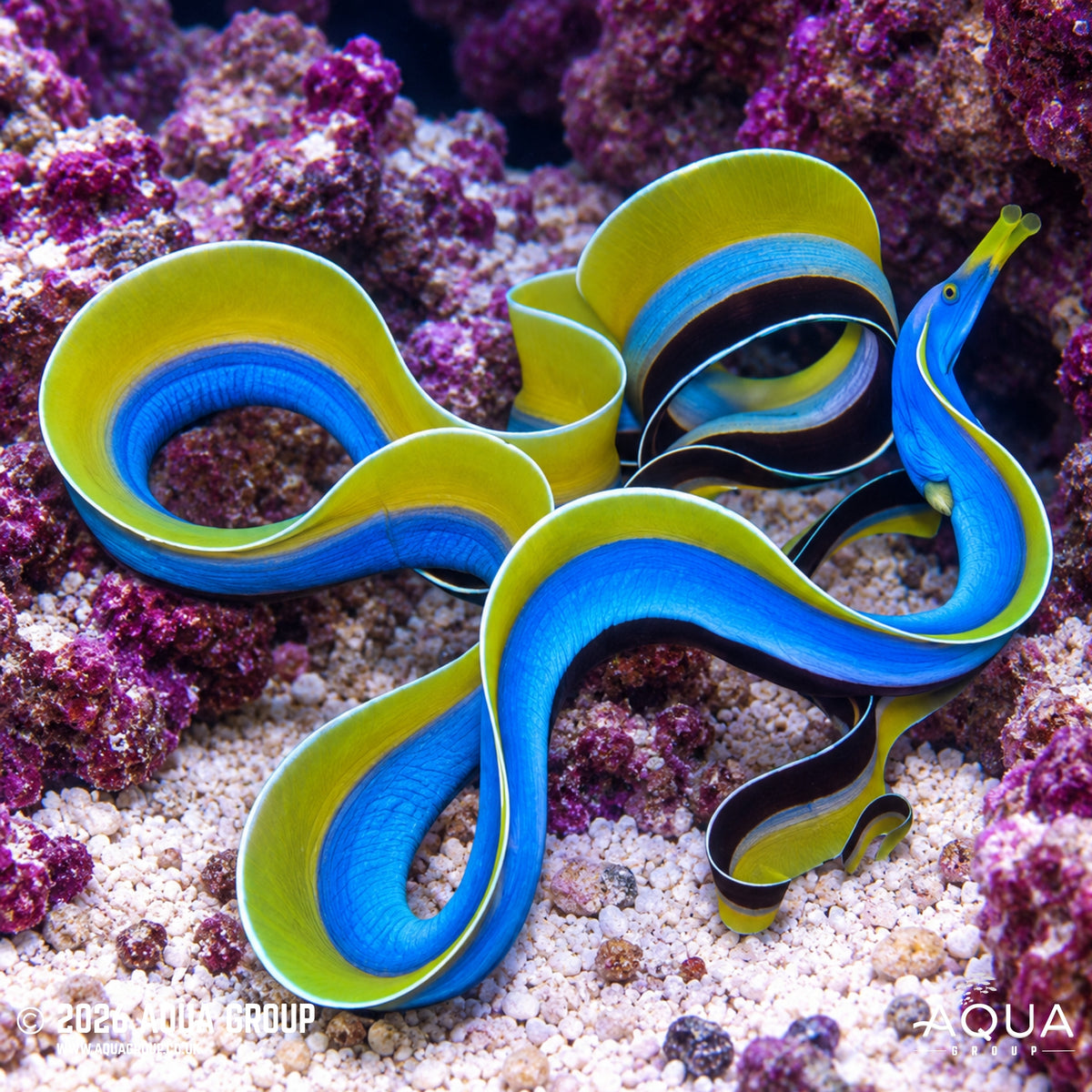
The Blue Ribbon Eel is one of the most distinctive marine eels, recognised for its extremely slender body, elongated jaws and vivid blue colouration in mature males. Juveniles are typically much darker, while females may develop yellow tones as they mature. Beautiful but highly specialised, this species is best suited to experienced marine aquarists who can provide a secure aquarium, suitable hiding places and careful feeding.
Common Name:
Blue Ribbon Eel, Ribbon Eel
Scientific Name (Latin):
Rhinomuraena quaesita
Maximum Size:
Approximately 100–120 cm
Water Type:
Marine
Origin / Natural Habitat:
The Blue Ribbon Eel occurs across tropical Indo-Pacific reef environments and is associated with lagoons, coral reefs, rubble zones and sandy areas close to reef structure.
It typically lives within crevices or burrows, often leaving only the head and upper body exposed while waiting for suitable prey.
Water Parameters:
Temperature: 24–26°C
pH Range: 8.1–8.4
Salinity: SG 1.024–1.026
Nitrate: Low and stable
Ammonia/Nitrite: 0 ppm
Temperament:
Peaceful to Semi-Aggressive / Predatory
The Blue Ribbon Eel is generally peaceful towards fish that are too large to be viewed as prey.
Smaller fish and crustaceans may be hunted or consumed, particularly once the eel becomes established and begins feeding confidently.
Diet:
Carnivore / Predator
The Blue Ribbon Eel naturally feeds on small fish and other suitable marine prey.
In the aquarium, newly introduced specimens can be difficult to feed and may initially refuse prepared foods.
Offer suitably sized marine foods such as pieces of prawn, squid, fish flesh and other meaty foods presented close to the eel's hiding place.
Feeding tongs can be useful once the eel begins accepting prepared foods.
Minimum Tank Size:
Approximately 400 litres
Although slender, the Blue Ribbon Eel requires a spacious mature aquarium with substantial rockwork, secure hiding places and enough room to establish a comfortable territory.
Behaviour & Activity:
The Blue Ribbon Eel spends much of its time concealed within caves, rockwork or burrows with its head protruding into open water.
It may become more active during feeding periods or once fully settled.
Provide multiple secure tunnels, caves and crevices large enough to accommodate the eel's long body.
A tightly fitted lid is absolutely essential, as ribbon eels are excellent escape artists and can pass through surprisingly small openings.
Reef Safe:
With Caution
The Blue Ribbon Eel does not normally damage healthy corals and can be kept in reef aquariums from a coral-safety perspective.
However, small fish, shrimp and other suitably sized mobile invertebrates may be eaten.
For this reason, it is best considered reef safe with caution.
Special Requirements or Care Notes:
This species should only be maintained by experienced marine aquarists prepared to meet its specialised feeding and housing requirements.
A tightly sealed aquarium is essential. All gaps around pipes, cables, lids and filtration equipment should be secured.
Provide substantial rockwork with deep caves, tunnels and sheltered areas.
Newly introduced specimens may be extremely reluctant to feed, so careful observation and patience are essential.
Avoid highly aggressive tankmates that may prevent the eel from settling or feeding.
Stable water chemistry, excellent filtration and good oxygenation are important for long-term health.
Its substantial adult length should be considered before purchase, even though much of the eel may remain concealed within the aquascape.
Suitable for:
Experienced
Availability:
Availability can vary depending on season, collection area and supplier.
All images are a visual representation of the fish you will receive, made to be as accurate as possible. Please note that Mother Nature is a wonderful thing, and variation in patterns and colours will occur — that is part of the unique beauty of these animals.
Order and get 120 reward points
Earn points by signing up for our rewards program