

Description
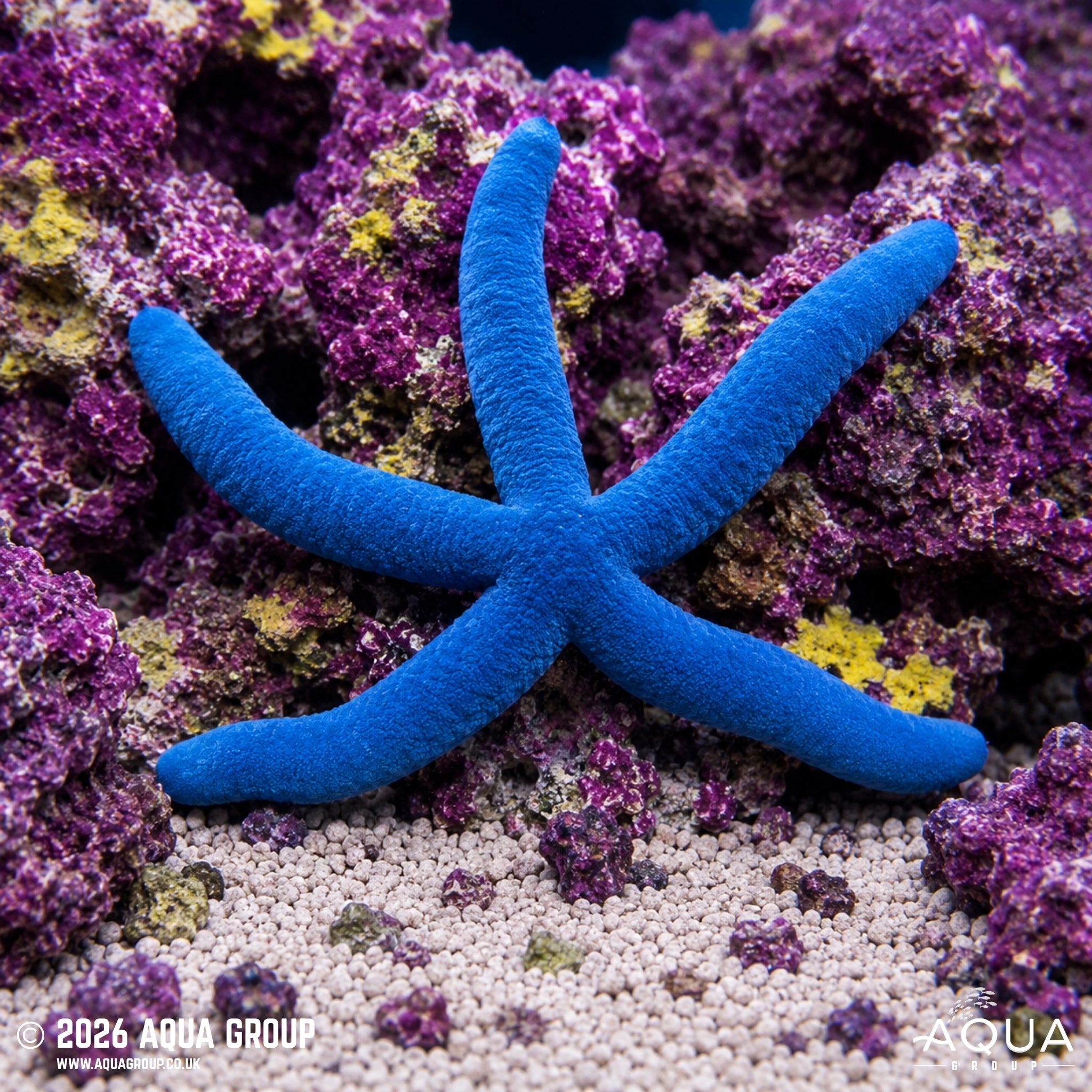
Blue Linckia Starfish (Linckia laevigata)
The Blue Linckia Starfish is one of the most recognisable marine starfish in the aquarium trade, prized for its intense blue colouration and elegant, elongated arms. Peaceful and reef safe, it spends much of its time slowly moving across live rock while grazing on biofilm, microbial growth and naturally occurring organic material. Although visually striking, it is a delicate species that requires a mature, stable reef aquarium with abundant established rockwork and excellent water quality.
Common Name:
Blue Linckia Starfish, Blue Sea Star
Scientific Name (Latin):
Linckia laevigata
Maximum Size:
Approximately 25–30 cm
Water Type:
Marine
Origin / Natural Habitat:
The Blue Linckia Starfish occurs throughout tropical Indo-Pacific reef environments, where it is associated with coral reefs, lagoons and rocky reef surfaces.
It is typically found moving across established reef structure where natural biofilm, microorganisms and organic material are available.
Water Parameters:
Temperature: 24–26°C
pH Range: 8.1–8.4
Salinity: SG 1.024–1.026
Nitrate: Low and stable
Copper: Must be avoided
Temperament:
Peaceful
Blue Linckia Starfish are peaceful and generally compatible with suitable reef fish, corals and non-predatory invertebrates.
They do not display territorial behaviour and should not be housed with species known to prey on starfish.
Diet:
Specialist Grazer / Detritivore
The Blue Linckia Starfish feeds primarily on naturally occurring biofilm, microorganisms, detritus and other organic material growing across mature live rock.
Supplementary feeding can be difficult, and many individuals do not reliably accept conventional prepared foods.
For this reason, a large, mature aquarium with extensive established rockwork is essential for long-term success.
Minimum Tank Size:
Approximately 300 litres
A mature aquarium with a large quantity of established live rock and natural grazing surfaces is more important than volume alone, but larger systems are generally better able to provide the continuous food supply this species requires.
Behaviour & Activity:
The Blue Linckia Starfish spends much of its time moving slowly across live rock and other hard surfaces while grazing.
It may be active during both daylight and lower-light periods and can travel surprisingly large distances around the aquarium over time.
Unlike sand-sifting starfish, this species is primarily associated with established rockwork rather than continuously burrowing through substrate.
Reef Safe:
Reef Safe
The Blue Linckia Starfish is generally considered reef safe and does not normally damage healthy corals.
Its natural grazing behaviour is focused on biofilm, microorganisms and organic material rather than coral tissue.
It should not be housed with predatory fish or invertebrates that may bite or consume echinoderms.
Special Requirements or Care Notes:
The Blue Linckia Starfish should only be introduced to a mature, biologically established marine aquarium.
Stable salinity is particularly important, and sudden changes in salinity, temperature or water chemistry can cause serious stress.
Careful, slow acclimation is strongly recommended.
Avoid exposing the starfish to air unnecessarily during handling and transfer.
Copper-based medications must never be used in an aquarium containing this species.
The greatest long-term challenge is food availability. Blue Linckia Starfish can gradually starve in aquariums that lack sufficient mature live rock, even when water quality appears excellent.
Avoid keeping multiple large grazing starfish in smaller systems, as they may compete heavily for the same natural food resources.
Suitable for:
Experienced
Availability:
Availability can vary depending on season, size and supplier.
All images are a visual representation of the invert you will receive, made to be as accurate as possible. Please note that Mother Nature is a wonderful thing, and variation in patterns and colours will occur — that is part of the unique beauty of these animals.
Order and get 10 reward points
Earn points by signing up for our rewards program