

Description
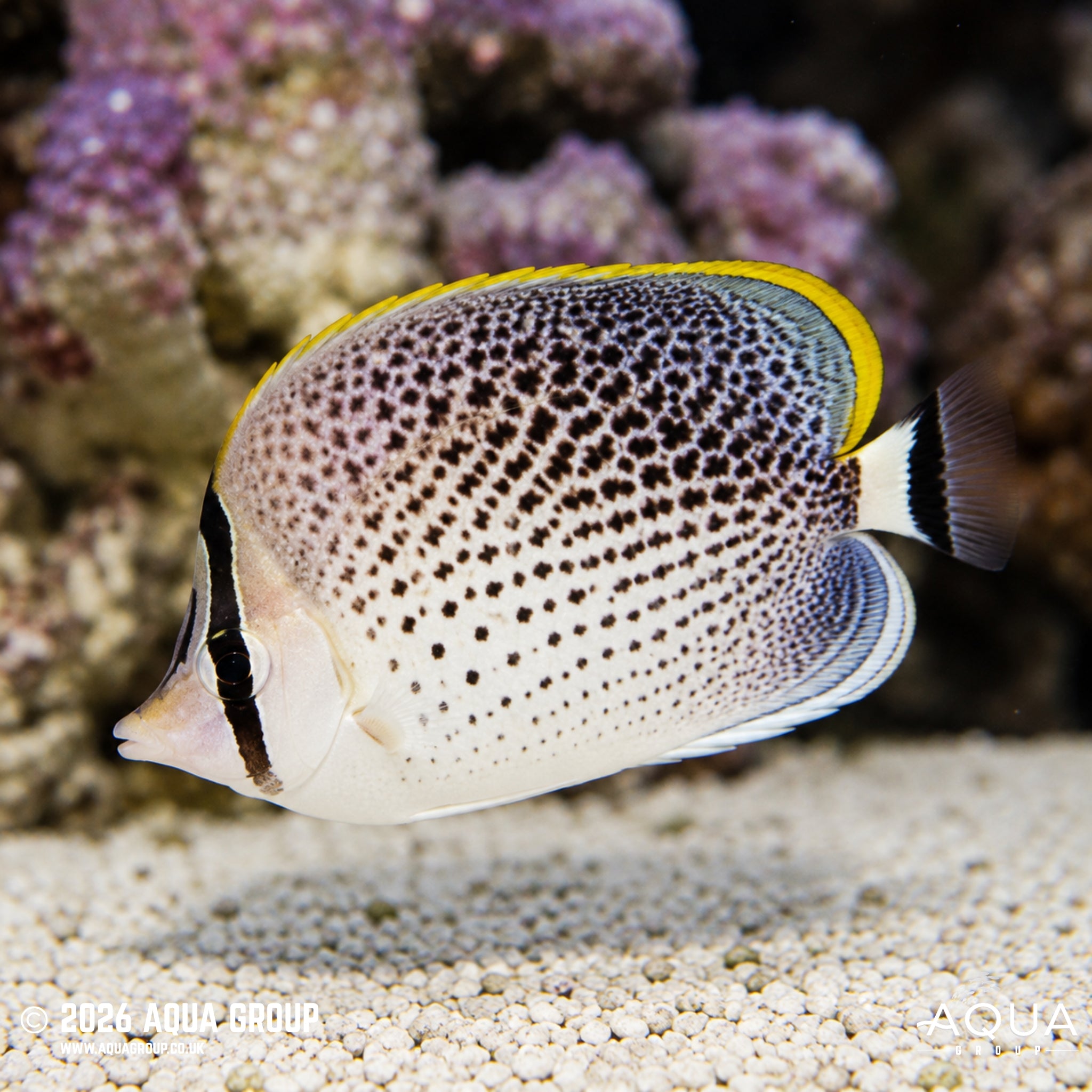
Blue Dot-Dash Butterflyfish (Chaetodon guttatissimus)
The Blue Dot-Dash Butterflyfish (Chaetodon guttatissimus) is an elegant Indian Ocean butterflyfish recognised by its pale silver-white body, fine dark spotting, yellow fins and contrasting black eye band. Also known as the Peppered Butterflyfish or Spotted Butterflyfish, it inhabits coral-rich lagoons and outer reef slopes where it feeds on coral polyps, marine worms and algae. Its delicate pattern and manageable adult size make it visually desirable, but its specialist natural diet and sensitivity during acclimatisation mean it is best reserved for experienced marine fishkeepers.
Common Name:
Blue Dot-Dash Butterflyfish, Peppered Butterflyfish, Spotted Butterflyfish, Peppered Coralfish
Scientific Name (Latin):
Chaetodon guttatissimus
Maximum Size:
Up to approximately 12 cm in total length. Although relatively compact for a butterflyfish, it remains an active reef swimmer requiring generous open space and mature rockwork.
Water Type:
Marine
Origin / Natural Habitat:
Native to the tropical Indian Ocean, from the Red Sea and East African coast southwards to South Africa and eastwards through island groups including the Seychelles, Maldives, Sri Lanka, Andaman Islands, Christmas Island and Cocos Islands.
It inhabits coral-rich lagoons and seaward reef slopes, usually at depths of approximately 3–25 metres. Individuals may be encountered alone, in pairs or in small groups, remaining close to areas of healthy coral growth and complex reef structure.
Water Parameters:
Temperature: 24–28°C
pH Range: 8.1–8.4
Salinity: 1.023–1.026 SG
Temperament:
Generally peaceful towards unrelated marine fish, although it may become territorial towards other butterflyfish, particularly similar-looking species.
It is easily intimidated by large or highly aggressive tank mates and should be maintained with calm fish that will not continually chase it or prevent it from feeding. A single specimen is suitable for most aquariums, while a compatible pair requires additional space and careful introduction.
Diet:
An omnivore with specialised feeding habits. In nature, it consumes coral polyps, polychaete worms, algae and other small benthic organisms picked from reef surfaces.
In the aquarium, offer finely chopped mysis shrimp, enriched brine shrimp, copepods, finely grated mussel, clam, prawn, krill and specialist frozen butterflyfish preparations containing sponge or marine invertebrate material. Marine algae and spirulina-based foods may also be accepted.
Newly imported specimens can be reluctant to recognise prepared foods. Pressing soft food into coral skeletons or rock crevices may encourage natural picking behaviour. Several small meals should be offered throughout the day.
Minimum Tank Size:
A minimum aquarium volume of approximately 300 litres is recommended for a single specimen, with a tank length of at least 120 cm preferred.
A larger aquarium is advisable for a pair or when maintaining the fish alongside other active butterflyfish.
Behaviour & Activity:
An active daytime fish that spends much of its time swimming around coral and rock structures while carefully picking at surfaces for food.
It usually occupies the middle and lower areas of the aquarium and benefits from a combination of open swimming room, caves, overhangs and mature rockwork. Newly introduced specimens may remain secretive until they feel secure and begin feeding confidently.
Wild individuals are frequently observed in pairs or small groups. Established aquarium specimens may defend a preferred feeding area from similar butterflyfish.
Reef Safe:
Not Reef Safe
The Blue Dot-Dash Butterflyfish naturally consumes coral polyps and is likely to nip both small-polyp and large-polyp stony corals. Soft corals, zoanthids, tube worms and other sessile invertebrates may also be investigated.
It should not be considered suitable for a valuable mixed reef aquarium. The species is best maintained in a mature fish-only or fish-only-with-live-rock system where its feeding behaviour can be managed without risking corals.
Special Requirements or Care Notes:
This species should only be purchased when it can be confirmed to be feeding. Avoid specimens with a pinched abdomen, damaged mouth, cloudy eyes or a persistent refusal of all offered foods.
Introduce it to a mature, fully cycled aquarium containing extensive established rockwork and natural benthic growth. A sterile or recently established system is unlikely to provide sufficient supplementary grazing opportunities.
Offer food several times each day and monitor body condition closely. Butterflyfish can lose weight rapidly even when they appear to investigate food, so confirm that the fish is actually swallowing its meals.
Provide strong oxygenation, stable water chemistry and efficient filtration. Avoid sudden changes in temperature, salinity or pH during acclimatisation.
Keep with peaceful tank mates and avoid aggressive tangs, triggers, large angelfish or territorial butterflyfish that may prevent it from feeding.
A carefully managed quarantine period is recommended, although treatment must be approached cautiously because butterflyfish may be sensitive to some medications. Maintain excellent water quality and observe closely for marine white spot, velvet, flukes and bacterial damage around the mouth.
A secure aquarium cover is recommended, particularly during introduction and acclimatisation.
Suitable for:
Experienced fishkeepers
Availability:
Rare or occasional in trade
All images are a visual representation of the fish you will receive, made to be as accurate as possible. Please note that Mother Nature is a wonderful thing, and variation in patterns and colours will occur — that is part of the unique beauty of these animals.
Order and get 40 reward points
Earn points by signing up for our rewards program